Amazon Pharmacy and eNavvi Partner to Integrate Real-Time Prescription Data into Clinical Workflows to Streamline Patient Care

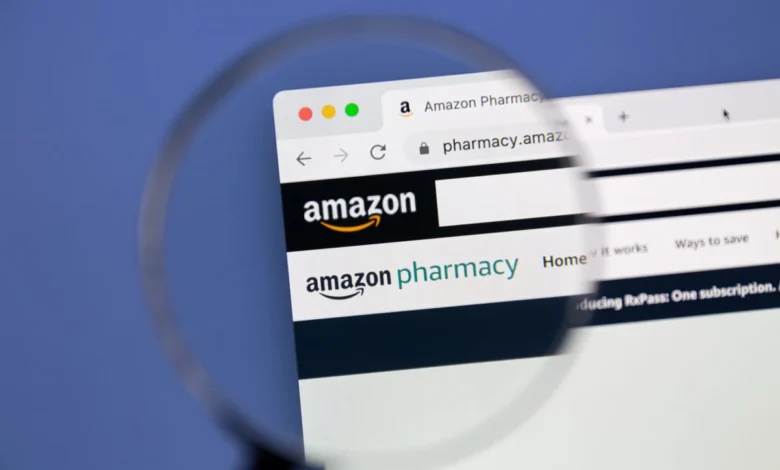
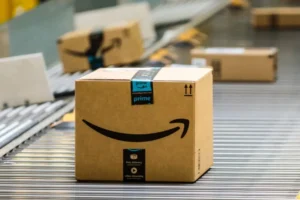
The healthcare landscape is witnessing a significant shift toward digital integration as Amazon Pharmacy and eNavvi, a prominent digital prescription platform, announced a strategic collaboration designed to provide healthcare providers with unprecedented access to medication information. This partnership aims to embed critical data regarding drug pricing, stock availability, and delivery logistics directly into the workflows used by physicians during patient consultations. By synchronizing the point of care with the point of purchase, the two companies intend to transform the traditional medical visit into a seamless, single point-of-sale (POS) moment. This initiative leverages Amazon’s extensive logistical infrastructure, specifically its same-day delivery network, which currently services nearly 3,000 cities across the United States.
The collaboration represents a major step in Amazon’s ongoing effort to dominate the pharmaceutical space by reducing the friction that often exists between a doctor writing a prescription and a patient successfully receiving their medication. According to the companies, the integration will allow clinicians to view real-time pricing and availability while the patient is still in the exam room. This transparency is intended to eliminate the "sticker shock" patients often experience at the pharmacy counter, which is a primary driver of prescription abandonment.
Bridging the Gap Between Prescription and Fulfillment
At the core of this partnership is the technical integration of Amazon Pharmacy’s backend data into eNavvi’s physician-facing platform. eNavvi serves as a digital bridge, allowing doctors to navigate the complex world of drug pricing without leaving their electronic health record (EHR) environments. By incorporating Amazon’s data, eNavvi enables physicians to see exactly what a medication will cost a patient, whether they are paying through insurance or utilizing Amazon’s Prime savings.
Simon Chang, the Chief Executive Officer of eNavvi, emphasized that this move fundamentally alters the capabilities of healthcare providers at the most critical moment of the patient journey. He noted that the ability to provide transparent pricing and direct routing to a reliable fulfillment partner like Amazon Pharmacy removes many of the traditional barriers that prevent patients from adhering to their prescribed treatments. For many patients, the uncertainty of cost and the inconvenience of visiting a physical pharmacy are enough to delay or skip treatment entirely.
Amazon Pharmacy’s leadership echoed these sentiments, highlighting the commitment to a "frictionless" experience. Tanvi Patel, Vice President and General Manager of Amazon Pharmacy, stated that the integration helps clinicians and patients make informed decisions collaboratively. The underlying philosophy is that when patients have immediate, convenient access to affordable medications, health outcomes improve across the board.
The Evolution of Amazon’s Healthcare Ecosystem
This partnership does not exist in a vacuum but is rather the latest chapter in Amazon’s multi-year strategy to disrupt the $500 billion U.S. prescription drug market. To understand the significance of the eNavvi deal, it is essential to look at the chronology of Amazon’s healthcare expansion:
- 2018 – The Acquisition of PillPack: Amazon entered the pharmacy space in earnest by acquiring PillPack for nearly $750 million. PillPack’s expertise in dose-organized packaging and home delivery provided the foundational technology for what would become Amazon Pharmacy.
- 2020 – Launch of Amazon Pharmacy: The company officially launched its branded pharmacy service, offering Prime members free two-day delivery and significant discounts on generic and brand-name drugs.
- 2022 – Expansion into Primary Care: Amazon announced the acquisition of One Medical for $3.9 billion, signaling its intent to manage the entire patient experience, from the initial doctor’s visit to the final prescription fill.
- 2023 – Introduction of RxPass: To further simplify costs, Amazon launched RxPass, a $5 monthly subscription for Prime members that covers a rotating list of more than 50 generic medications for common conditions.
- 2024 – Same-Day Delivery and Workflow Integration: The current collaboration with eNavvi represents the "last mile" of clinical integration, moving Amazon’s services directly into the doctor’s office.
According to Digital Commerce 360’s Top 1000 Database, Amazon maintains its position as the No. 1 online retailer in North America. However, the company is ranked No. 158 in the AI Commerce Rankings, suggesting that while its logistics and scale are unmatched, there is significant room for growth in how it utilizes artificial intelligence to personalize the shopping and healthcare experience. Additionally, Amazon holds the No. 3 spot in the Global Online Marketplaces Database, which tracks gross merchandise value (GMV) from third-party sellers.
Integrating Prime Benefits into the Clinical Experience
A pivotal aspect of the eNavvi collaboration is the inclusion of Amazon Prime benefits within the physician’s workflow. Patients who are Prime members can access savings of up to 80% on generic medications and 40% on brand-name drugs when paying without insurance. Furthermore, the integration will allow doctors to check if a patient’s medications are covered under the RxPass program.
By surfacing these savings at the point of care, Amazon is positioning itself as a cost-effective alternative to traditional retail pharmacies and even some insurance-based co-pays. This is particularly relevant in an era of rising healthcare costs and high-deductible health plans. When a physician can tell a patient, "This medication will cost you $5 total and arrive at your house by 6:00 PM today," the likelihood of the patient following through with the treatment increases exponentially.
The Convergence of Healthcare and Shoppable Media
The shift toward embedding fulfillment options directly into the "discovery" or "decision" phase is a trend that transcends healthcare. Vivien Garnès, co-CEO and co-founder of the influencer marketing platform Upfluence, observed that the eNavvi-Amazon partnership mirrors developments in social commerce.
In the traditional ecommerce model, a consumer might see a product on social media, then have to navigate to a separate website, search for the item, and complete a checkout process. Modern platforms like TikTok and Instagram have eliminated these steps by making content "shoppable." Garnès argues that eNavvi is applying this same logic to the medical prescribing screen. "Whenever and wherever a decision gets made, that’s where checkout needs to live," Garnès stated. By erasing the friction between the decision (the doctor’s prescription) and the purchase (the patient’s order), Amazon is adopting a retail strategy that has already proven successful in the consumer goods sector.
This "shoppable healthcare" model addresses a major inefficiency in the American medical system. Industry data suggests that nearly 20% to 30% of prescriptions are never filled at the pharmacy, a phenomenon known as primary non-adherence. By making the "buy" button available the moment the "prescribe" button is clicked, Amazon and eNavvi are attempting to close that gap.
Combating Pharmacy Deserts and Enhancing Patient Adherence
Beyond convenience, the partnership has significant implications for healthcare equity. Alys Reynders, Chief Marketing Officer at Quickbase, noted that the collaboration addresses a longstanding weakness in healthcare technology: the secure and efficient flow of data. She highlighted the potential for this technology to mitigate the impact of "pharmacy deserts"—areas, often in low-income or rural communities, where residents lack easy access to a physical pharmacy.
As traditional retail pharmacies like CVS and Walgreens close underperforming locations to cut costs, pharmacy deserts are becoming an increasingly urgent public health crisis. Amazon’s highly efficient nationwide delivery network serves as a vital infrastructure for these underserved populations. Reynders noted that providing clinicians with real-time access to medication costs and availability at the point of care can eliminate hidden fees and physical bottlenecks that prevent patients from receiving essential treatments.
The use of a no-code or low-code workflow approach, similar to what platforms like Quickbase facilitate, allows for more agile responses to these systemic issues. By creating a "secure corridor" for prescription data, eNavvi and Amazon are providing a glimpse into how digital transformation can solve physical infrastructure problems.
Market Impact and the Future of Digital Health Integration
The broader implications of this partnership for the pharmaceutical industry are profound. For decades, the flow of prescriptions has been controlled by Pharmacy Benefit Managers (PBMs) and large retail chains. Amazon’s direct-to-provider approach bypasses some of the traditional gatekeepers of the pharmacy industry, potentially leading to more transparent pricing and increased competition.
Analysts suggest that if this model proves successful, other digital health platforms and retailers may follow suit. We could see a future where various fulfillment options—ranging from local independent pharmacies to national delivery services—are all integrated into a single, transparent marketplace within the EHR.
However, the success of this initiative will depend on several factors:
- Physician Adoption: Doctors are notoriously pressed for time. The eNavvi interface must be intuitive and add zero "clicks" to their already burdened administrative workload.
- Data Privacy: Handling prescription data requires the highest levels of HIPAA compliance and security. Any breach could undermine patient and provider trust in the Amazon healthcare ecosystem.
- Logistical Consistency: While Amazon’s same-day delivery is live in 3,000 cities, maintaining that speed for temperature-sensitive or high-priority medications across all geographies remains a challenge.
As the collaboration between eNavvi and Amazon Pharmacy rolls out, the healthcare industry will be watching closely to see if this "point-of-sale" medical model can truly move the needle on patient adherence and health outcomes. If it succeeds, it may mark the end of the era where a paper prescription—or even a standard e-prescription—was the final step in a doctor’s office, replaced instead by a fully completed, paid, and routed delivery order. This evolution suggests that the future of medicine is not just about the science of healing, but also about the sophisticated logistics of access.