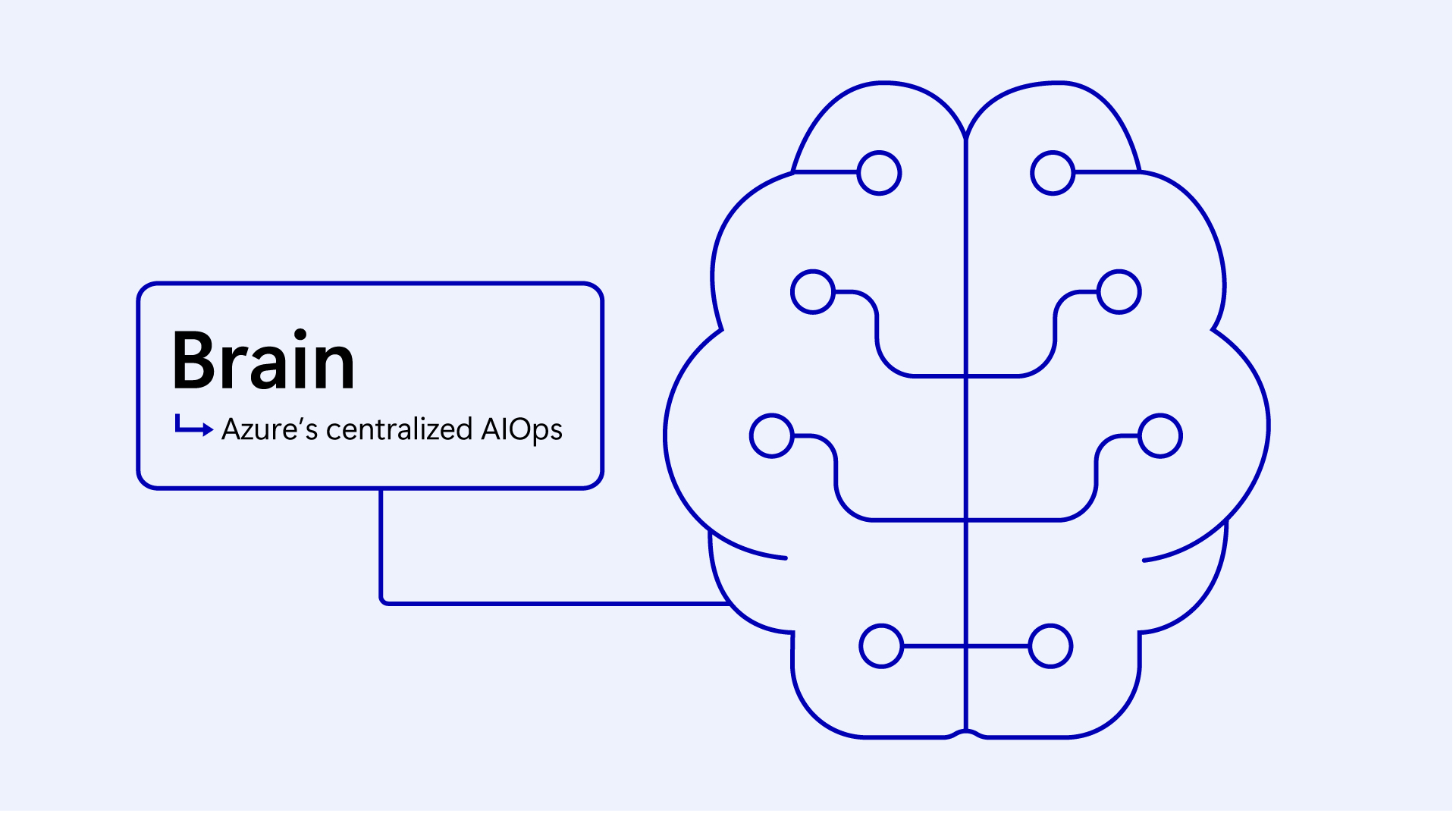
Azure’s commitment to unparalleled cloud reliability has taken a significant leap forward with the unveiling of "Brain," an advanced AI-powered cloud reliability intelligence system. This sophisticated AIOps (Artificial Intelligence for IT Operations) platform functions as an intelligent layer atop Azure Resource Graph, effectively creating a dynamic, real-time "digital twin" of the Azure cloud’s health. By seamlessly fusing platform telemetry, cutting-edge AI/ML models, intricate service dependency mapping, and direct customer impact analysis, Brain delivers a singular, continuously updated panorama of performance across every service, region, and customer workload. Already integral to Azure’s operations, Brain underpins critical functions such as customer Azure resource health notifications, deployment safeguards, and automated outage declarations, laying the groundwork for the agentic AI that is now fundamentally reshaping how Azure functions. This article marks the beginning of a comprehensive series delving into the intricacies of Brain, its development, lessons learned from its large-scale operation, and its future trajectory.
The Genesis of a Cloud-Scale Intelligence System
The sheer scale of Azure’s global infrastructure presents a formidable challenge in maintaining consistent and proactive reliability. Operating across hundreds of services, over 80 geographical regions, more than 500 data centers, and an extensive network of over 800,000 kilometers of fiber optic and subsea cable, Azure represents one of the planet’s most expansive cloud footprints. Despite the immense activity generated and managed within this ecosystem, a persistent challenge has been the occasional discovery of critical issues through customer reports before internal monitoring systems could fully flag them. This communication gap, where customers are left to troubleshoot their own applications while unaware of an underlying platform fault, represents the most detrimental type of incident from a user’s perspective.
Historically, the gap between measured data and actual comprehension has been a significant bottleneck for cloud reliability. While extensive tooling and monitoring solutions exist, the sheer volume of signals produced by a hyperscale cloud has surpassed human capacity for real-time interpretation. Conventional approaches, such as deploying more dashboards, generating more alerts, and increasing on-call rotations, have proven to be an unsustainable treadmill rather than a definitive solution. Each new dashboard offers another window for operators to peer through, but what has been critically missing is a system that can intelligently interpret the information presented, providing actionable insights in a timely manner.
Closing this gap necessitated a paradigm shift: the development of a system that moves beyond mere data aggregation and alert generation. Azure sought to build a continuously updated model of the platform’s health, capable of reasoning across every available signal in real-time and automatically enacting reliability measures at the immense scale required by the Azure platform. This ambitious undertaking led to the creation of Brain.
Brain: Azure’s Centralized AIOps for Unprecedented Reliability
At its core, Brain is Azure’s centralized AIOps-powered cloud health intelligence system. It leverages advanced AI/ML capabilities, including agentic AI, alongside sophisticated data engineering practices, to construct and maintain a dynamic model of Azure’s health. This model then drives automated reliability actions. Its implementation in Azure production environments has already yielded significant improvements in resource health determinations across the platform.
The architecture of Brain can be understood through three key components: its inputs, its processing and evaluation mechanisms, and the outputs that drive automated actions.
Input Streams: Brain ingests data from three primary classes of sources, each serving a distinct purpose and collectively providing comprehensive coverage:
- Platform Telemetry: This encompasses a vast array of operational data generated by Azure’s underlying infrastructure. It includes metrics on hardware performance, network traffic, resource utilization, error rates, and system logs from every component across all regions and data centers. This stream provides the raw, granular data reflecting the physical and logical state of the cloud.
- Service Dependencies and Topology: Understanding how different Azure services interact is crucial. This input maps the intricate relationships between services, workloads, and customer resources. It details dependencies, communication pathways, and the logical structure of the Azure environment, enabling Brain to trace the ripple effects of issues across interconnected systems.
- Customer Impact Signals: This vital input directly incorporates information related to customer experience. It includes data from Azure Resource Health, customer-reported issues, support tickets, and potentially even anonymized application performance metrics from customer workloads. This ensures that the system’s understanding of health is directly aligned with real-world user impact.
Processing and Evaluation: Regardless of the input source, Brain evaluates each "subject" – which can be a service, a region, a deployment unit, or an individual customer resource – against its comprehensive model. This evaluation results in four standardized outputs:
- Health State: A clear determination of whether the subject is functioning as expected, experiencing degradation, or is impacted by an outage.
- Severity: A quantification of the criticality of the identified health state, ranging from informational to critical.
- Impact: An assessment of the scope and nature of the effect on customers and services.
- Reason for Conclusion: A transparent explanation of the factors and data points that led to the determination, providing crucial context for troubleshooting and decision-making.
The standardization of these outputs in a universal vocabulary ensures that all downstream systems communicate using the same language, eliminating the ambiguity that often arises from disparate interpretations of terms like "impacted" across different teams.
Automated Reliability Actions: The insights generated by Brain empower a growing suite of automated reliability actions designed to proactively mitigate issues and minimize downtime. These actions include:
- Automated Outage Declaration: Brain can automatically declare an outage when specific criteria are met, initiating the incident response process.
- Automated Notification: Proactive alerts are sent to affected customers with precise details about the issue and its potential impact.
- Deployment Safeguards: Brain can automatically pause or roll back deployments that exhibit signs of causing reliability issues.
- Automated Routing: Incidents are intelligently routed to the appropriate engineering teams based on the nature and scope of the problem.
- Automated Remediation: In certain scenarios, Brain can trigger automated remediation steps to restore service health.
Foundations of Azure’s Digital Twin for Cloud Health
To truly grasp the transformative nature of Brain, it’s essential to understand what constitutes its foundation – the elements that distinguish it from a mere collection of dashboards. Brain’s representation of Azure is built upon a unified integration of several critical data categories, which, while not novel individually, are powerfully combined within its AI-driven framework:
- Resource Topology and Inventory: A complete map of all Azure resources, their interconnections, and their configurations.
- Runtime State: Real-time operational data reflecting the current status and performance of each resource.
- Intent and Configuration: Information about the intended state and configuration of services and workloads, allowing for the detection of deviations.
- Historical Performance Patterns: A repository of past performance data, enabling Brain to recognize anomalies and predict future behavior.
- Customer-Side Evidence: Direct or inferred data on how Azure’s performance is affecting customer applications and services.
Individually, these components exist in various forms across cloud platforms. However, Brain’s innovation lies in its ability to synthesize them into a single, cohesive, AI-driven representation. This unified view stands in stark contrast to the traditional approach of scattering this information across numerous dashboards and tools, forcing operators to manually correlate disparate data points under intense pressure.
When Brain declares a service is degrading, this statement is not simply the result of a predefined threshold being breached. Instead, it is a nuanced determination derived from simultaneous reasoning across topology, runtime state, user intent, historical performance trends, and corroborating customer-side evidence. This is the intelligence system speaking, offering insights far beyond the capabilities of a standalone metric alert. The speed of this determination, measured in seconds rather than minutes, translates directly into a superior customer experience through shorter incident durations, more precise notifications, and more efficient problem routing.
Operating Against a Cloud Intelligence System: A Paradigm Shift
The true impact of Brain lies in how it fundamentally alters the operational landscape for Azure customers. This transformation becomes most apparent when contrasting traditional incident resolution with the approach enabled by a unified intelligence system.
Consider a scenario where a deployment-driven degradation occurs. In a world lacking a shared intelligence system, the process often involves extensive reconstruction and manual correlation. A rollout is in progress, and an error rate in a specific region begins to drift upwards. Operators might notice the drift on a dashboard, but the cause remains elusive. They would then need to manually check deployment logs, compare performance metrics from different time periods, examine network telemetry, and potentially engage with multiple service teams to piece together the puzzle. This reactive, investigative process is time-consuming and prone to human error, prolonging the impact on customers.
In stark contrast, a world operating with Brain’s intelligence system transforms this into a process of consumption. The rollout is already registered within the intelligence system, and Brain is aware of its in-flight status, its intended changes, the regions it’s affecting, and its expected behavior. When the error-rate drift is detected, Brain immediately correlates it with the ongoing rollout. This correlation is further refined by analyzing the dependency graph, comparing the observed anomaly against historical patterns of what constitutes a minor fluctuation versus genuine degradation.
Crucially, affected customers are also part of this integrated system. Their tenants are mapped to the platform resources impacted by upstream dependencies, which are in turn affected by the rollout. Brain then synthesizes all this information into a single, definitive determination: the rollout is causing customer-visible impact in this specific region, and resolution requires the rollout to be paused.
This determination is then disseminated instantaneously to all relevant systems. The deployment system automatically pauses the rollout, preventing further customers from being impacted. The incident management system creates a single, unified incident, accurately identifying the upstream dependency and avoiding the creation of duplicate, confusing incidents across different teams. Simultaneously, the customer communication system drafts a precise notification, tailored to the affected tenant scope and presented in clear, understandable language, ensuring that customers receive timely and actionable updates from Microsoft.
For Azure customers, this intricate coordination is largely invisible. What they experience is a significantly shorter incident duration, an accurate alert that triggers their own automated systems rather than requiring human intervention, and a diagnosis that is already identified by the time their on-call personnel engage. On services where Brain’s resource health evaluation is fully implemented, the precision of detection for service-impacting issues has seen substantial improvements, and the coverage of relevant incidents continues to expand. In the past year alone, a significant majority of Brain-integrated outages were automatically communicated to affected customers, and the time to notification for these events improved materially compared to manually issued notifications.
This operational model, where downstream systems consume a singular determination from the intelligence system in a shared vocabulary with consistent supporting evidence, is the essence of "operating against an intelligence system." This foundational capability was a prerequisite for enabling the agentic AI advancements that are now becoming synonymous with Azure’s operational future. This not only enhances Azure’s inherent reliability but also provides invaluable transparency into service health and timely communication for customers building their applications on the platform.
The Future of Agentic AI and Cloud Operations
The broader cloud industry is currently engaged in a significant conversation surrounding agentic AI – AI systems that possess the capability to act autonomously, not merely observe. Microsoft is a prominent participant in this discourse. However, a crucial, often understated, aspect of this conversation is the fundamental requirement for agents to have a reliable and comprehensive foundation upon which to act.
Agents require a context, a "world" to interact with. This is precisely what Brain’s health intelligence system, the "digital twin," provides. It serves as the essential prerequisite, not a consequence, for enabling agentic operations at hyperscale. Attempting to build agents first, relying on fragmented and disparate data sources, inevitably leads to a federation of autonomous systems that may disagree with each other in critical production scenarios. Conversely, establishing a robust, unified model first allows agents to be composable, reasoning from a shared, auditable picture of the cloud’s health.
This principle forms the central theme of the ongoing series examining Brain. Brain is positioned as the indispensable cloud health intelligence system that the next generation of cloud agents will require. For organizations exploring agentic AI for any operational function – whether it pertains to their cloud environments, applications, or infrastructure – the architectural pattern embodied by Brain represents a critical area for careful consideration. While agents may capture the headlines, the underlying intelligence system is where the foundational work of reliability is truly accomplished.
What’s Next for Azure Reliability and Brain
With the establishment of Brain and its core capabilities, the focus now shifts to addressing the nuanced challenges of defining and operationalizing cloud health. While Brain can accurately determine that a service in a region is degrading, deeper questions emerge: Degrading compared to what specific baseline? Healthy according to whose definition? When different engineering teams hold conflicting views on their service’s health, which perspective prevails? And what is the precise state of the platform when it is degrading, but no individual customer is yet experiencing an impact?
These are not merely philosophical inquiries; they represent the next frontier of engineering challenges that must be addressed. A sophisticated system like Brain cannot make truly informed determinations until the humans building and operating it reach a consensus on the precise meaning and measurement of these states. The industry, until recently, has largely grappled with these definitional ambiguities.
In the subsequent installments of this series, the detailed engineering approaches and the novel solutions developed to overcome the limitations of the long-standing, often inadequate, vocabulary of cloud health will be explored. This evolution promises to redefine how the industry perceives and manages cloud reliability, moving from reactive troubleshooting to proactive, AI-driven operational intelligence.
Acknowledgments
This groundbreaking work represents the collective effort and expertise of numerous engineers and researchers across the Brain AIOps team, Microsoft Research (MSR), and various Azure service teams, underscoring the collaborative spirit essential for such large-scale technological advancements.