Microsoft Azure Databricks Delivers Transformative Business Value, Independent Study Confirms

Microsoft Azure Databricks, the deeply integrated data and AI platform co-engineered by Microsoft and Databricks, is demonstrably delivering significant and measurable business value, according to a comprehensive Total Economic Impact™ (TEI) study commissioned by Microsoft and conducted by Forrester Consulting. The findings reveal a compelling return on investment for organizations leveraging this native Azure service, highlighting its ability to streamline operations, accelerate insights, and reduce costs.
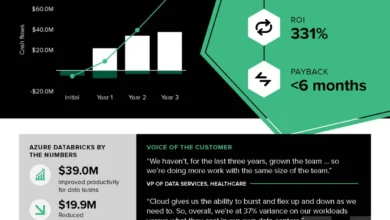
The study, released in June 2026, analyzed the financial and operational impact of Azure Databricks on a composite organization representing interviewed customers. This representative entity is a $6 billion company operating within a regulated industry, managing approximately 10 petabytes of data. The research indicates that over a three-year period, this composite organization realized a remarkable 331% return on investment (ROI), achieved a net present value (NPV) of $58.1 million, and saw its initial investment fully recouped in less than six months. These figures underscore the platform’s capacity to translate advanced data and AI capabilities into tangible business outcomes.
The First-Party Advantage: Seamless Integration and Enhanced Performance
The core of Azure Databricks’ value proposition lies in its status as a first-party Azure service. This strategic co-engineering by Microsoft and Databricks ensures a level of integration that is not simply "bolted on" but is fundamental to the platform’s architecture. This deep integration extends across the Microsoft data and AI ecosystem, including Microsoft tools, identity management, and governance frameworks that organizations already utilize.
For technical teams, this native integration translates into enhanced performance and a more cohesive development environment. The shared integration roadmap between Microsoft and Databricks ensures continuous optimization and accelerated feature development, directly benefiting users. From a business perspective, this unified approach translates into reduced complexity, lower operational costs, and a faster path to realizing the benefits of data and AI initiatives. The single motion, single bill, and single support path offered by Azure Databricks further simplify procurement and management, minimizing risk and accelerating time to value.
Forrester TEI Study: Quantifying the Economic Impact
The Forrester TEI study meticulously dissected the benefits derived from Azure Databricks. Before adopting the platform, the composite organization grappled with a fragmented and costly data estate that was often unreliable at scale and presented governance challenges. Post-implementation, the study quantified benefits totaling $75.6 million against costs of $17.5 million over three years, culminating in the aforementioned $58.1 million net present value.
The study identified four primary drivers of this substantial financial gain:
- Increased Productivity: This encompasses improvements in efficiency for data engineers, data scientists, and business analysts. Streamlined workflows, automated tasks, and easier access to data empower these roles to achieve more in less time. The integration of tools like Azure Databricks Genie with Microsoft Copilot, for instance, allows users to query their lakehouse in natural language, directly within familiar applications like Microsoft Teams and Microsoft 365 Copilot. This significantly reduces the learning curve and the time spent on complex data retrieval and analysis.
- Reduced Infrastructure Costs: By consolidating data workloads onto a unified platform and optimizing resource utilization, organizations can achieve significant savings on their data infrastructure. The inherent scalability and efficiency of Azure Databricks contribute to lower compute and storage expenses compared to disparate, legacy systems.
- Accelerated Time to Market for Data Products and Insights: The platform’s ability to expedite data processing, model development, and deployment cycles allows businesses to bring data-driven products and insights to market faster. This agility is crucial in today’s competitive landscape, enabling organizations to capitalize on emerging opportunities and respond more effectively to market changes.
- Enhanced Data Governance and Security: While often difficult to quantify directly, the study acknowledged the significant value of improved data governance and security. Azure Databricks, particularly through its integration with Unity Catalog, provides a centralized framework for managing data access and ensuring compliance. This not only mitigates risks but also fosters greater trust in data-driven decision-making across the organization.
Unpriced Benefits: The Foundation for Value Creation
Beyond the quantifiable financial benefits, the Forrester study also highlighted several critical advantages that, while not assigned a specific monetary value, are foundational to Azure Databricks’ overall impact. These include:
- Native Azure Service Integration: The seamless integration with other Azure services, such as Azure Synapse Analytics, Azure Machine Learning, and Power BI, creates a unified and powerful data and AI ecosystem. This eliminates data silos and simplifies the architecture, leading to greater operational efficiency and reduced complexity.
- Faster Insights and Broader Data Access: The platform’s architecture and performance capabilities enable users to derive insights from data more rapidly. Furthermore, it democratizes access to data, allowing a wider range of users to explore and leverage information for their decision-making processes.
- Robust Governance via Unity Catalog: Unity Catalog provides a unified governance solution for data and AI across data lakes and data warehouses. This ensures that data is discoverable, accessible, and secure, adhering to organizational policies and regulatory requirements. The ability to scope intelligence by user permissions, as seen with Genie, ensures that sensitive information remains protected while still empowering users with the data they need.
Deep Integrations Driving Productivity and Cost Savings
The underlying strength of Azure Databricks lies in its deep and pervasive integrations across the Microsoft stack. The example of Azure Databricks Genie, which now seamlessly integrates with Microsoft Copilot Cowork, illustrates this point vividly. By allowing users to add business context and build upon existing intelligence within the tools they use daily, Genie bridges the gap between raw data and actionable insights.
The ability for "anyone to question the lakehouse in plain language" is a significant leap forward in data accessibility. This natural language querying capability, now available within Microsoft Teams, Microsoft 365 Copilot, and Copilot Cowork, grounds tasks in trusted data through Genie Ontology. Crucially, every response is meticulously scoped by Unity Catalog to ensure users only see data they are permitted to access, maintaining stringent governance even as intelligence flows freely through the organization.
This level of integration extends across the platform:
- Azure Machine Learning Integration: Enables seamless model training, deployment, and management, leveraging the power of Azure’s comprehensive ML capabilities.
- Power BI Connectivity: Facilitates intuitive data visualization and business intelligence reporting, allowing users to easily consume insights generated on Azure Databricks.
- Azure Data Factory Integration: Streamlines data ingestion and transformation pipelines, ensuring data is ready for analysis and consumption.
- Azure Active Directory Integration: Provides robust identity and access management, ensuring secure and centralized control over user permissions.
- Azure Monitor Integration: Offers comprehensive monitoring and logging capabilities, enabling proactive management and performance optimization.
These integrations, while not always directly monetized in studies, are critical enablers of the productivity gains and cost efficiencies that were quantified by Forrester. They reduce the need for custom tooling and complex integration efforts, thereby lowering the total cost of ownership.
Performance Validation: Independent Benchmarking
Beyond the economic impact, the performance of Azure Databricks has also been validated through independent benchmarks. Principled Technologies, a respected independent research firm, conducted a decision-support benchmark, akin to the industry-standard TPC-DS, on a 10-terabyte dataset. The results demonstrated Azure Databricks’ superior performance compared to Databricks on AWS. Specifically, Azure Databricks completed a single query stream up to 21.1% faster when autoscale was disabled on the AWS counterpart. Furthermore, it executed four concurrent query streams more than nine minutes faster, indicating a significant advantage in handling complex, concurrent workloads. This performance edge is crucial for organizations that rely on rapid data processing for time-sensitive analytics and AI applications.
Implications for the Future of Data and AI
The findings from the Forrester TEI study and the independent performance benchmarks paint a clear picture: Azure Databricks is not merely another cloud service; it is a strategic platform that empowers organizations to unlock the full potential of their data. The first-party advantage, characterized by deep integration and co-engineering, translates directly into tangible business benefits, including substantial ROI, accelerated innovation, and reduced operational friction.
For decision-makers tasked with selecting a data and AI platform, the choice of Azure Databricks offers a compelling combination of innovation, performance, and economic value. The reinforcement of its components – seamless integration driving savings, consistent performance with growing usage, and a robust, unified foundation – provides a compelling case for its adoption. The measured returns, a three-year 331% ROI with a payback period of under six months, offer concrete evidence of its transformative capabilities.
As organizations increasingly rely on data and AI to drive competitive advantage, the importance of a platform that can scale, perform, and integrate seamlessly cannot be overstated. Azure Databricks, with the backing of Microsoft’s extensive cloud infrastructure and Databricks’ pioneering data and AI innovations, is positioned to be a cornerstone of enterprise data strategies for years to come, enabling businesses to navigate the complexities of the modern data landscape with confidence and achieve unprecedented levels of success.
Exploring Further
Organizations interested in understanding the full scope of Azure Databricks’ capabilities and economic impact are encouraged to explore the following resources:
- Forrester Total Economic Impact™ (TEI) Study: Access the full study to delve deeper into the methodology and detailed findings.
- Azure Databricks Product Page: Learn more about the platform’s features, capabilities, and technical specifications.
- Customer Case Studies: Discover real-world examples of how organizations are leveraging Azure Databricks to achieve their business objectives.
- Microsoft Azure Blog: Stay updated on the latest announcements, insights, and best practices related to Azure Databricks and the broader data and AI landscape.