Indonesia’s International Financial Centre Navigates Global Minimum Tax with Tailored Incentives for Investors

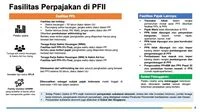
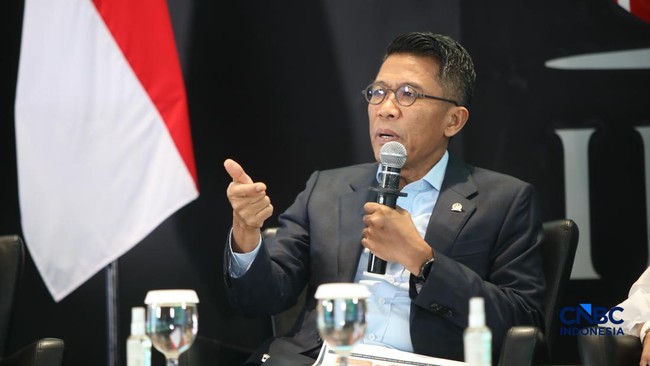
Jakarta, Indonesia is setting the stage for its ambitious International Financial Centre (IFC), known as Pusat Finansial Internasional Indonesia (PFII), by offering a sophisticated package of tax incentives designed to attract global investors. Crucially, these facilities are being meticulously crafted to comply with the tenets of the Global Minimum Tax (GMT), a landmark international tax reform. This strategic approach was underscored by Mukhamad Misbakhun, Chairman of Commission XI of the House of Representatives (DPR), who affirmed that while the IFC aims to provide compelling advantages, it will strictly adhere to the evolving global tax landscape.
Navigating the New Global Tax Reality
The establishment of PFII, envisioned as a pivotal catalyst for deepening Indonesia’s financial markets, diversifying financial instruments, and bolstering investment inflows, comes at a time of significant transformation in international taxation. The Global Minimum Tax, a key component of the OECD/G20 Base Erosion and Profit Shifting (BEPS) 2.0 initiative, seeks to ensure that large multinational enterprises (MNEs) pay a minimum effective tax rate of 15% on their profits, regardless of where they operate. Indonesia, alongside over 60 other nations including regional counterparts like Singapore, Malaysia, Hong Kong, and the UAE, officially adopted the GMT framework starting January 1, 2025.
Mr. Misbakhun elaborated on the interplay between the IFC’s incentives and the GMT, explaining that earlier provisions allowing for tax exemptions for up to 50 years would now be re-evaluated through the lens of global tax harmonisation. "The existing law stipulates that investors can receive tax exemptions for up to 50 years. However, we are fully aware of the changes in the international tax landscape, and we are committed to following these developments," he stated. He further clarified the practical application: "Mechanisms are in place to determine whether companies investing in the PFII fall within the scope of the global minimum tax. If they do not, they can still enjoy the 50-year tax exemption." This indicates a nuanced approach, where the attractiveness of the IFC’s tax holiday remains for entities not caught by the GMT’s thresholds or those already meeting the minimum effective tax rate.
The Global Minimum Tax: A Paradigm Shift
The Global Minimum Tax, often referred to as Pillar Two of the BEPS 2.0 framework, represents a fundamental shift away from decades of international tax competition. Its genesis lies in addressing concerns about corporate tax avoidance, profit shifting to low-tax jurisdictions, and the erosion of national tax bases. The core mechanism involves a 15% minimum effective tax rate on the profits of MNEs with annual consolidated revenues exceeding €750 million.
For MNEs operating within jurisdictions like Indonesia’s PFII, the GMT is implemented through a series of interlocking rules:
- Qualified Domestic Minimum Top-up Tax (QDMTT): This rule allows a jurisdiction to impose a top-up tax on the low-taxed profits of MNE entities located within its borders, bringing their effective tax rate up to 15%. This ensures that any additional tax revenue generated stays within the country where the profits originate.
- Income Inclusion Rule (IIR): If a jurisdiction does not implement a QDMTT, the ultimate parent entity in a different country can be required to pay a top-up tax on the low-taxed profits of its foreign subsidiaries.
- Undertaxed Payments Rule (UTPR): This acts as a backstop, allocating top-up tax among other group entities if the IIR has not fully applied.
Indonesia’s commitment to QDMTT means that if a multinational operating in the PFII, with a global turnover exceeding €750 million, benefits from the IFC’s incentives and consequently has an effective tax rate below 15%, Indonesia itself would levy the top-up tax. This approach allows Indonesia to retain potential tax revenues that would otherwise be claimed by another jurisdiction under the IIR or UTPR, while still presenting the IFC as a competitive investment destination within the new global tax parameters.
Who Benefits from IFC Incentives Under GMT?
The application of GMT rules in the PFII is not universal. Several categories of investors and businesses are explicitly designed to remain outside its scope, thereby potentially fully benefiting from the extensive tax holidays and other incentives offered by the IFC:
- Individuals: The GMT primarily targets large multinational corporations, not individual investors or entrepreneurs.
- Multinational Enterprises Below Threshold: Companies with a global turnover below the €750 million threshold are not subject to the GMT. This provision is crucial for attracting smaller but significant international businesses and high-growth startups to the PFII.
- MNEs with Effective Tax Rates Above 15%: Even if an MNE falls within the global turnover threshold, it will not incur additional tax under GMT if its effective tax rate, when consolidated with other subsidiaries outside the PFII but within Indonesia, already stands above 15%. This acknowledges that some profitable operations may naturally meet or exceed the minimum rate without needing top-up taxes.
Beyond the specific interactions with GMT, the PFII is set to offer a comprehensive suite of additional fiscal and non-fiscal incentives. Mr. Misbakhun highlighted these, stating, "In addition to tax holidays, investors, businesses, and skilled professionals in the IFC will also receive various other facilities, such as exemptions from income tax collection for foreign permanent establishments (SPLN), as well as various VAT and Luxury Goods Sales Tax (PPnBM) facilities." These complementary incentives are vital for creating a truly attractive business environment, addressing operational costs, and simplifying compliance for a wide range of financial activities.
The Regulatory Backbone and Strategic Vision
The establishment of the PFII is not merely an administrative decision but a significant legislative undertaking, mandated by Article 248A of Law Number 4 of 2026, which amends Law Number 4 of 2023 concerning the Development and Strengthening of the Financial Sector (P2SK). The P2SK Law itself is a comprehensive reform package aimed at enhancing financial sector resilience, stability, and competitiveness, while also promoting financial inclusion and consumer protection. The specific mandate for a dedicated law governing the PFII underscores its strategic importance within Indonesia’s broader economic agenda.
The overarching goal of the PFII extends beyond merely attracting capital. It is designed to be a strategic engine for:
- Financial Market Deepening: Encouraging the development of more sophisticated financial products, services, and market infrastructure.
- Diversification of Instruments and Funding Sources: Expanding beyond traditional banking and equity markets to include areas like green finance, digital assets, and venture capital, thereby attracting a broader base of domestic and international investors.
- Increased Investment: Drawing in foreign direct investment (FDI) into the financial sector and related high-value industries.
- Strengthening Indonesia’s Position in the Global Financial Ecosystem: Elevating Jakarta’s status as a regional financial hub, on par with established centres like Singapore, Hong Kong, and Dubai.
Indonesia’s economy, the largest in Southeast Asia, has demonstrated robust growth in recent years, fueled by strong domestic consumption and strategic investments. With a GDP projected to continue its upward trajectory, the timing for an IFC is opportune. In 2023, Indonesia recorded significant FDI inflows, indicating growing investor confidence. The PFII aims to capture an even larger share of global capital flows, particularly in sectors aligned with Indonesia’s development priorities such, as infrastructure, renewable energy, and digital economy.
Global and Regional Context: Competition and Collaboration
Indonesia’s move to establish an IFC while adhering to GMT is a strategic response to a changing global economic landscape. International financial centres worldwide are grappling with the implications of GMT. Singapore, a leading regional financial hub, for instance, has also announced its intention to implement QDMTT from January 1, 2025, and is recalibrating its tax incentive regimes to remain competitive. Similarly, other hubs like Malaysia (with the Labuan International Business and Financial Centre) and the UAE (with the Dubai International Financial Centre and Abu Dhabi Global Market) are adjusting their offerings.
The key for Indonesia’s PFII will be to differentiate itself. Beyond tax incentives, investors are increasingly looking at factors such as:
- Rule of Law and Regulatory Stability: A transparent, predictable, and robust legal and regulatory framework is paramount.
- Talent Pool: Access to a highly skilled, multilingual workforce specializing in finance, technology, and compliance.
- Infrastructure: World-class physical infrastructure (transport, connectivity) and digital infrastructure (high-speed internet, cybersecurity).
- Market Access and Connectivity: Strategic location providing access to Indonesia’s vast domestic market and the broader ASEAN region.
- Quality of Life: Attractive living conditions for expatriate professionals.
Indonesia’s significant domestic market of over 270 million people, its growing middle class, and its rich natural resources provide a strong fundamental draw. The PFII aims to leverage these inherent strengths by combining them with a sophisticated financial ecosystem.
Potential Impact and Implications
The successful implementation of the PFII, in harmony with GMT, could yield several profound impacts:
- Enhanced FDI Quality: By aligning with GMT, Indonesia signals its commitment to responsible global taxation, potentially attracting high-quality, long-term investments from MNEs seeking stable and compliant jurisdictions rather than purely tax-arbitrage driven flows.
- Financial Sector Modernization: The influx of international financial institutions and expertise could accelerate the modernization of Indonesia’s financial sector, fostering innovation in areas like fintech, green finance, and sustainable investment.
- Job Creation and Human Capital Development: The growth of the IFC will create demand for highly skilled professionals in finance, law, accounting, and technology, spurring local talent development and potentially attracting global talent.
- Economic Diversification: A thriving financial hub can contribute to diversifying Indonesia’s economy away from reliance on commodities, adding significant value-added services.
- Government Revenue: While offering tax holidays, the QDMTT mechanism ensures that Indonesia captures any top-up tax, potentially increasing overall tax revenues from large MNEs that might otherwise have paid less. The economic activity generated by the IFC will also lead to indirect tax revenues and broader economic growth.
However, challenges remain. The complexity of GMT rules requires robust administrative capacity within tax authorities and clear guidance for businesses. Regional competition for financial services is fierce, necessitating continuous innovation and adaptation from Indonesia. Furthermore, building a reputation as a credible and trusted international financial centre takes time, sustained effort, and unwavering commitment to good governance.
Conclusion: A Calculated Move for Global Standing
Indonesia’s strategic decision to establish the International Financial Centre with an explicit commitment to Global Minimum Tax compliance reflects a sophisticated understanding of the evolving global economic order. It signifies a calculated move to balance the allure of tax incentives with the imperative of international tax fairness. By doing so, Indonesia aims not merely to attract capital but to integrate more deeply and responsibly into the global financial architecture, positioning Jakarta as a dynamic and reputable hub for international finance in the 21st century. The success of this endeavour will hinge on meticulous implementation, continuous adaptation to global standards, and the cultivation of an environment that fosters trust, innovation, and sustainable growth.