Breakthrough in Organ Preservation: Supercooling Technology Extends Kidney Viability to 72 Hours without Ice Damage

Time is the most unforgiving variable in the field of transplant surgery, where the gap between life and death is often measured in the mere hours an organ can survive outside the human body. For decades, the medical community has relied on "cold ischemia," a process of slowing down cellular decay by packing organs in ice at approximately 4°C (39°F). However, this method is a race against a ticking clock; as soon as an organ is harvested, it begins a steady process of deterioration. If the organ is not transplanted within a narrow window—typically 24 hours for a kidney—it becomes non-viable, leading to a tragic waste of life-saving resources.
A team of researchers at Texas A&M University, led by thermodynamicist Matthew Powell Palm, has unveiled a potential solution to this temporal bottleneck. By utilizing a specialized device that enables "supercooling," the researchers have successfully preserved pig kidneys at temperatures as low as -4°C (25°F) for up to three days without the formation of damaging ice crystals. This advancement, recently presented at the American Transplant Congress, represents a significant leap forward in cryobiology and could fundamentally rewrite the logistics of organ transplantation worldwide.
The Science of Supercooling: Preventing the Ice Phase
The primary obstacle to cooling organs below the freezing point has historically been the formation of ice. When water freezes, it expands and forms sharp, crystalline structures that pierce cell membranes and destroy the delicate internal architecture of complex tissues. While scientists have long been able to cryopreserve individual cells, such as sperm, eggs, and embryos, through "vitrification" (turning liquid into a glass-like state), applying this to large, vascular organs like kidneys has proven nearly impossible due to the uneven distribution of cryoprotectants and the risk of toxic side effects.
Powell Palm’s approach sidesteps the need for harsh chemical "antifreeze" agents. As a thermodynamicist, he focused on the physical environment of the organ rather than its chemical composition. The device developed by his team is a hermetically sealed chamber that maintains the organ under constant pressure. By manipulating the pressure and volume—a principle often referred to as isochoric cooling—the system prevents the water molecules within the organ and the surrounding preservation fluid from organizing into an ice lattice, even when the temperature drops well below the standard freezing point.
The organ is submerged in a standard University of Wisconsin (UW) solution, a preservation fluid already widely used in hospitals. This "low-tech high science" approach ensures that the organ remains in a liquid state at -4°C. By lowering the temperature further than traditional ice storage, the organ’s metabolic rate is significantly more suppressed, effectively "stopping biological time" and slowing the onset of cellular death.
Experimental Success: From Supercooling to Transplantation
To validate the efficacy of the supercooling device, the Texas A&M team conducted a series of rigorous trials using pig kidneys, which are physiologically similar to human kidneys. The experimental design compared the new method against the current "gold standard" of clinical practice.
In the control groups, kidneys were stored on ice for either two hours (mimicking an ideal, rapid transplant) or 24 hours (the current upper limit for human kidneys). In the experimental groups, kidneys were placed in the supercooling device for 24, 48, and even 72 hours. Following the storage period, the kidneys were transplanted back into the original donor pigs, and the animals’ second, healthy kidneys were removed. This ensured that the pigs’ survival and health were entirely dependent on the functionality of the preserved organ.
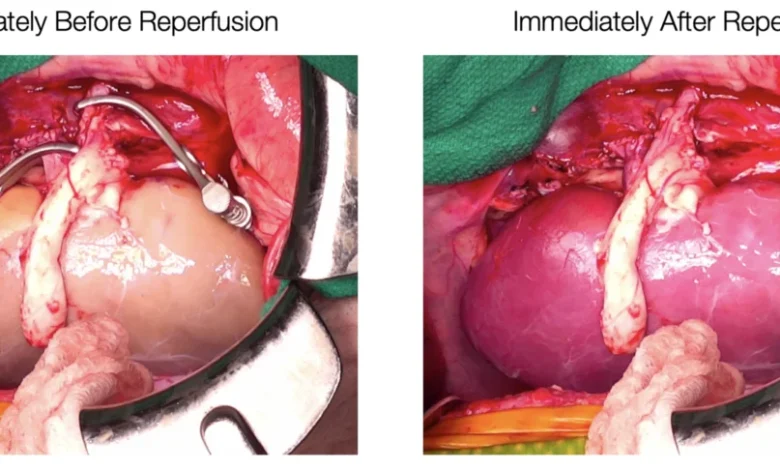
The results were remarkable. The kidneys that had been supercooled for 24 hours began producing urine almost immediately upon reperfusion (the restoration of blood flow), a primary indicator of successful transplantation. Furthermore, markers of renal function, such as creatinine levels, returned to baseline within 10 days.
Even more significant was the performance of the kidneys stored for 72 hours. Despite being kept outside the body for three times the current clinical limit, these organs recovered faster than kidneys that had been kept on traditional ice for only 24 hours. The researchers monitored the long-term health of the subjects, noting that over a 30-day period, the pigs grew by 30%, and the single transplanted kidneys grew alongside them, doubling in size to compensate for the loss of the second kidney. One pig was monitored for 200 days, with post-mortem analysis showing a perfectly healthy, functional organ.

Addressing the Global Organ Shortage Crisis
The implications of extending the shelf life of a kidney from 24 to 72 hours cannot be overstated. Currently, the United States faces a dire shortage of transplantable organs. According to data from the Health Resources and Services Administration (HRSA), more than 104,000 Americans are currently on the waiting list for a kidney transplant. The scarcity is so acute that approximately 17 people die every day while waiting for a donor.
However, the crisis is not solely due to a lack of donors; it is also a failure of logistics and preservation. It is estimated that nearly 20% to 30% of donated kidneys are discarded each year. These organs are often deemed unusable because they have spent too much time "on the clock," or the logistics of matching a donor in one state with a recipient in another could not be reconciled within the 24-hour window.
Kevin Myer, president and CEO of LifeGift, an organ procurement organization, noted that a 72-hour window would "change everything." This extension would allow for:
- Enhanced Matching: Doctors would have more time to perform sophisticated cross-matching and HLA (human leukocyte antigen) testing to ensure the best possible long-term outcome for the recipient.
- Global Logistics: Organs could be transported across continents via commercial flights rather than relying on expensive, weather-dependent private charters.
- Reduced Discards: Kidneys harvested in rural or remote areas that currently cannot reach major transplant centers in time would become viable.
- Improved Surgical Scheduling: Transplant surgeries, which are currently treated as midnight emergencies, could be scheduled as elective procedures during daylight hours, reducing surgical fatigue and improving patient safety.
Comparative Analysis and Regulatory Path
The Texas A&M study enters a competitive field of organ preservation research. Earlier this year, Canadian researchers demonstrated the ability to cool pig kidneys to sub-zero temperatures using cryoprotectants, achieving a 48-hour storage window with a one-week survival rate. However, Powell Palm’s method has already exceeded this, reaching 72 hours with proven 200-day survival and omitting the need for potentially toxic cryoprotectants.
The absence of these chemicals is a strategic advantage for the team. Because the device uses existing, FDA-approved preservation solutions and relies on physical rather than chemical changes, the path to regulatory approval for human trials may be significantly shorter. The device itself is compact and robust; the team has already tested its durability by transporting supercooled kidneys across the United States in the back of a standard SUV to simulate the vibrations and stresses of transit.
Heidi Yeh, a transplant surgeon at Mass General Brigham for Children, remarked on the impressive speed of recovery seen in the study. In many other experimental preservation methods, kidneys stored for 48 hours often take weeks to "wake up" and function correctly—a condition known as delayed graft function. The fact that supercooled kidneys at 72 hours recovered faster than traditional 24-hour ice-stored kidneys suggests that the supercooling process is inherently less traumatic to the tissue.
Future Implications: Beyond the Kidney
While the current research focused on kidneys, the potential applications for supercooling technology extend to other vital organs. Livers, hearts, and lungs have even shorter viability windows than kidneys—often as little as four to six hours. If the constant-pressure supercooling method can be adapted for these organs, it would revolutionize the treatment of end-stage heart and liver failure.
Powell Palm and his colleague Sebastian Giwa are in the process of launching a dedicated company to commercialize this technology. Their goal is to create a standardized, portable "time capsule" for organs that can be used in any hospital setting. Preliminary data suggests that they may be able to push the preservation limit even further, with some organs appearing healthy after 120 hours (five days) of storage, though transplantation trials for that duration are still pending.
As the medical community moves toward a future of "organ banking"—where organs could be stored for days or weeks like blood—this thermodynamic breakthrough serves as a foundational milestone. By decoupling the act of donation from the urgency of transplantation, the technology promises to maximize the gift of every donor and provide a second chance at life for the thousands currently waiting in the shadow of the clock. In the words of the researchers, this is not just an improvement in storage; it is the beginning of the end for the organ shortage as we know it.