Staples Canada Launches Staples Business to Streamline Corporate Procurement and Defend Market Share Against E-commerce Giants

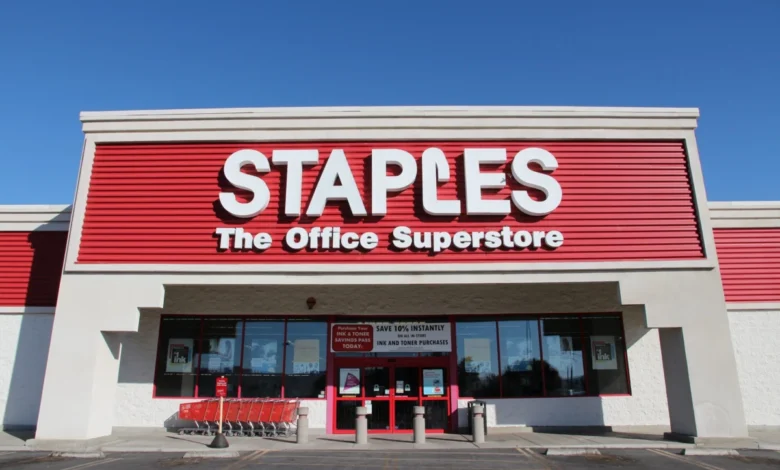
Staples Canada has officially introduced Staples Business, a newly minted commercial brand designed to amalgamate office supplies, advanced technology infrastructure, print services, and facilities management into a single, cohesive ecosystem for Canadian corporate and commercial clients. Headquartered in Richmond Hill, Ontario, Staples Canada manages a robust physical footprint comprising nearly 300 retail locations across the country, alongside its specialized Bureau en Gros operations in the province of Quebec. This strategic rollout represents a significant operational pivot for the legacy retailer, moving beyond traditional consumer-facing stationery sales to capture a larger share of the lucrative business-to-business (B2B) procurement market.
The newly formed division is strategically structured around a two-tiered service model. The first tier is optimized specifically for small-to-medium-sized businesses (SMBs), focusing on automated checkout workflows, pricing transparency, and rapid digital response times. The second tier caters to larger enterprise buyers requiring sophisticated procurement features, including dynamic contract pricing, customized product catalogs, and dedicated account management support. By consolidating these disparate offerings under one brand umbrella, Staples Canada aims to eliminate administrative friction and simplify account management for organizations navigating complex supply chains.
Strategic Imperatives and the Competitive Landscape in Canadian B2B Commerce
The launch of Staples Business is not merely a cosmetic marketing exercise; industry analysts view it as a calculated tactical maneuver designed to fortify Staples Canada’s market position against aggressive global e-commerce competitors, most notably Amazon Business. As digital procurement platforms continue to reshape commercial supply chains, traditional office supply retailers face mounting pressure to prove their distinct value proposition to corporate buyers.
Marty Bauer, an e-commerce expert at marketing platform Omnisend, emphasizes that the modern B2B buyer operates under a fundamentally different set of expectations compared to the traditional retail consumer. According to Bauer, contemporary procurement professionals prioritize operational efficiency, administrative time-savings, and frictionless purchasing experiences above marginal cost savings.
"This new branding strategy is about much more than a cosmetic rebrand," Bauer stated, analyzing the structural shift. "It’s an important step in defending the market against e-commerce giants, particularly Amazon Business. The goal is to make supply procurement as easy and frictionless as possible. It’s as much about time and efficiency as it is about price."
By bringing together a diverse product catalog that spans routine paper goods, specialized janitorial and facility maintenance supplies, and high-end IT hardware, Staples Business allows corporate clients to centralize their purchasing. Under this consolidated model, a single dedicated account manager oversees the entirety of a client’s requirements, substantially reducing the administrative overhead traditionally associated with managing multiple vendors.
Leadership Insights and the Evolution of Staples Canada
The conceptualization of Staples Business stems from more than three decades of corporate history serving the Canadian commercial sector. Chris Saniga, chief B2B officer at Staples Canada, underscores that the new brand architecture directly addresses the unique operational pressures currently confronting Canadian enterprises, ranging from agile tech startups to sprawling multinational corporations.
"Staples Business brings everything our business customers rely on together under one brand, building on our long-standing commitment to supporting Canadian businesses for more than 30 years," Saniga remarked upon the launch. "As a Canadian company, we understand the pressures organizations here are facing. Whether it’s a growing startup or a large enterprise, our goal is to take more off their plate so they can focus on what comes next."
This sentiment reflects a broader industry trend wherein traditional brick-and-mortar office suppliers leverage their physical infrastructure and localized expertise to offer hybrid services that digital-only platforms struggle to replicate. While pure-play e-commerce giants often compete aggressively on base-level pricing, legacy suppliers like Staples are betting that personalized customer service, deep product expertise, and tailored corporate solutions will secure long-term client loyalty.
Operational Challenges and Market Execution
Despite the strategic clarity of the two-tiered model, industry observers caution that the long-term success of Staples Business will hinge entirely on the company’s ability to execute its operational promises seamlessly. Rich Pleeth, founder of the artificial intelligence-powered logistics platform Finmile, notes that while consolidating services creates a compelling narrative for the corporate sales team, convincing entrenched procurement officers to switch suppliers remains a formidable challenge.
"Someone who thinks of Staples for printer paper may not think of it for IT support or facilities supplies," Pleeth explained. "Putting those services together gives the sales team a clearer story, but the customer still needs a reason to change suppliers. For a larger buyer, consolidated invoicing, agreed pricing, and an account manager who can sort out a problem could be worth more than a small discount on stationery. The two tiers make sense because those buyers need different levels of support."
However, Pleeth also points out that the unified branding creates a high-stakes operational test for Staples Canada’s logistics and customer service divisions. When a corporate client places a complex, multi-category order—such as acquiring laptops, ergonomic office chairs, and custom marketing collateral for a newly leased corporate office—the expectation is that fulfillment and troubleshooting will be managed seamlessly through a single point of contact.
"If a business orders laptops, chairs, and printed materials for a new office, can someone coordinate the delivery and resolve anything missing?" Pleeth questioned. "If the customer still has to chase three departments, the brand has promised more than the operation delivers."
Broader Economic Implications for Corporate Procurement
The structural evolution of Staples Canada arrives at a critical juncture for the Canadian economy, where organizations across all sectors are actively seeking ways to optimize operational efficiency and mitigate supply chain vulnerabilities. Inflationary pressures, fluctuating logistics costs, and labor market constraints have forced corporate procurement departments to scrutinize every line item in their operating budgets.
By establishing a formalized, tiered B2B framework, Staples Canada is positioning itself not merely as a vendor of physical goods, but as a strategic supply chain partner. For small and medium-sized enterprises (SMEs) that lack dedicated procurement departments, automated digital self-service tools and transparent pricing models reduce administrative friction and free up internal resources. Conversely, for large enterprises managing thousands of employees across multiple regional offices, dynamic contract pricing and dedicated account representation offer the necessary scalability and governance required for enterprise-grade purchasing.
Furthermore, the expansion into specialized facilities services and IT hardware allows Staples Business to capture a larger share of wallet from existing customers who previously outsourced these categories to specialized, single-source vendors. This cross-selling capability is vital for maintaining revenue growth in a mature office products market where traditional paper and print volumes have experienced secular declines due to the rise of remote work and digital document management.
Future Outlook for Staples Business
As Staples Business rolls out across Canada, the brand’s performance will serve as a bellwether for how traditional omnichannel retailers can successfully pivot toward sophisticated B2B ecosystems. The ability to harmonize digital procurement platforms with physical delivery networks and personalized human support will determine whether Staples can effectively insulate its market share from digital-first competitors.
Ultimately, the transformation underscores a fundamental truth of modern commercial retail: sustainable competitive advantage in the B2B space is no longer driven solely by product availability or cost competitiveness. Instead, it is defined by the elimination of operational friction, the delivery of specialized expertise, and the creation of resilient procurement frameworks capable of adapting to the evolving needs of Canadian businesses.