Agentic AI Startup Sazo Secures 10 Million Dollars to Scale Cross Border Commerce Infrastructure Across Japan Korea and the United States

Sazo, an agentic artificial intelligence-powered cross-border commerce platform, has officially launched its services in the United States, marking a significant milestone in its mission to eliminate the friction inherent in international e-commerce. Headquartered in Nagoya, Japan, the company aims to synchronize the global shopping experience, allowing consumers to purchase goods from foreign markets with the same ease and transparency they expect from local retailers. Under the leadership of Chief Executive Officer Maro Gil and Chief Financial Officer Gavin Jung, Sazo is positioning itself as the critical "execution layer" for a new generation of AI-driven consumer behavior.
The company’s entry into the U.S. market, effective as of June, allows American consumers to access and purchase products directly from Japan. This expansion follows a rapid period of growth in East Asia, where Sazo first established a corridor from South Korea to Japan in early 2024, followed by the introduction of Japan-to-Korea services in June 2025. With established offices in Tokyo and Seoul, the company has announced plans to open a California-based headquarters within the next year to manage its burgeoning North American operations and facilitate deeper integration with U.S. logistics networks.
A Strategic Pivot Amidst Restrictive Global Trade Policies
The timing of Sazo’s U.S. launch is particularly notable given the shifting regulatory landscape of international trade. For years, cross-border e-commerce relied heavily on "de minimis" duty exemptions—thresholds under which small-value packages could enter a country without formal customs entries or the payment of duties and taxes. In the United States, the Section 321 de minimis threshold has faced increasing scrutiny and legislative pressure, leading to a more restrictive environment for high-volume, low-value imports.
CFO Gavin Jung observes that while trade is becoming more regulated, consumer demand for niche international goods continues to hit record highs. "The macro backdrop is almost counterintuitive," Jung stated. "Trade is getting more restrictive. The U.S. ended its de minimis duty exemption, and yet cross-border demand keeps rising. It used to be about duty-free tricks to keep prices low. Now, it’s about who absorbs customs more smoothly for the shoppers."
Sazo’s business model is designed to thrive in this high-friction environment. Rather than attempting to bypass regulations, the company utilizes its proprietary agentic AI to automate the complexities of compliance. The platform functions as a proxy buyer: when a consumer selects multiple products from different sellers in a foreign country, Sazo purchases the items, receives them at a local hub, repackages them into a single consolidated shipment, and manages the entire customs clearance process. This "all-in-one" approach ensures that the consumer pays a single price in their local currency, with all tariffs, duties, and international shipping fees calculated and included upfront.
The Role of Agentic AI in the Execution Layer
The core of Sazo’s innovation lies in its "agentic" approach to artificial intelligence. Unlike traditional AI models that primarily focus on information retrieval or generative text, agentic AI is designed to take autonomous actions to achieve a specific goal. In the context of Sazo, this means the AI does not just tell a user how much a product costs; it actively manages the logistics of moving that product across a border.
The AI handles several critical points of failure in the cross-border journey. First, it utilizes Harmonized System (HS) codes—the international standardized system of names and numbers to classify traded products—to provide precise, real-time estimates of duties and taxes. This eliminates the "hidden fees" that often surprise international shoppers weeks after a purchase. Second, the AI provides high-fidelity translations of product listings, ensuring that nuances in item descriptions are preserved. Finally, it optimizes fulfillment by consolidating shipments, which significantly reduces the carbon footprint and shipping costs associated with individual small-parcel delivery.
Jung emphasizes that Sazo is building its technology stack to serve as the backend for the broader AI ecosystem. "As AI agents start shopping on people’s behalf—searching, recommending, and eventually buying—the models are great at finding a product," Jung explained. "But they can’t clear customs, predict duty by HS code, or run local fulfillment. That execution layer is exactly what we own." To capitalize on this, Sazo is developing an Application Programming Interface (API) that will allow third-party AI agents to plug into Sazo’s logistics and customs infrastructure, effectively making Sazo the primary utility provider for autonomous international commerce.
Funding Success and Financial Trajectory
To fuel this technological development and geographic expansion, Sazo recently closed a Series A funding round totaling $10.3 million. The round was led by prominent institutional investors, including Japan Post Capital and Suzuyo & Co., both of whom had previously participated in the company’s pre-Series A financing. The involvement of Japan Post Capital is particularly strategic, providing Sazo with a direct link to one of the world’s most sophisticated postal and logistics networks.
The investor roster also includes high-profile financial institutions and technology firms such as Naver, the South Korean internet giant; Sumitomo Mitsui Banking Corporation (SMBC); and Mizuho Bank. Other contributors include the Japanese venture capital firm Partners Fund and D4V (Design for Ventures). This diverse group of backers reflects the market’s confidence in Sazo’s ability to bridge the gap between traditional logistics and modern AI applications.
According to CEO Maro Gil, the company’s growth metrics justify the influx of capital. Over the past six months, Sazo’s monthly gross merchandise value (GMV) has increased roughly sevenfold. Currently, the company reports a month-over-month growth rate of approximately 25%. Gil plans to use the new funds to scale the engineering team and optimize service operations as the company prepares for its full-scale U.S. rollout and potential expansion into European markets.
Origins and Evolutionary Chronology
The genesis of Sazo is rooted in the personal frustrations of its founder. Maro Gil, a South Korean student studying AI in Nagoya, Japan, found it surprisingly difficult to purchase hobby-related items from his home country despite the geographical proximity of the two nations. Nagoya, while a major industrial hub, lacks the cosmopolitan retail variety of Tokyo, prompting Gil to seek digital solutions for cross-border sourcing.
Gil’s first iteration of the platform was a rudimentary prototype designed to help him and his peers navigate the logistical hurdles of buying from Korea. "As you can imagine, it was his prototype and it was his first product, so it was very inefficient in terms of how it was engineered and architectured," Jung recalled. However, the prototype proved the viability of the concept. By 2023, Gil officially founded Sazo, pivoting from a simple tool into a robust, AI-driven enterprise.
The company’s timeline highlights a rapid ascent:
- 2023: Sazo founded in Nagoya, Japan, by Maro Gil.
- Early 2024: Launch of the first commercial corridor (South Korea to Japan).
- June 2025: Expansion of services from Japan to South Korea.
- June 2025/2026: Entry into the United States market with Japan-to-U.S. shopping capabilities.
- Mid-2026: Closing of $10.3 million Series A funding.
- Upcoming Year: Planned opening of the California headquarters.
Comparative Market Trends and Consumer Behavior
Data collected by Sazo reveals fascinating discrepancies in consumer behavior between the Japanese and South Korean markets, challenging initial assumptions about the platform’s demographic reach.
In the Japanese market, Sazo’s customers are predominantly younger and male. Their purchasing habits are heavily influenced by South Korean pop culture, with a high volume of orders for K-pop merchandise and specialized Korean food products. Conversely, the South Korean market has seen an unexpected surge in adoption among women in their 30s and 40s. While Jung initially expected the platform to appeal mostly to tech-savvy teenagers and young adults in their 20s, more than half of the Korean customer base falls into the older millennial and Gen X brackets.
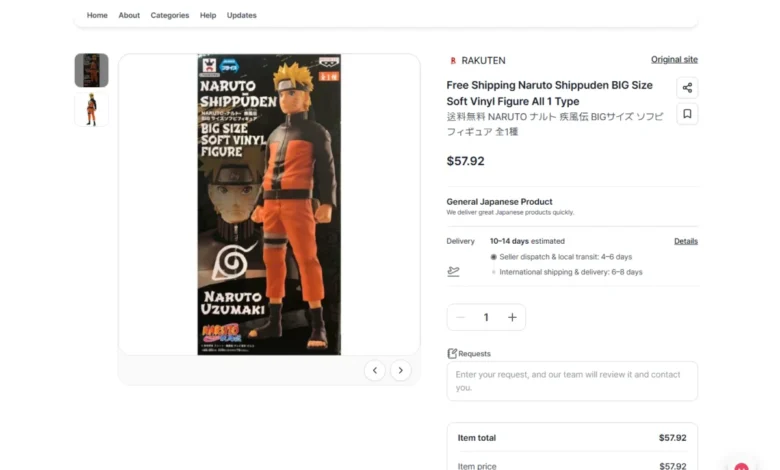
One of the most surprising metrics for the Sazo leadership team has been the Average Order Value (AOV). "I was shocked to see our AOV is more than $100," Jung noted. "I expected consumers would use Sazo for cheap purchases." Instead, the platform has become a destination for "IP maniacs"—dedicated fans of Japanese anime, character brands, and intellectual properties who are willing to spend significant sums on authentic, high-quality items that are difficult to find outside of Japan. While the AOV in Japan is slightly lower than in Korea, both markets demonstrate a high willingness to pay for the convenience of a "landed cost" model where all fees are transparent from the start.
Strategic Implications for the Future of Retail
Sazo’s rise signifies a broader shift in the e-commerce industry toward "headless" and "agentic" commerce. As consumers increasingly rely on AI tools to discover products, the traditional storefront is becoming just one of many touchpoints. By focusing on the "execution layer"—the gritty, physical reality of moving goods across borders—Sazo is insulating itself from the volatility of front-end consumer trends.
The company is also exploring a shift toward a hybrid inventory model. While it currently operates primarily as a proxy buyer, Sazo is investigating the feasibility of pre-purchasing and stocking high-demand items. This would allow the company to offer even more competitive pricing and faster delivery times, moving it closer to a traditional retailer while maintaining its AI-driven logistics edge.
As global trade continues to grapple with geopolitical tensions and regulatory changes, the ability to automate compliance and logistics will become a definitive competitive advantage. Sazo’s successful expansion into the U.S. and its robust Series A funding suggest that the market is ready for a technological solution to the age-old problems of international trade. For consumers in the U.S., Korea, and Japan, the result is a world where the border is no longer a barrier to the products they value most.