AMD’s Advancing AI 2026 Summit Ignites Debate on AI’s "Mid" State and NVIDIA’s Future Value

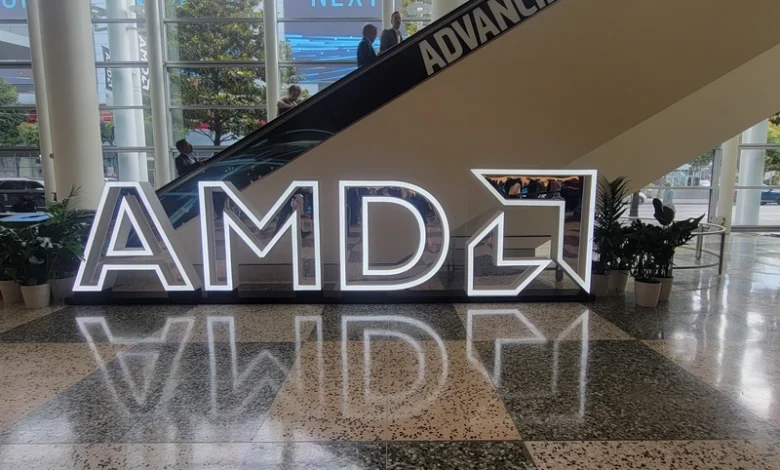
San Francisco, CA – The recent AMD Advancing AI 2026 summit, held at the Moscone Center, provided a platform for leading figures in artificial intelligence and computer architecture to discuss the evolving landscape of AI development, hardware acceleration, and the potential disruption of established market leaders. The event, notably offered free of charge to attendees, highlighted a dynamic period where the rapid adoption of AI technologies is prompting a re-evaluation of foundational infrastructure and the economic models supporting it.
The summit’s first day featured a series of discussions that challenged conventional thinking about AI’s current capabilities and future trajectory. A prominent panel, including compiler infrastructure pioneer Chris Lattner, AI researcher Ramin Hasani, and ecosystem strategist Hassan Akbari, set a critical tone. Lattner, widely recognized for his foundational work on the LLVM compiler, expressed a provocative view, labeling current AI as "mid." This statement, delivered with a disarming candor, resonated throughout the event, prompting deeper consideration of AI’s underlying mechanics versus its user-facing applications.
The backdrop for these discussions is a significant investment by companies like AMD in fostering AI development. The "Advancing AI 2026" summit itself represents a strategic effort to engage developers, researchers, and industry professionals, underscoring a broader trend of technology providers offering extensive resources and educational opportunities. This proactive approach aims to cultivate ecosystems around their hardware and software solutions, a strategy that, as observers note, often precedes a shift towards more commercially driven models. The sheer scale of an event at the Moscone Center, encompassing multiple days of technical talks, vendor showcases, and networking, signifies a substantial investment by AMD, hinting at a future where such open access might become less prevalent as companies seek returns on their AI initiatives.
Redefining Technical Ecosystems: AMD’s Hardware Focus
For many attendees, including those new to the intricacies of AI hardware, events like the AMD summit serve as crucial entry points into a complex technical domain. Unlike some previous events focused on broader cloud or software platforms, AMD’s summit placed a significant emphasis on the hardware layer, a distinction that resonated with participants seeking a deeper understanding of the computational underpinnings of AI. The presence of robotics demonstrations and in-depth technical sessions underscored this hardware-centric approach, aiming to reshape participants’ mental models of how software and hardware interact within AI development.

This technical depth was particularly evident in the discussions surrounding the interplay between silicon, frameworks, and applications. The traditional view often segregates these components, but the summit’s discourse increasingly highlighted the need for a symbiotic relationship, where advancements in one area directly influence and enable progress in others. This holistic perspective is crucial for optimizing AI performance and efficiency, moving beyond siloed development to a more integrated approach.
Chris Lattner on AI’s Maturity and the Open Ecosystem
The panel featuring Chris Lattner, Ramin Hasani, and Hassan Akbari, while reportedly lacking a singular thematic focus, yielded significant insights. Lattner, whose LLVM compiler infrastructure forms the backbone of much of today’s software, articulated a nuanced perspective on the AI landscape. He stressed the inextricable link between hardware capabilities and software development, arguing that one cannot be effectively understood or optimized without considering the other.
Lattner drew a parallel between NVIDIA’s CUDA platform and the established dominance of GCC in the compiler world. He posited that while CUDA, like GCC, benefits from a vast, entrenched ecosystem, its proprietary nature presents an opportunity for alternative architectural approaches. His work with Modular, and the development of the Mojo programming language, aims to create a portable, open-source alternative that allows hardware to express its capabilities more directly, rather than being constrained by a single vendor’s language. This strategy, he suggested, is not about directly confronting established moats but about architecting around them, fostering an environment where diverse hardware can be more effectively utilized.
His assertion that "AI is mid" was a focal point of discussion. Interpreted by many not as a dismissal of AI’s potential, but rather as a commentary on the maturity of its user-facing applications relative to the complex infrastructure supporting them. Lattner’s perspective, rooted in the foundational layers of computation, suggests that while applications like large language models are impressive products, they are currently distribution followers, heavily reliant on the underlying advancements in training, hardware, and compute. This distinction highlights the ongoing work in the granular layers of AI development that often goes unnoticed by the broader public.
Ramin Hasani’s Abstract Vision and Hassan Akbari’s Unifying Perspective
Ramin Hasani, representing Liquid AI, delved into more abstract concepts, discussing the importance of algorithmic design preceding kernel optimizations. His work on liquid foundation models and the concept of AI designing AI, beyond attention mechanisms and other transformers, offers a glimpse into more advanced AI architectures. Hasani emphasized the critical need to match the most effective models with the appropriate hardware – be it CPUs, NPUs, or GPUs – a complex optimization problem that requires a deep understanding of both algorithmic properties and hardware specifications. While the specifics of his presentation may have been highly technical, the underlying principle of intelligent resource allocation and model-hardware synergy is a critical frontier in AI development.

Hassan Akbari provided a crucial bridge, tying together the various threads of the discussion by focusing on a unified ecosystem approach. He underscored the necessity of optimizing across frameworks, hardware, and software concurrently, rather than in isolation. Akbari’s insights into the customer perspective, where reliability, cost per token, and accuracy are paramount, highlighted the practical implications of these technical optimizations. He also raised a thought-provoking question regarding wasted compute, suggesting that the ability to distill large, effective models into smaller ones necessitates a pragmatic approach to scaling and resource utilization. This focus on evaluation pipelines, benchmarks, and deployment metrics underscores the ongoing drive for measurable improvements in AI efficiency and effectiveness.
George Hotz: Disrupting NVIDIA with Open-Source Innovation
The summit also featured a compelling presentation by George Hotz, a figure renowned for his pioneering work in hacking and his venture, comma.ai. Hotz presented his open-source neural network framework, tinygrad, with a stated ambition to "commoditize the petaflop." This audacious goal, if realized, could significantly impact the valuation of leading hardware manufacturers, particularly NVIDIA, by democratizing access to high-performance computing.
Hotz’s presentation, characterized by its raw candor and technical depth, showcased tinygrad as a lean, dependency-free framework written in Python. He highlighted its core engine, comprising approximately 9,000 lines of code, as a testament to its efficiency and maintainability. The absence of dependencies, such as NumPy, is a deliberate design choice aimed at minimizing potential points of failure, bloat, and versioning conflicts, thereby fostering greater stability and development velocity.
His vision of "GPUs for the middle class" resonated with many, contrasting with the data-center-centric focus of established players. Hotz’s personal narrative, rooted in a middle-class upbringing, fuels his drive to make advanced AI development accessible beyond large corporations. He argued that while off-the-shelf solutions like TensorFlow might offer immediate speed advantages, tinygrad’s architecture is designed for sustained, long-term growth in development velocity and performance. This approach, he believes, will ultimately challenge the dominance of proprietary hardware ecosystems by offering a more flexible and cost-effective alternative for developers. The implication is clear: a successful tinygrad could indeed shave billions, if not trillions, of dollars from the market capitalization of companies heavily reliant on proprietary hardware acceleration.
The Broader Implications: Shifting Perspectives in AI Development
The AMD Advancing AI 2026 summit served as a powerful reminder of the layered complexity inherent in artificial intelligence. For developers like the author, accustomed to operating at the application and software layer, the event prompted a crucial introspection. The focus on underlying infrastructure – frameworks, hardware, and compute – challenged a purely product-centric viewpoint, highlighting the significant impact of these foundational elements on the ultimate capabilities and accessibility of AI.

The discussions also touched upon a potential concern: the risk of overwhelm. Attempting to master every facet of AI development, from hardware architecture to software deployment, could indeed lead to paralysis. However, the value of such events lies precisely in their ability to broaden perspectives, even if temporarily. The realization that the summit’s emphasis on compute and infrastructure might be distinct from the SaaS layer inhabited by many developers offers a degree of comfort, suggesting that the immediate fight for some may remain focused on application-level innovation. Nevertheless, the exposure to these deeper layers is invaluable for fostering a more comprehensive understanding of the AI ecosystem.
Workshops and Local AI Development
Beyond the keynote sessions and panel discussions, the summit offered hands-on workshops that provided practical experience with AMD’s technologies. Sessions like "Build Your OpenClaw Agent with Multi-Modal Models" and a workshop on "vibecoding with local models" introduced attendees to new tools and methodologies. The latter, utilizing the Lemonade framework and Qwen models, demonstrated the feasibility of running large language models locally on personal hardware.
The Lemonade project, a community initiative sponsored by AMD, represents a significant step towards decentralized AI development. By enabling users to run sophisticated models on their own GPUs or NPUs, it fosters greater control over data privacy and allows for rapid experimentation with new ideas and systems. This shift towards local AI processing, facilitated by frameworks like Lemonade, is poised to lower the barrier to entry for AI experimentation and development, potentially accelerating innovation by empowering a wider range of individuals and smaller organizations. The technical pyramid, from silicon to application, was again a recurring theme, reinforcing the interconnectedness of the AI development stack.
Looking Ahead: The Promise of Local AI
While the author was unable to attend the second day of the Advancing AI 2026 summit, the insights gained from day one, particularly the potential of local AI development through projects like Lemonade, have generated considerable enthusiasm. The prospect of setting up and experimenting with such frameworks from scratch on personal machines presents a compelling learning opportunity. The journey from the current state of AI, where user-facing applications often mask the complexity beneath, to a future where the underlying infrastructure is more accessible and democratized, is a dynamic and exciting one. The AMD Advancing AI 2026 summit has clearly articulated the critical role of hardware innovation and open-source collaboration in shaping this future, setting the stage for significant shifts in the AI landscape.