Announcing Amazon ECS Gateway: Streamlining Ingress Networking for Containerized Applications at Scale

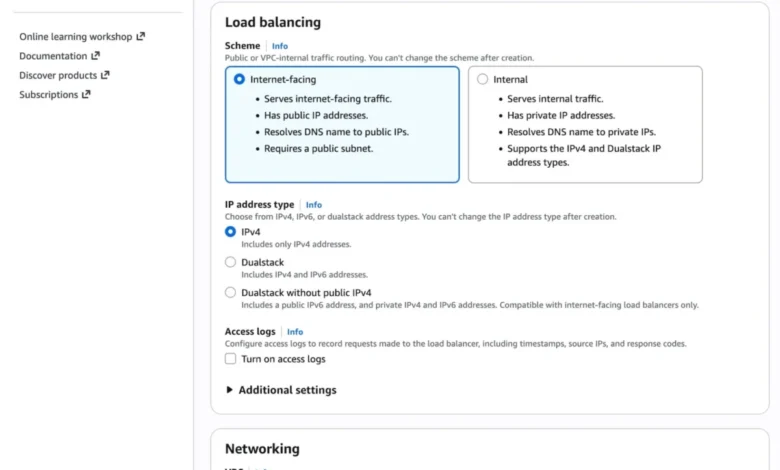
Managing containerized applications at scale on Amazon Elastic Container Service (ECS) has long been a complex balancing act for platform engineering teams. As organizations migrate from monolithic architectures to microservices, the operational burden of configuring ingress networking—the point where external traffic enters the cluster—has become a significant bottleneck. For every new service deployed, teams have traditionally been required to manually provision and orchestrate a suite of infrastructure components: Application Load Balancers (ALBs), AWS Certificate Manager (ACM) certificates, AWS WAF web access control lists (ACLs), and complex security group rules. Keeping these resources in sync as services scale, update, or shift across availability zones often results in configuration drift and increased deployment friction.
To address these challenges, Amazon Web Services (AWS) has introduced Amazon ECS Gateway, a new account-level resource designed to automate and centralize the management of ingress networking for containerized workloads. By shifting the responsibility of infrastructure lifecycle management from the developer to the ECS control plane, the new feature aims to increase deployment velocity while maintaining high security and performance standards.
The Evolution of Container Networking
The history of container orchestration on AWS has been marked by a transition from manual infrastructure provisioning toward highly abstracted, managed services. In the early stages of ECS adoption, users were responsible for virtually every aspect of the network stack. As the ecosystem matured, tools like the AWS Load Balancer Controller for Kubernetes simplified some of these processes for EKS users, but ECS customers often relied on custom automation scripts or infrastructure-as-code (IaC) templates to manage their ingress.

The introduction of ECS Gateway represents a fundamental shift in how AWS handles the "plumbing" of microservices. By acting as an account-level orchestrator, the gateway automatically provisions and manages the necessary infrastructure directly within the customer’s AWS account. This removes the need for platform teams to act as intermediaries for routine networking tasks, allowing application developers to focus on service logic rather than load balancer configurations.
Architectural Overview and Functionality
ECS Gateway utilizes a robust, host-based routing architecture powered by ALBs. One of its primary efficiency drivers is the ability to share a single Application Load Balancer across up to 25 different services. This density-focused approach significantly optimizes infrastructure costs, as organizations no longer need to provision a dedicated ALB for every minor microservice.
The lifecycle management is entirely automated. When a service connects to the gateway, the system evaluates the available capacity of existing load balancers. If a new service requires a connection, ECS handles the provisioning of the necessary listeners, target groups, and security group associations. If capacity thresholds are met, the system automatically triggers the creation of additional ALBs, and conversely, it decommissioned unused resources to ensure cost-efficiency. Every service is provided with a unique DNS hostname immediately upon provisioning, providing a stable, ready-to-use endpoint for internal and external traffic.
Implementation and Deployment Mechanics
For platform engineering teams, the implementation process begins in the ECS console or via the AWS Command Line Interface (AWS CLI). The initial setup involves defining a gateway and assigning an "infrastructure role." This IAM role provides the gateway with the necessary permissions to manage ALBs, certificates, and WAF rules on behalf of the organization.

The deployment of a gateway follows a clear hierarchical structure:
- Creation: A unique gateway name is established, and a configuration object is defined, specifying the networking scheme (public or VPC-internal) and security parameters.
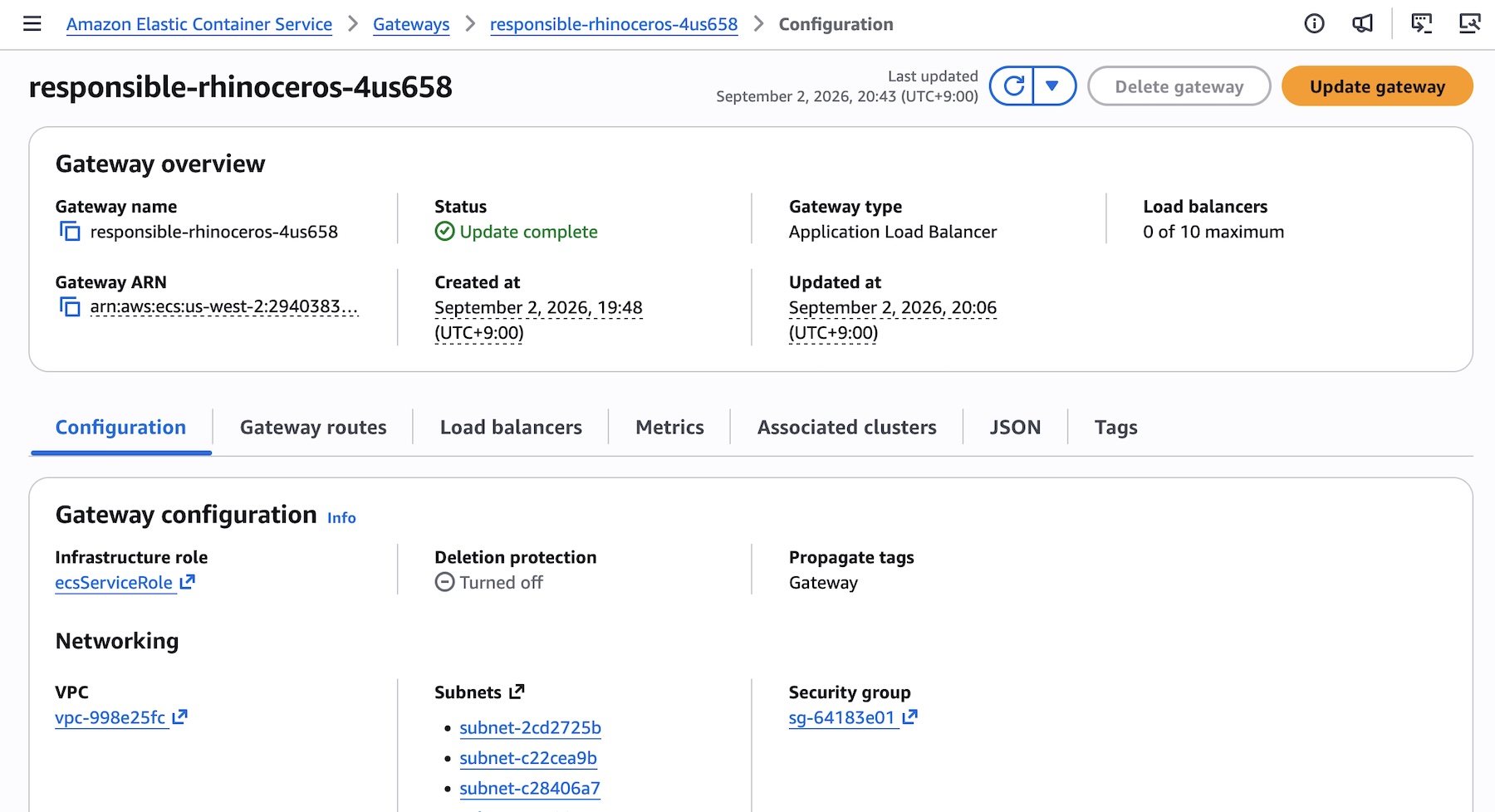
- Association: Once the gateway exists, it is associated with one or more ECS clusters. A single gateway can be linked to up to 10,000 clusters, while a single cluster can support up to five distinct gateway associations, allowing for complex routing configurations (e.g., separating public-facing traffic from internal service-to-service communication).
- Connection: Application teams integrate the gateway into their service definitions using a "gateway connector." This allows for an incremental migration strategy; existing services with legacy load balancer configurations can be updated to use the gateway without immediate disruption, enabling a "canary" style validation period.
Technical Implications for Platform Teams
The introduction of ECS Gateway creates a distinct separation of concerns. Platform teams are responsible for the high-level configuration—defining the gateway’s scope, regional availability, and security posture. Application teams, meanwhile, simply define their service requirements.
This model effectively mitigates the risk of configuration drift. Because the lifecycle of the infrastructure is tied to the lifecycle of the service within the ECS control plane, orphaned load balancers and misconfigured security groups become a concern of the past. Furthermore, the use of IAM policies allows platform teams to exert fine-grained control, restricting which teams or services can connect to specific gateways, thereby enforcing organizational compliance policies at the networking layer.
Performance and Scaling Considerations
In a production environment, performance and availability are paramount. ECS Gateway is built to handle the complexities of multi-AZ deployments. When a service is connected to a gateway, the system automatically ensures that the underlying ALB covers all Availability Zones (AZs) utilized by the service’s subnets.
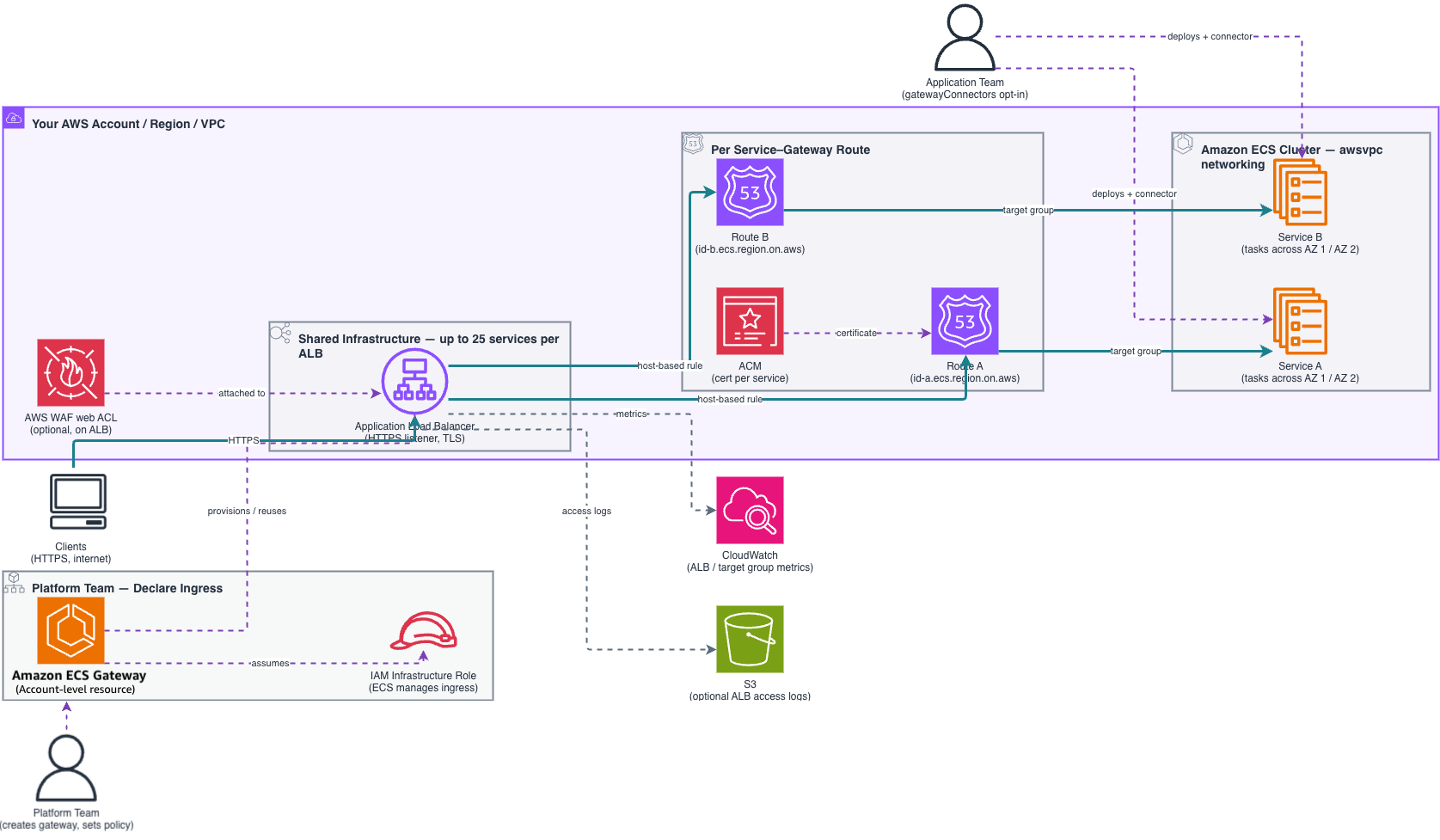
The system also provides built-in protection mechanisms. By integrating with AWS WAF, organizations can apply web ACLs at the gateway level, ensuring that all services routed through the gateway benefit from consistent security policies. Should a service need to scale, the underlying infrastructure scales with it; as traffic patterns fluctuate, the gateway manages the registration and deregistration of task IPs within the target groups, ensuring that traffic distribution remains optimal.
Analysis: Bridging the "Day 2" Operations Gap
Industry analysts have noted that the "Day 2" operational overhead of managing cloud infrastructure is a primary inhibitor to scaling container deployments. By automating the ingress layer, AWS is addressing the most frequent point of failure in microservices architectures: the networking handshake between the internet and the container.
The economic implications are also noteworthy. By enabling higher ALB density, AWS is providing a mechanism for customers to reduce their monthly spend on idle load balancer hours. Furthermore, the reduction in manual engineering hours spent configuring and debugging ingress rules can lead to a quantifiable increase in developer productivity. Estimates suggest that automating this layer of the stack could reduce the time-to-market for new microservices by several hours per deployment, a significant gain for high-velocity teams.
Security and Governance
Security is handled through a combination of identity-based access and resource-level isolation. Because the gateway creates infrastructure directly within the customer’s account, all resources remain subject to the organization’s existing compliance and auditing tools. Changes made by the gateway are logged in AWS CloudTrail, providing a clear audit trail of who authorized the infrastructure changes and when they occurred.
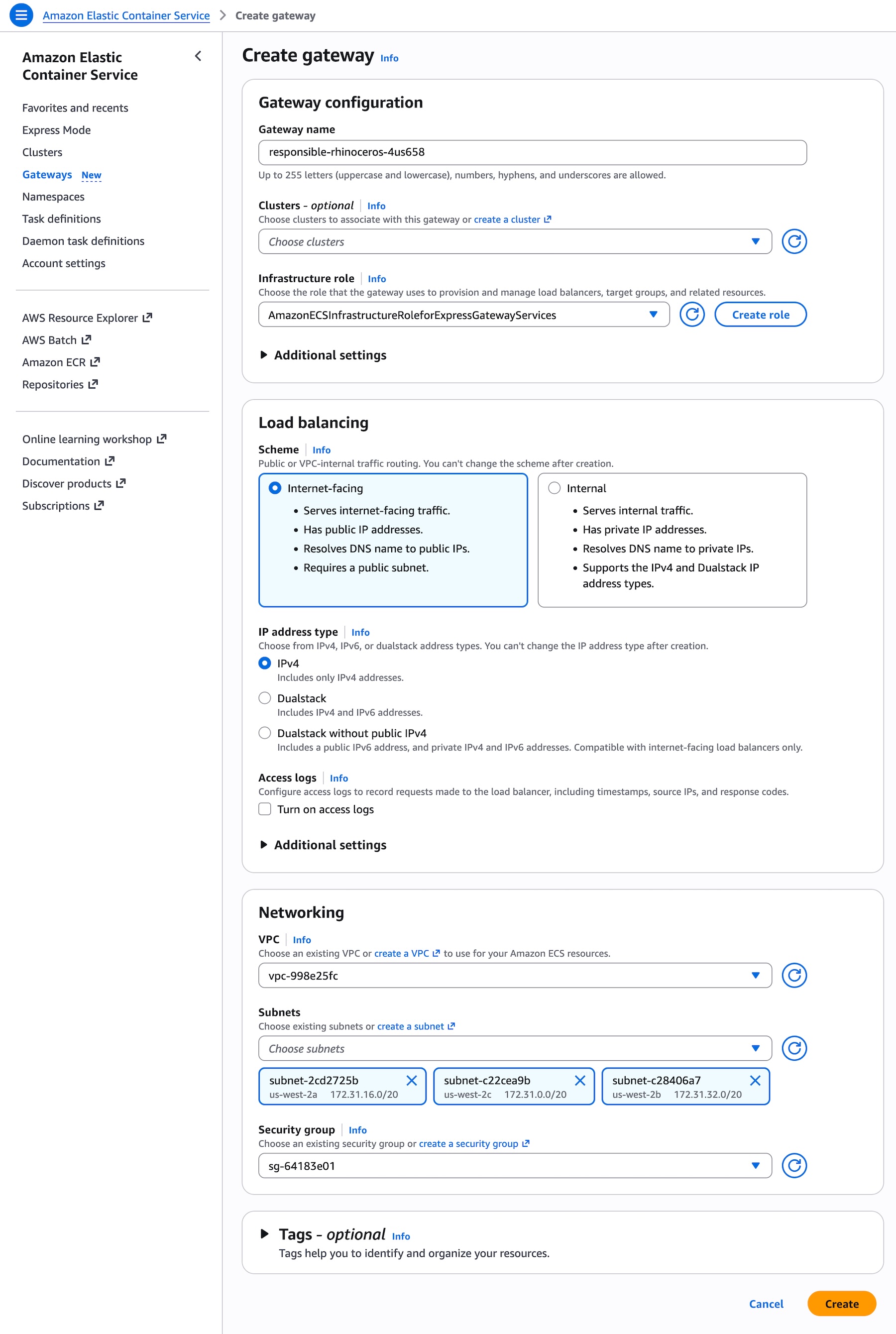
Furthermore, the "infrastructure role" provides a secure, least-privilege approach to resource management. The gateway only has the permissions explicitly granted by the platform team, preventing unauthorized modifications to the broader VPC environment.
Future Outlook and Integration
The release of ECS Gateway is part of a broader trend within AWS to make cloud infrastructure "invisible." With the recent push toward AI-assisted development, the compatibility of ECS Gateway with tools like the AWS MCP Server and various AI-coding plugins is a significant step forward. This allows developers to interact with their network infrastructure through natural language queries or automated scripts, further abstracting the complexity of the underlying APIs.
As organizations continue to embrace distributed systems, the requirement for automated, policy-driven networking will only grow. The ECS Gateway provides a robust, scalable, and secure framework for managing the ingress of traffic at a scale that was previously difficult to achieve without significant custom engineering investment.
Conclusion and Availability
Amazon ECS Gateway is available immediately in all commercial AWS Regions where Amazon ECS is supported. There is no additional premium for using the gateway; customers are only responsible for the costs associated with the underlying AWS resources (such as ALBs, CloudWatch logs, and data transfer fees) that are provisioned by the service.
For organizations already operating at scale on ECS, the transition to this new model offers a path toward greater operational efficiency and reduced infrastructure complexity. For those just beginning their container journey, it provides a "best practice" template for networking that can grow alongside their requirements. Detailed documentation and migration guides are currently available on the official AWS website, providing a clear roadmap for teams looking to integrate this functionality into their existing CI/CD pipelines.