Google and Samsung Redefine the Android Ecosystem with Galaxy Z Fold8 and Wear OS 7 Integration for Developers

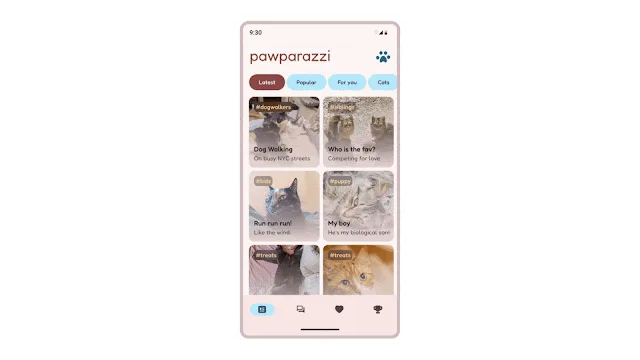
At the July 2026 Galaxy Unpacked event, Samsung and Google unveiled a sophisticated suite of hardware and software integrations that signal a definitive shift in the mobile computing landscape. The centerpiece of the announcement, the Galaxy Z Fold8, introduces a landscape-first natural orientation and an ultra-wide aspect ratio, forcing a fundamental rethink of how Android applications are architected. Accompanied by the debut of Wear OS 7 and the integration of the Gemini Nano 4 on-device AI model, this latest hardware cycle provides developers with a more expansive—yet more complex—canvas for digital experiences. As the ecosystem matures, the emphasis has moved beyond mere compatibility toward proactive, adaptive design that anticipates a user’s transition between various device postures and screen states.
The Shift to Landscape-First Architecture and Ultra-Wide Displays
The release of the Galaxy Z Fold8 marks a significant departure from previous foldable iterations. While early foldable devices were primarily designed as portrait-oriented smartphones that unfolded into larger squares, the Z Fold8 adopts a landscape-first natural orientation. This hardware change reflects shifting user behaviors, where foldable devices are increasingly used for productivity, side-by-side multitasking, and immersive media consumption.
For the developer community, this shift necessitates the abandonment of hardcoded layout rules. Applications that assume a fixed portrait relationship between the UI and the device hinge often fail when deployed on ultra-wide displays. To address this, Google has released dedicated guidance for building for landscape foldables and the emerging category of trifold devices. The core pillars of this new responsive UI focus on fluid resizing and the use of the Jetpack WindowManager library to track hinge angles and folding states in real-time.
The technical challenge lies in the variety of aspect ratios now present in the market. A single application must now look native on a narrow cover screen, a traditional 16:9 tablet-style inner display, and the new ultra-wide 21:9-style configurations of the Z Fold8. By utilizing adaptive layouts—such as Pane Resizing and List-Detail views—developers can ensure that content dynamically redistributes rather than simply stretching to fill the screen.
Chronology of the Foldable Evolution: 2019 to 2026
To understand the significance of the 2026 Galaxy Unpacked event, one must look at the timeline of foldable development. The journey began in 2019 with the launch of the original Galaxy Fold, which was met with both curiosity and skepticism regarding hardware durability and software utility.
.png)
By 2021, Google responded to the hardware trend by launching Android 12L, a feature drop specifically designed for large screens and foldables. This introduced the taskbar and improved split-screen multitasking. In 2023 and 2024, the entry of more competitors, including Google’s own Pixel Fold line, pushed the industry toward thinner hinges and better "gapless" designs.
The 2026 announcement represents the "Third Era" of foldables. If the first era was about proof-of-concept and the second was about refinement, the third era is about specialization. The introduction of landscape-first natural orientations and the official developer support for trifolds suggest that the industry is preparing for devices that can replace traditional laptops and tablets entirely.
Seamless Camera Capture and Media Pipeline Optimization
One of the most persistent technical hurdles for foldable developers has been the camera preview. On a device like the Galaxy Z Fold8, moving from a compact outer display to an expanded inner display introduces distinct layout aspect ratios while the physical rotation of the device remains unchanged. If an application assumes a fixed portrait relationship between the camera sensor and the device layout, the preview will appear sideways, stretched, or cropped during a folding transition.
To mitigate these "hardware quirks," Google is urging developers to migrate their media pipelines to CameraX. The library’s PreviewView component is designed to automatically handle sensor orientation, device rotation, and scaling behind the scenes. This ensures a stable preview regardless of whether the user is holding the device in a "tent" mode, "laptop" mode, or fully unfolded.
For developers maintaining legacy Camera2 codebases, the introduction of the CameraViewfinder library provides a bridge. This library applies complex aspect ratio and rotation transformations automatically, allowing developers to support the Z Fold8’s unique form factor without a total architectural overhaul of their camera logic.
Wear OS 7 and the Rise of Glanceable Interactions
The expansion of the Android ecosystem at Galaxy Unpacked extended to the wrist with the introduction of Wear OS 7. This update introduces a new paradigm for "glanceable" interactions through the launch of Wear Widgets. These widgets provide users with instant access to essential updates—such as fitness metrics, calendar alerts, or smart home controls—without requiring them to open a full application.

Built using Jetpack Glance and RemoteCompose, these widgets allow developers to create highly expressive, data-driven layouts that are energy-efficient. Crucially, Wear OS 7 now allows these third-party widgets to populate multi-widget tiles, a surface area that was previously reserved for first-party Google or Samsung services. This democratization of the watch face provides developers with a high-traffic entry point for user engagement.
Industry analysts suggest that the move toward more robust widgets on Wear OS is a response to the "notification fatigue" experienced by many smartwatch users. By offering glanceable data that requires zero clicks, developers can increase the utility of their apps while respecting the user’s attention.
On-Device Intelligence with Gemini Nano 4
Artificial intelligence was a dominant theme of the 2026 Unpacked event. Samsung’s new foldable devices are among the first to ship with Gemini Nano 4, Google’s latest on-device large language model (LLM). Unlike cloud-based AI, Nano 4 processes data locally, ensuring lower latency and enhanced user privacy—a critical factor for enterprise users of the Z Fold8.
Gemini Nano 4 introduces support for over 140 languages and significantly improved multimodal understanding, meaning the AI can "see" and interpret images and text simultaneously. Developers can tap into this power via ML Kit’s Prompt API, which now includes "Structured Output" and "Thinking Mode."
- Structured Output: This allows the AI to return data in specific formats like JSON, making it easier for developers to integrate AI-generated content directly into their app’s UI.
- Thinking Mode: This feature enables the model to perform chain-of-thought processing before providing a final answer, leading to more accurate and nuanced responses for complex queries.
The integration of Gemini Nano 4 allows for features such as real-time document summarization in productivity apps, automated translation in messaging platforms, and intelligent object recognition in photo editing suites—all performed without an internet connection.
Market Implications and the Competitive Landscape
The collaborative efforts of Google and Samsung at Galaxy Unpacked 2026 carry significant weight in the broader smartphone market. As of early 2026, foldable devices have moved from a niche luxury segment to a mainstream category, with global shipments projected to grow by 25% year-over-year.

By providing developers with better tooling (such as the updated Android Studio simulators for trifolds) and clearer guidance, Google is attempting to solve the "app gap" that has historically plagued non-traditional form factors. When apps work seamlessly across cover screens, main screens, and watches, the value proposition of the Samsung ecosystem strengthens against competitors like Apple, which has yet to release a foldable iPhone.
Furthermore, the emphasis on on-device AI positions Android as the leading platform for privacy-conscious innovation. As regulators in the EU and North America increase scrutiny on cloud data processing, the ability to offer "Gemini-powered" features that never leave the device is a significant competitive advantage.
Official Responses and Developer Sentiment
Initial reactions from the developer community have been cautiously optimistic. Miguel Montemayor, a Developer Relations Engineer at Google, emphasized that the goal is to make "adaptive" the default state of Android development. "Building for foldables used to be an afterthought," Montemayor noted during a technical breakout session. "With the Z Fold8 and Wear OS 7, we are providing the tools so that adaptive design becomes a proactive part of the development lifecycle."
Samsung executives echoed this sentiment, highlighting that the hardware is only as good as the software ecosystem supporting it. The partnership between the two companies ensures that as Samsung pushes the boundaries of hardware—such as with the ultra-wide display—Google provides the software frameworks necessary to prevent fragmentation.
Conclusion: The Road Ahead for Adaptive Apps
The 2026 Galaxy Unpacked event serves as a call to action for the global developer community. The tools and frameworks, from Jetpack Glance for Wear OS to CameraX for foldables, are now mature enough to support premium, flawless experiences across any screen size.
As the industry moves toward trifolds and even more diverse wearable form factors, the principles of adaptive design—fluidity, continuity, and responsiveness—will become the benchmarks of app quality. Developers who begin optimizing today for the landscape-first reality of the Galaxy Z Fold8 and the glanceable world of Wear OS 7 will be best positioned to lead the next generation of mobile computing. The future is no longer a single screen; it is a fluid ecosystem of devices that adapt to the user’s needs in real-time.