Sazo Expands Agentic AI Cross-Border Commerce Platform to United States Following Series A Funding and Triple-Digit Growth

Sazo, an agentic artificial intelligence-powered cross-border commerce company, has officially entered the United States market, signaling a significant expansion of its mission to eliminate the friction inherent in international shopping. According to Sazo’s Chief Financial Officer, Gavin Jung, the company’s objective is to enable consumers to purchase goods from foreign markets with the same ease and transparency they experience when shopping at domestic retailers. Headquartered in Nagoya, Japan, with additional offices in Tokyo and Seoul, Sazo is positioning itself as the critical infrastructure layer for the next generation of AI-driven global trade.
The move into the U.S. market, which commenced in June, allows American consumers to access and purchase products directly from Japan through the Sazo platform. This expansion follows a rapid series of milestones for the startup, which began its operations by facilitating cross-border commerce from South Korea to Japan in early 2024, followed by the addition of a Japan-to-Korea corridor in June 2025. To support its growing North American footprint, Sazo has announced plans to establish a physical presence in California within the next year, further solidifying its role as a bridge between East Asian supply and Western demand.
The Evolution of Cross-Border Trade: From Duty-Free Tricks to Seamless Logistics
The entry of Sazo into the U.S. comes at a time of significant regulatory shifts in international trade. For years, the cross-border e-commerce sector relied heavily on "de minimis" duty exemptions—thresholds under which small packages could enter a country without being subject to traditional tariffs or rigorous customs inspections. However, as trade policies become more restrictive and the U.S. moves to end or significantly tighten these exemptions, the old model of cross-border commerce is under threat.
Gavin Jung noted that the current macroeconomic backdrop is somewhat counterintuitive. While trade barriers are rising, consumer demand for international products continues to climb. Sazo’s strategy is built on the premise that the competitive advantage in e-commerce has shifted. In the past, companies competed by finding legal loopholes to keep prices low. Today, the winner is the company that can absorb the complexity of customs, duties, and international logistics most effectively for the end-user. Sazo’s model is specifically designed to thrive in this high-friction environment by using AI to handle the administrative and logistical burdens that typically deter consumers from shopping abroad.
Agentic AI: The Execution Layer of Global Commerce
At the core of Sazo’s value proposition is its "agentic" AI technology. Unlike traditional e-commerce platforms that act as simple marketplaces, Sazo’s AI functions as an active participant in the transaction. The technology handles the most complex parts of the cross-border journey: estimating duties and shipping costs upfront, translating product listings into the consumer’s native language, and consolidating items from multiple sellers into a single shipment.
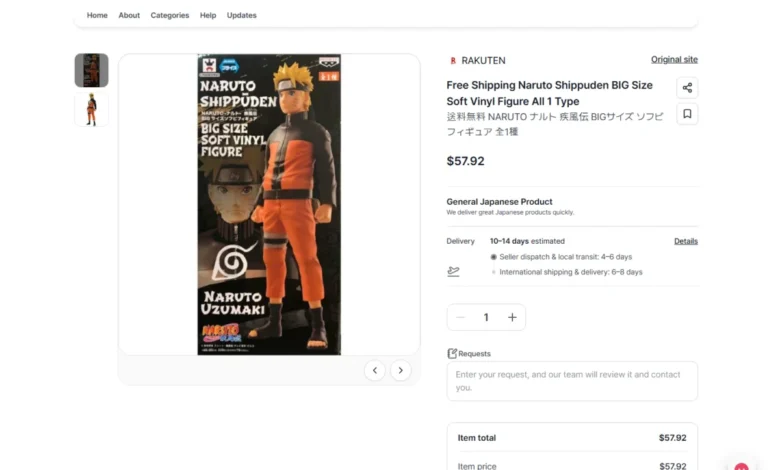
When a consumer in the U.S. uses Sazo to browse Japanese products, they are presented with a final price that includes all tariffs, duties, and international shipping fees. The customer pays once in their local currency, eliminating the "foreign exchange surprises" or secondary customs invoices that often plague international orders. Sazo acts as a proxy buyer, purchasing the items on behalf of the customer, receiving them at a local hub, and repackaging them to optimize shipping efficiency.
Looking toward the future of the technology, Jung emphasized that Sazo is building its stack to be the "back end" for other AI agents. As autonomous AI agents—digital assistants that can search, recommend, and buy products on behalf of humans—become more prevalent, they will require an execution layer to handle physical logistics. While an AI model might be excellent at finding a specific limited-edition item in a Tokyo shop, it cannot physically clear customs or manage local fulfillment. Sazo intends to provide the API (Application Programming Interface) that allows these agents to complete complex international transactions seamlessly.
Funding and Financial Trajectory
Sazo’s rapid expansion is backed by a substantial capital infusion. The company recently closed a $10.3 million Series A funding round, led by Japan Post Capital and Suzuyo & Co. These investors also led Sazo’s pre-Series A round, demonstrating continued confidence in the company’s scalability and technological moat.
The investment pool includes some of the most prominent names in Asian finance and technology. Naver, South Korea’s leading internet search and e-commerce giant, has taken a stake in the company, alongside major Japanese financial institutions Sumitomo Mitsui Banking Corporation (SMBC) and Mizuho Bank. Other participants in the round include the Japanese venture capital firm Partners Fund and D4V (Design for Ventures).
According to CEO Maro Gil, who founded the company in 2023, the investment will be used to scale the workforce across development and service operations. The company’s growth metrics provide a compelling case for the investment; Gil reported that monthly gross merchandise value (GMV) has increased roughly sevenfold over the past six months. Currently, the platform is maintaining a 25% month-over-month growth rate, a pace that Sazo hopes to maintain as it penetrates the U.S. market.
The Origin Story: From Hobbyist Frustration to AI Innovation
The concept for Sazo was born out of personal necessity. Maro Gil, a South Korean student studying AI in Nagoya, Japan, found it unexpectedly difficult to purchase products from his home country related to his personal hobbies. Despite the geographical proximity and strong cultural ties between South Korea and Japan, the logistical and linguistic barriers made direct purchasing a chore.
Jung described the early days of Sazo as humble. Nagoya, an industrial center often overshadowed by the cultural and commercial gravity of Tokyo, provided the quiet environment necessary for Gil to build his first prototype. While Jung admitted that the initial version of the product was "inefficient" in its engineering and architecture, it proved the viability of using AI to bridge the gap between different e-commerce ecosystems. What began as a tool for hobbyists to buy niche goods has evolved into a sophisticated platform capable of handling high-volume commercial trade.
Divergent Consumer Trends in Korea and Japan
Through its operations in East Asia, Sazo has gained unique insights into the differing behaviors of international shoppers. While the core technology remains the same, the motivations for cross-border shopping vary significantly by demographic.
In Japan, the typical Sazo customer is younger and predominantly male. These consumers are primarily driven by the "Hallyu" or Korean Wave, seeking out products related to K-pop idols or specialized Korean food items that are not readily available in local Japanese stores.
In contrast, the South Korean market presents a different profile. Contrary to the expectation that teenagers or twenty-somethings would be the primary users, Sazo found that more than half of its Korean customers are women in their 30s and 40s. These shoppers are often "IP maniacs"—dedicated fans of Japanese intellectual property, ranging from anime and manga to character-based merchandise and high-end collectibles.
One of the most surprising metrics for the Sazo leadership team has been the Average Order Value (AOV). Despite the availability of cheap international shipping options for low-cost goods, Sazo’s AOV exceeds $100. This suggests that consumers are not using the platform for casual, low-stakes purchases, but rather for high-value items related to their passions. Jung noted that when it comes to hobbies or items of significant personal value, consumers are willing to spend more, provided the purchasing process is reliable and transparent.
Broader Implications for Global E-commerce
The rise of Sazo reflects a broader trend in the e-commerce industry: the "democratization" of global supply chains. Historically, the ability to navigate the complexities of international trade was reserved for large corporations with dedicated logistics departments. By leveraging AI to automate the Harmonized System (HS) code classification and duty prediction, Sazo is effectively providing individual consumers and small businesses with the same capabilities as multinational importers.
Furthermore, Sazo’s move to stock and sell products proactively—moving from a pure proxy-buying model to a traditional inventory-holding model—indicates a desire to compete on price as well as convenience. By identifying high-demand items through its AI-driven data, Sazo can purchase stock in bulk, reducing the unit cost for consumers and further accelerating its growth.
As Sazo establishes its presence in California and scales its U.S. operations, it faces the challenge of competing in a market already serviced by giants like Amazon and emerging players like Temu and Shein. However, Sazo’s focus on the "agentic" execution layer and its specialization in the highly curated markets of Japan and Korea provide a distinct niche. By positioning itself not just as a store, but as the underlying technology that enables AI agents to shop across borders, Sazo is betting that the future of commerce will be defined by autonomous execution rather than manual browsing.
The company’s trajectory from a student’s prototype in Nagoya to a multi-national, venture-backed platform highlights the transformative power of AI in traditional sectors like logistics. As trade barriers continue to evolve, the ability to simplify the complex will likely remain the most valuable currency in the global marketplace.