Zalando Strategic Investment in Sereact Signals Major Shift Toward AI-Driven Robotics in E-commerce Returns Management

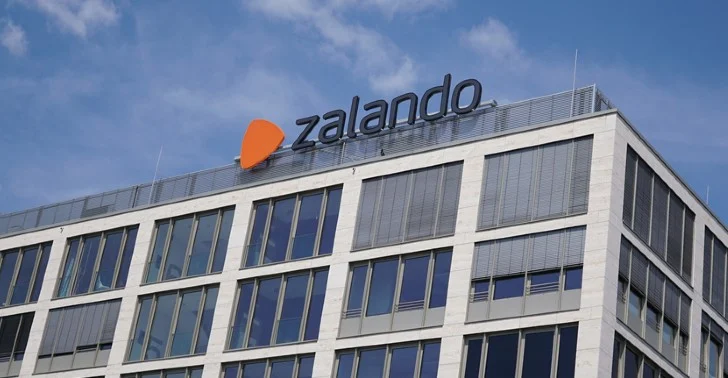
The European e-commerce landscape is currently witnessing a significant technological pivot as Zalando, the continent’s leading online fashion and lifestyle platform, announces a strategic investment in the Stuttgart-based robotics innovator Sereact. This partnership is designed to tackle one of the most persistent and costly challenges in the digital retail sector: the automation of complex logistics, with a specific focus on the processing of returned merchandise. As Zalando prepares for further geographical expansion, including a highly anticipated launch in Bulgaria, the integration of Sereact’s advanced artificial intelligence and robotic picking technologies represents a critical step in maintaining operational efficiency and scaling its fulfillment capabilities.
The Economic Context of the Zalando-Sereact Partnership
Zalando’s decision to back Sereact comes at a time when the e-commerce industry is grappling with thinning margins and the logistical nightmare of "reverse logistics." In the fashion sector, return rates can frequently fluctuate between 30 and 50 percent, creating a massive secondary supply chain that requires intense manual labor. Traditionally, when a customer returns a garment, it must be manually opened, inspected for signs of wear or damage, re-folded, re-packaged, and re-entered into the inventory system. This process is not only time-consuming but also prone to human error and high operational costs.
By investing in Sereact, Zalando is positioning itself at the forefront of the "Physical AI" movement. Unlike traditional industrial robots that operate on rigid, pre-programmed scripts, Sereact’s solutions utilize computer vision and large language models (LLMs) to allow robots to "see," "understand," and "manipulate" objects they have never encountered before. This capability is essential in the fashion industry, where products vary wildly in shape, texture, and weight—from silk blouses and leather boots to boxed accessories.
Sereact and the Evolution of the Cortex Platform
Founded in Stuttgart, Germany, Sereact has rapidly emerged as a leader in the warehouse automation space. The company’s flagship product, the Cortex platform, serves as the "brain" for robotic systems. Cortex is an AI-driven operating system that enables robots to perform picking and packing tasks with human-like dexterity. The platform is unique because it learns from real-world operational data; every time a robot interacts with a product, the data is fed back into the system, allowing the entire fleet of robots to become more efficient over time.
The financial trajectory of Sereact reflects the high market demand for such technology. Prior to this latest development, the company had already successfully navigated multiple funding rounds. With the inclusion of Zalando’s capital, Sereact’s Series B funding round has expanded to a total of 116 million dollars (approximately 101.6 million euros). To date, the company has raised over 145 million dollars (126.8 million euros) in total venture capital. This influx of cash is earmarked for the scaling of the Cortex platform and the acceleration of Sereact’s expansion into new international markets, particularly the United States and broader Europe.
Addressing the "Returns Crisis" Through Automation
The technical difficulty of automating returns cannot be overstated. While robots have been used for decades to move heavy pallets or pick uniform boxes, the "soft goods" of the fashion world present a unique challenge. Clothing is non-rigid; it sags, folds, and shifts when handled. Sereact’s robotics solutions utilize advanced grippers and AI-powered tactile sensing to recognize these objects and grasp them precisely without causing damage.
Zalando’s interest in this specific application is purely strategic. As the company expands its footprint—most notably into the Bulgarian market this summer—the volume of shipments will inevitably rise, and with them, the volume of returns. A streamlined, automated returns process allows Zalando to return items to the "available for sale" inventory much faster than manual processing. This speed is vital in the fast-fashion world, where the shelf life of a trend is short and inventory depreciation happens daily.
Chronology of Zalando’s Logistics Transformation
To understand the significance of this investment, one must look at Zalando’s logistics timeline over the past several years:
- 2011–2015: Zalando builds its first proprietary fulfillment centers in Germany, focusing on manual labor supplemented by basic conveyor belts.
- 2017–2020: The company begins experimenting with "cobots" (collaborative robots) such as the Toru robot from Magazino, which assisted workers in picking shoe boxes.
- 2021–2022: Zalando launches "ZEOS" (Zalando E-commerce Operating System), offering its logistics infrastructure as a service to third-party brands. This move increased the complexity of the items handled in their warehouses.
- 2023: Zalando identifies the "returns bottleneck" as a primary area for AI intervention.
- Present (2024): The strategic investment in Sereact is finalized, signaling a shift from simple box-moving automation to sophisticated, AI-led object manipulation.
Official Responses and Industry Reaction
The partnership has been met with enthusiasm from both companies. In a statement shared via LinkedIn, Sereact emphasized the validation that comes with having a partner like Zalando. "Zalando is one of Europe’s leading e-commerce platforms, built on operational excellence at real scale. Their decision to back Sereact is a strong signal of confidence in physical AI for the warehouse—and in the technology we are building together in Europe," the company noted. Sereact further elaborated that the partnership would allow them to "scale Cortex and expand into new markets—working alongside a partner who understands fulfillment from the inside."
Industry analysts view this as a defensive and offensive move. Defensively, Zalando must keep pace with Amazon, which has invested billions into its "Amazon Robotics" division (formerly Kiva Systems) and recently debuted "Sparrow," a robotic arm capable of handling millions of individual items. Offensively, Zalando’s investment in Sereact allows them to develop bespoke solutions tailored specifically to the nuances of fashion logistics, which differ significantly from the general merchandise handled by other e-commerce giants.
Broader Implications for the Labor Market and Sustainability
The move toward high-level automation also touches upon two critical socio-economic factors: labor shortages and environmental sustainability.
The logistics sector across Europe, particularly in Germany and the Netherlands, has faced a chronic shortage of warehouse workers. By automating the most repetitive and physically demanding tasks—such as sorting through thousands of return packages—Zalando can mitigate the risks associated with labor scarcity. This does not necessarily mean a reduction in total headcount; rather, it allows human workers to shift toward supervisory roles or complex quality control tasks that still require human judgment.
From a sustainability perspective, efficient returns processing is a cornerstone of the circular economy. The faster an item is processed and restocked, the less likely it is to end up in a liquidation channel or, in extreme cases, a landfill. By using Sereact’s AI to precisely identify the condition of returned goods, Zalando can better manage its inventory lifecycle, reducing waste and optimizing the use of existing resources.
Analysis: The Future of Autonomous Fulfillment
The investment in Sereact is likely only the beginning of a broader trend where e-commerce platforms become de facto technology companies. Zalando is no longer just a storefront; it is a logistics and data powerhouse. The "Cortex" platform’s ability to learn from operational data means that the more Zalando uses these robots, the more valuable the underlying software becomes.
As Zalando moves into Bulgaria and continues to solidify its presence in Eastern Europe, the density of its fulfillment network will increase. The integration of Sereact’s technology will likely be piloted in a few key "smart warehouses" before being rolled out across Zalando’s dozen-plus fulfillment centers.
The success of this partnership will be measured by two key metrics: the "click-to-re-shelf" time for returned items and the overall reduction in processing costs per unit. If Sereact can deliver on its promise of high-precision, AI-driven picking, it could set a new standard for the entire global e-commerce industry, proving that even the most "human" tasks in a warehouse—like folding a shirt or inspecting a dress—can eventually be mastered by a machine.
In conclusion, the Zalando-Sereact investment is a landmark moment for European "Deep Tech." It represents a home-grown solution to a global problem, combining German engineering with the massive scale of a European retail titan. As the technology matures, the "Cortex" platform may well become the industry standard for autonomous logistics, transforming the warehouse from a place of manual toil into a sophisticated hub of artificial intelligence and robotic precision.