Indonesia Prioritizes Satellite Internet to Maintain Connectivity in Remote Islands Amidst Submarine Cable Restoration Efforts

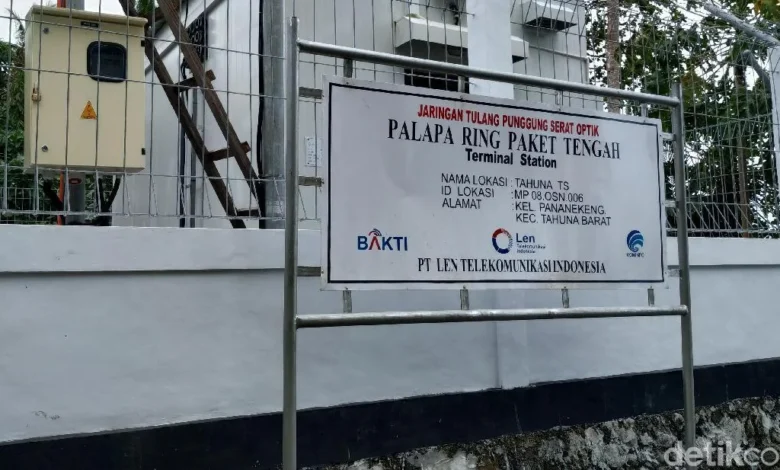
Jakarta, Indonesia – The Telecommunication and Information Accessibility Agency (Bakti) under the Ministry of Communication and Digital (Komdigi) is executing a critical strategy to maintain vital telecommunication services across the remote Sangihe, Talaud, and Sitaro archipelagic regions of North Sulawesi. This proactive measure involves significantly optimizing the capacity of the Satria-1 satellite-based internet network as an interim solution while the damaged Palapa Ring Tengah submarine fiber optic cable undergoes extensive restoration. The disruption, attributed to recent tectonic activity, underscores the inherent challenges of maintaining robust digital infrastructure in Indonesia’s seismically active and geographically dispersed archipelago.
The urgent intervention by Bakti Komdigi comes after anomalies were detected in a section of the fiber optic cable within the Melonguane-Morotai segment. This segment is a crucial artery of the Palapa Ring Tengah, a national backbone infrastructure designed to bridge the digital divide across Indonesia. Government officials have emphasized that the ongoing restoration is not merely a repair but a preventative measure aimed at bolstering network reliability and averting more widespread service disruptions. During this complex repair phase, the Satria-1 satellite network has been pressed into service as the primary conduit for internet access for thousands of residents across these island communities.
Darien Aldiano, the Acting Director of Infrastructure at Bakti Komdigi, highlighted the comprehensive mitigation strategies deployed to ensure continuous telecommunication access for affected communities. "We extend our sincere apologies for the inconvenience experienced by the affected communities in the Sangihe, Talaud, and Sitaro Islands. We assure the public that our entire team is working tirelessly on the ground to accelerate the restoration of this vital infrastructure, committed to achieving high-quality connectivity across all corners of Indonesia," Aldiano stated, as quoted on Saturday, July 25, 2026. This sentiment reflects the government’s broader commitment to digital inclusion, recognizing that internet access is no longer a luxury but a fundamental necessity for socio-economic development.
Strategic Enhancement of Satellite Capacity
To ensure the interim satellite solution is robust enough to meet demand, Bakti has proactively increased bandwidth capacity across 286 existing Internet Access points that rely on the Satria-1 satellite in the affected areas. These points are strategically distributed: 106 in the Sangihe Islands Regency, 132 in the Talaud Islands Regency, and 48 in the Sitaro Islands Regency. The internet capacity at these critical locations has been substantially upgraded, now ranging from 50 Mbps to 150 Mbps, tailored to the specific needs and usage patterns of each site. This significant boost aims to replicate, as closely as possible, the experience of fiber optic connectivity, albeit with the inherent latency differences of satellite communication.
These Bakti Internet Access points are strategically located within essential public facilities, including government offices, schools, community health centers (Puskesmas), hospitals, and defense and security installations. By concentrating enhanced connectivity in these hubs, the government ensures that critical services can continue to operate and that residents have accessible locations to maintain communication, access information, and conduct digital transactions during the restoration period. This approach mitigates the immediate impact on education, healthcare, and local governance, which are heavily reliant on stable internet connectivity in modern times. Furthermore, technical teams are conducting continuous, periodic monitoring of user experience (UX) to ensure that essential services like web browsing and digital communication remain optimal, making real-time adjustments as necessary to maintain service quality.
The Palapa Ring Project: A National Digital Backbone
To fully appreciate the gravity of the current disruption, it is essential to understand the significance of the Palapa Ring project. Initiated as a monumental undertaking by the Indonesian government, the Palapa Ring is a national fiber optic network spanning over 36,000 kilometers, comprising both undersea and terrestrial cables. Its ambitious goal is to provide high-speed internet connectivity to all 514 districts and cities across Indonesia’s vast archipelago, including its most remote and frontier regions. The project is divided into three segments: Palapa Ring West, Palapa Ring Central, and Palapa Ring East. The segment currently affected, Palapa Ring Tengah, connects the central and eastern parts of Indonesia, serving a critical role in linking islands that have historically faced significant digital disparities.
The Palapa Ring project, largely implemented through a Public-Private Partnership (PPP) scheme, represents a strategic investment in Indonesia’s digital future. It aims to accelerate economic growth, improve public services, foster innovation, and enhance social inclusion by bringing affordable, high-speed internet to previously unconnected or underserved areas. Its completion has been heralded as a cornerstone of Indonesia’s digital transformation agenda, enabling e-government, e-education, e-health, and supporting the growth of digital industries across the nation. The disruption to any part of this vital infrastructure, therefore, has far-reaching implications beyond mere internet access, potentially affecting development trajectories in the connected regions.
Geological Context and the Challenge of the "Ring of Fire"
The cause of the cable damage – tectonic activity – is a stark reminder of Indonesia’s precarious geographical location. Situated along the Pacific "Ring of Fire," a horseshoe-shaped belt of volcanoes and seismic activity, Indonesia is one of the most tectonically active regions on Earth. The collision of several major tectonic plates – the Eurasian, Pacific, Indo-Australian, and Philippine Sea plates – results in frequent earthquakes and volcanic eruptions. This geological reality poses unique and formidable challenges for the deployment and maintenance of critical infrastructure, especially submarine cables that traverse active fault lines and deep ocean trenches.
The specific incident saw the anomaly on the Palapa Ring Tengah cable detected following a series of seismic events in the Melonguane-Morotai area. Crucially, a magnitude 5.7 earthquake on May 26, 2026, is believed to be the primary trigger. Detailed technical investigations pinpointed the damage at an astonishing depth of approximately 3,400 meters (over 11,000 feet) and about 95 kilometers from the Morotai Terminal Station. This extreme depth significantly complicates repair efforts, demanding highly specialized equipment, advanced robotic technology, and expert personnel trained for deep-sea operations. The immense pressure, lack of visibility, and challenging currents at such depths make conventional repair methods impossible, necessitating purpose-built cable-laying and repair vessels (CLRV) equipped with remotely operated vehicles (ROVs) and advanced grappling systems.
The Complexities of Deep-Sea Cable Restoration
Repairing a submarine fiber optic cable at such extreme depths is an intricate and time-consuming undertaking, involving multiple stages and significant logistical challenges. Firstly, the precise location of the fault must be identified through sophisticated testing from terminal stations. Once identified, a specialized cable repair vessel, equipped with dynamic positioning systems to maintain its exact location, must be deployed to the site. These vessels carry vast spools of spare cable and specialized equipment for grappling, cutting, and splicing the damaged sections.
The process typically involves:
- Deployment of ROVs: Remotely Operated Vehicles are sent down to survey the seabed, locate the damaged cable, and prepare for recovery.
- Cable Recovery: Grappling hooks or specialized cutting tools are used to retrieve the damaged ends of the cable from the seabed. This can be particularly challenging in deep waters, strong currents, or rugged underwater terrain.
- Splicing: The recovered cable ends are brought to the surface (or spliced underwater in some advanced methods) and meticulously joined to a new section of cable using fusion splicers. This process requires a sterile environment and highly skilled technicians, as even microscopic imperfections can degrade signal quality.
- Testing: Once spliced, the new section is thoroughly tested to ensure signal integrity and bandwidth capacity.
- Re-laying: The repaired cable is then carefully lowered back to the seabed, ensuring it is properly laid to avoid future damage.
The sheer scale of the operation, coupled with environmental factors such as weather conditions and ocean currents, means that such repairs can often take weeks or even months to complete, highlighting the critical role of interim solutions like satellite connectivity.
Multi-Stakeholder Collaboration and a Detailed Plan of Work
Recognizing the complexity and national importance of the restoration, a comprehensive coordination meeting was convened. This gathering brought together key stakeholders from various government agencies and private sector entities, including the Directorate General of Digital Infrastructure Komdigi, Bakti, the Radio Frequency Spectrum Monitoring Center, PT Len Telekomunikasi Indonesia, PT Surveyor Indonesia, several telecommunication operators, and other relevant parties. This collaborative approach ensures that all technical, logistical, and regulatory aspects of the repair are meticulously planned and executed.
During this crucial meeting, an updated "Plan of Work" was agreed upon, outlining the precise timeline and sequence of operations. According to the revised schedule, the specialized repair vessel is slated to depart from Bitung, North Sulawesi, heading towards Morotai on July 28, 2026. This departure is contingent upon the swift completion of all necessary administrative documentation and maritime permits, underscoring the bureaucratic hurdles that can also impact infrastructure projects.
The plan anticipates a "critical service period" of approximately 12 days during the actual cable splicing and re-laying process. While every effort is made to minimize disruption, some intermittent or reduced service may be unavoidable during this highly sensitive phase. However, if all stages proceed according to the carefully laid out plan, the Palapa Ring Tengah network is targeted to be fully operational and "Ready for Service" by August 11, 2026. This timeline provides a clear benchmark for recovery and allows for coordinated communication with the public.
Broader Impact and Implications for Remote Communities
The temporary reliance on satellite internet and the subsequent restoration efforts highlight the profound impact of connectivity on Indonesia’s remote island communities. For residents of Sangihe, Talaud, and Sitaro, internet access is not merely for entertainment; it is an indispensable tool for education, healthcare, economic livelihoods, and social cohesion. Students rely on it for online learning resources, small businesses for e-commerce and digital payments, and local governments for administrative tasks and disaster response coordination. Fishermen and farmers increasingly use digital platforms for market information and weather forecasts.
A prolonged internet outage can severely impede these essential activities, widening existing disparities between urban and rural areas. The government’s swift response, particularly the capacity upgrade of Satria-1, demonstrates a recognition of this critical dependency. While satellite internet offers broad coverage, its higher latency compared to fiber optics can affect real-time applications, video conferencing, and certain cloud-based services. Nevertheless, it serves as a vital lifeline, preventing a complete communications blackout and allowing essential services to continue functioning.
This incident also underscores the need for robust disaster preparedness and redundancy strategies in national digital infrastructure. For an archipelagic nation like Indonesia, a hybrid approach that integrates both fiber optic networks and high-throughput satellite systems like Satria-1 is not just an option but a strategic imperative. Such redundancy ensures greater resilience against natural disasters and technical failures, safeguarding connectivity for critical services and communities even when primary infrastructure is compromised.
Future-Proofing Connectivity and Ongoing Commitment
Bakti has affirmed its commitment to transparent communication, pledging to provide regular updates on the restoration progress through its official communication channels. This proactive approach aims to keep the public informed and manage expectations throughout the repair process. Furthermore, strengthened coordination with local governments, security forces, and telecommunication operators will be maintained to ensure that the repair proceeds smoothly and efficiently, minimizing any unforeseen obstacles.
The incident with the Palapa Ring Tengah serves as a crucial learning experience for Indonesia’s ambitious digital agenda. It highlights the vulnerability of critical infrastructure to natural forces and emphasizes the importance of investing in both resilient physical networks and adaptive backup solutions. As Indonesia continues its journey towards becoming a fully connected digital nation, the lessons learned from this restoration effort will undoubtedly inform future infrastructure planning, ensuring that the promise of digital inclusion reaches every citizen, regardless of their geographical location within the vast archipelago. The ongoing efforts by Bakti Komdigi and its partners are not just about repairing a cable; they are about reinforcing the foundation of Indonesia’s digital future.