Global Financial Markets Brace for Potential Federal Reserve Rate Hikes Through 2026 Amid Persistent Inflation and Geopolitical Tensions

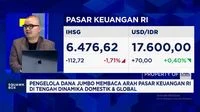
Global financial markets are recalibrating their monetary policy expectations as mounting economic data suggests the United States Federal Reserve may be forced to pivot toward interest rate hikes rather than cuts as previously anticipated. Driven by robust non-farm payroll reports and persistent inflationary pressures fueled by ongoing geopolitical conflicts in the Middle East, market participants are increasingly pricing in the possibility of tighter monetary policy stretching toward the end of 2026.
This shifting macroeconomic landscape presents severe policy dilemmas for emerging markets, particularly Indonesia, where the central bank faces the delicate balancing act of stabilizing the rupiah and supporting domestic economic growth against a backdrop of aggressive global capital outflows.
The re-pricing of Federal Reserve expectations marks a stark departure from the monetary easing cycles that analysts had projected just months prior. Strong labor market resilience in the world’s largest economy has continually defied expectations of a cooling economy, keeping wage growth and consumer demand elevated. Combined with supply chain anxieties and energy market volatility stemming from Middle Eastern hostilities, inflationary risks have resurfaced as a primary concern for central bankers in Washington.
Evolving Monetary Policy Outlook and Market Pricing
The trajectory of the United States central bank has become increasingly opaque, compounded by structural and leadership transitions. According to Dimas Yusuf, Investment Director at Sucor Asset Management, the future direction of Federal Reserve policy remains shrouded in significant uncertainty.
The policy landscape under the incoming leadership framework, including figures such as Kevin Warsh, has yet to provide clear forward guidance to calm jittery global markets. This lack of explicit communication has left institutional investors to rely heavily on incoming macroeconomic indicators to forecast the central bank’s next moves.
Despite the prevailing lack of official guidance, quantitative market indicators are signaling a definitive shift in sentiment. Yusuf highlighted that financial markets are now calculating a sharply rising probability of a 25 basis point (bps) benchmark interest rate hike by the Federal Reserve. Current pricing models indicate that the likelihood of this tightening action has climbed to approximately 60% for September 2026.
This probability represents a dramatic reversal from earlier consensus views that anticipated a prolonged pause or a gradual cutting cycle to support global economic expansion. The realization that borrowing costs in the United States may remain higher for longer—or climb even further—has triggered immediate adjustments across global asset classes, pushing sovereign bond yields higher and strengthening the United States dollar against a basket of major and emerging market currencies.
Chronology of Shifting Expectations
To understand how global markets arrived at this juncture, it is essential to trace the macroeconomic milestones and policy shifts that have defined the post-pandemic economic cycle:
- Early to Mid-2024: The Federal Reserve maintained its peak federal funds rate at the 5.25% to 5.50% range, signaling that the most aggressive tightening cycle in decades had successfully brought headline inflation down from its multi-decade highs, though sticky core inflation remained a concern.
- Late 2024 to 2025: Markets widely anticipated a pivot toward monetary easing. As labor market data showed initial signs of cooling, investors priced in multiple rate cuts, sparking rallies in global equities and emerging market debt.
- Late 2025 to Early 2026: Economic resilience consistently outperformed expectations. Monthly non-farm payroll reports repeatedly exceeded consensus forecasts, demonstrating that domestic demand in the United States remained impervious to high borrowing costs. Concurrently, geopolitical escalations in the Middle East disrupted global shipping routes and pushed energy prices upward, reigniting inflationary concerns.
- Mid-2026: Leadership transitions at the Federal Reserve introduced new questions regarding operational transparency and strategic direction. With forward guidance becoming less predictable, incoming economic data forced market participants to abandon expectations of rate cuts and begin pricing in the distinct possibility of renewed rate hikes.
- September 2026: Market pricing reflects a dominant 60% probability that the Federal Reserve will implement a 25 basis point rate hike to combat stubbornly high inflation and robust employment figures.
Macroeconomic Drivers: Labor Resilience and Geopolitical Shocks
The primary catalyst behind the renewed hawkish outlook for the Federal Reserve is the persistent strength of the domestic labor market. Despite a prolonged period of restrictive monetary policy, United States employers continue to add jobs at a pace that prevents significant economic deceleration. The monthly non-farm payroll data has routinely surprised analysts on the upside, keeping unemployment rates near historical lows and sustaining wage pressures that feed directly into service-sector inflation.
Simultaneously, external supply-side shocks have complicated the disinflationary process. The protracted conflicts in the Middle East have introduced severe volatility into global energy markets. Disruptions to maritime trade routes and petroleum infrastructure have heightened fears of imported energy inflation, forcing central bankers to maintain a vigilant stance against second-round price pressures.
Because energy costs permeate every sector of the global economy, persistent geopolitical friction effectively ties the hands of monetary policymakers, preventing them from easing financial conditions even as global growth slows.
Implications for Bank Indonesia and the Rupiah
The prospect of a tightening United States monetary policy cycle carries profound implications for emerging market economies, particularly Indonesia. For Bank Indonesia (BI), a potential rate hike by the Federal Reserve creates a highly complex policy dilemma.
When the Federal Reserve raises interest rates or signals a prolonged high-rate environment, the yield differential between United States Treasury securities and emerging market assets narrows. This dynamic typically triggers capital outflows as global investors repatriate funds to dollar-denominated assets perceived as lower risk.
For the Indonesian domestic market, this capital flight exerts substantial depreciation pressure on the rupiah. A weaker rupiah increases the cost of imported goods, raw materials, and energy, thereby importing inflation into the domestic economy and eroding consumer purchasing power.
To defend the domestic currency and mitigate imported inflation, Bank Indonesia traditionally has little choice but to raise its own benchmark interest rates. Higher domestic interest rates help maintain the attractiveness of rupiah-denominated assets and stabilize the exchange rate.
However, this defensive monetary stance directly conflicts with BI’s mandate to support domestic economic growth. Higher borrowing costs for corporations and consumers tend to dampen credit growth, slow business expansion, and temper consumption—the primary engine of Indonesia’s gross domestic product.
Consequently, if the Federal Reserve proceeds with a 25 basis point rate hike in late 2026, Bank Indonesia will find itself navigating a narrow policy corridor. The central bank must carefully calibrate its interventions, balancing foreign exchange market stabilization with the imperative to keep domestic liquidity sufficient for ongoing economic development.
Broader Impact on Financial Markets and Corporate Strategy
Beyond central bank boardrooms, the evolving monetary outlook is reshaping strategic decision-making across corporate treasuries and institutional investment portfolios. Fixed-income managers are shortening the duration of their portfolios to protect against capital losses stemming from rising bond yields. Equity investors are rotating out of growth-oriented sectors, which are particularly sensitive to higher discount rates, and reallocating capital toward cash-equivalent instruments and defensive sectors with strong balance sheets.
For emerging market corporations reliant on foreign debt, a stronger United States dollar combined with higher global interest rates increases debt-servicing burdens. Chief financial officers across Southeast Asia are increasingly prioritizing liquidity management, hedging foreign exchange exposures, and exploring domestic financing alternatives to mitigate external currency risks.
As global financial markets await further clarity from Washington, the overarching consensus is that the era of cheap money has definitively concluded. Market participants must now navigate an environment defined by higher macroeconomic volatility, persistent geopolitical friction, and the constant threat of policy tightening from the world’s most influential central bank.
Related posts: