3 Ways to Enhance Your AI Model’s Interpretability for Regulatory Compliance and Transparency

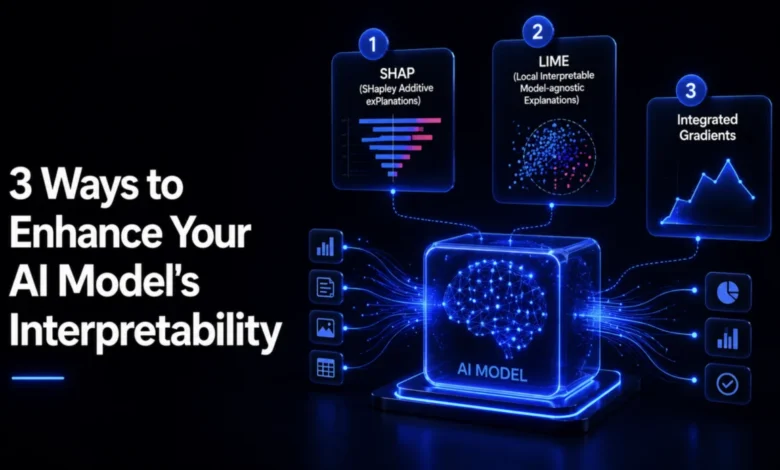
In an era where machine learning models are increasingly entrusted with high-stakes decisions—ranging from credit scoring and healthcare diagnostics to employee retention and criminal justice—the ability to decipher "why" an algorithm arrives at a specific output has transitioned from a technical curiosity to a fundamental requirement. The era of the "black box" is closing. With the enactment of regulations like the European Union’s AI Act, specifically Article 13, organizations are now legally obligated to provide transparency for high-risk AI systems. A predictive model that is accurate but unexplainable is no longer a professional asset; it is a liability that can lead to regulatory sanctions, customer distrust, and operational risk.
To navigate this landscape, data scientists must move beyond basic, legacy metrics and adopt robust interpretability frameworks. This article explores three concrete techniques—SHAP, LIME, and Integrated Gradients—that provide actionable insights into model logic, ensuring that your AI deployments are defensible, fair, and transparent.
The Shift from Correlation to Causality in AI
Historically, data science teams relied on rudimentary tools such as the .feature_importances_ attribute found in scikit-learn ensemble models. While these tools offer a quick, high-level summary of which variables contribute to a model’s overall performance, they possess significant limitations. They are strictly global—meaning they tell you what matters across the entire dataset but remain silent on individual, case-by-case decisions. Furthermore, these traditional methods are notoriously susceptible to bias toward high-cardinality features, often inflating the importance of variables simply because they contain more split points.
As organizations scale their AI initiatives, the demand for "local interpretability"—the ability to explain a single, specific prediction—has grown. If a churn model flags a loyal, five-year customer as "high-risk," a manager cannot justify that decision to the customer or a regulator by citing a global average. They need a granular breakdown of the specific features that drove that individual classification.
Establishing the Ground Truth
To evaluate the effectiveness of interpretability tools, we look at a synthetic customer churn dataset. In this environment, the "truth" is known: the model is trained to identify churn based on factors like tenure, monthly charges, support ticket frequency, and contract type. By using a controlled dataset where the underlying drivers are predefined, we can verify whether our interpretability tools are surfacing actual model logic or merely generating noise.
Across the following methodologies, we consistently evaluate a single, complex case: a customer with 53 months of tenure but a spike in recent support interactions. This specific profile tests whether a model correctly prioritizes immediate behavioral triggers over long-term historical trends.
Method 1: SHAP (SHapley Additive exPlanations)
SHAP is widely considered the gold standard in modern interpretability. Grounded in cooperative game theory, SHAP treats each feature in a model as a "player" in a game. It calculates the marginal contribution of each feature to the model’s output by averaging its impact across every possible combination of features.
Why SHAP matters:
- Mathematical Consistency: It provides a unified framework that works for both global and local explanations.
- Industry Adoption: As of mid-2026, SHAP remains the most utilized library in production environments, offering extensive documentation and support for various model architectures.
- Granular Insight: In our churn test case, SHAP reveals that while tenure is a protective factor, the "support_tickets" feature provides a massive positive weight toward the churn probability. By quantifying this, SHAP allows teams to defend the decision: the model is not ignoring the five-year history; it is correctly identifying that the recent volume of support tickets has overridden that history.
Method 2: LIME (Local Interpretable Model-agnostic Explanations)
Where SHAP focuses on game-theoretic exactness, LIME operates on the principle of local approximation. LIME does not attempt to understand the entire global structure of the model. Instead, it generates a "cloud" of perturbed data samples around a specific prediction and fits a simple, interpretable linear model to that local neighborhood.
The Practical Utility of LIME:
LIME is model-agnostic, meaning it can be applied to any architecture—even proprietary, black-box APIs where you have no visibility into the underlying weights. It is highly efficient for real-time systems where computational latency is a concern. While SHAP can be resource-intensive, LIME provides rapid, "good enough" explanations that help teams diagnose issues on the fly. However, practitioners should be aware of its slight instability; because it relies on random sampling, re-running a LIME explanation may yield minor variations in weight, making it better suited for diagnostic exploration than for rigid, audit-trail documentation.
Method 3: Integrated Gradients (IG)
For teams working exclusively with differentiable models—such as deep neural networks—Integrated Gradients offers a specialized approach. IG works by calculating the integral of the gradients of the model’s output with respect to the input features along a path from a "baseline" (a neutral input, such as a zeroed-out feature vector) to the actual input.
Why use Integrated Gradients:
Unlike SHAP or LIME, which treat the model as an opaque entity, Integrated Gradients exploits the internal architecture of the neural network. By utilizing the model’s own gradients, it provides a highly precise attribution of how each feature contributed to the final output. The "convergence delta" provided by IG serves as an internal audit mechanism, confirming that the sum of the attributions perfectly matches the difference in output between the baseline and the target input. This level of mathematical rigor is particularly important for high-stakes sectors like finance and healthcare, where every decision must be verifiable.
Navigating the Regulatory Landscape
The regulatory environment is shifting rapidly. The EU AI Act, along with emerging frameworks in the United States and elsewhere, suggests that "explainability" will soon be a non-negotiable component of the software development lifecycle (SDLC).
- Auditability: Organizations must be prepared to demonstrate that their models are not relying on prohibited proxies (e.g., using a zip code as a proxy for race in a loan approval model).
- Consistency: Relying on a single tool is no longer sufficient. Leading organizations are now adopting "cross-method validation," where they use two different techniques—such as SHAP and LIME—to see if they converge on the same explanation. If they diverge, it serves as a red flag that the model’s behavior may be unstable or that the data contains noise that the model is misinterpreting.
Selecting the Right Tool for Your Stack
Choosing the appropriate interpretability framework requires balancing computational costs against the need for precision:
- Use SHAP when you are using tree-based models (like XGBoost or LightGBM) and require a gold-standard, consistent, and mathematically rigorous explanation that satisfies both developers and auditors.
- Use LIME for rapid, local, "on-the-fly" explanations, particularly when dealing with complex or proprietary models where the internal architecture is unknown or too computationally expensive to traverse.
- Use Integrated Gradients for neural networks. It is the most sophisticated tool available for differentiable architectures, offering a level of depth that black-box methods simply cannot replicate.
Conclusion: Transparency as a Competitive Advantage
The transition to transparent AI is not merely a bureaucratic hurdle; it is a critical evolution in how we build and trust technology. By implementing SHAP, LIME, or Integrated Gradients, teams can move away from the "it just works" defense and toward a model of rigorous, explainable intelligence.
As we look toward the remainder of the decade, the ability to open the "black box" will define the leaders in the AI space. Companies that can articulate the reasoning behind their algorithms will foster deeper customer loyalty, simplify compliance with international regulations, and ultimately build more reliable, high-performing systems. Interpretability is no longer a "nice-to-have" research topic—it is the bedrock upon which the next generation of responsible AI will be built.