Radaris Domain Seizure Marks a Watershed Moment in the Battle Over Data Broker Accountability and Daniel’s Law


The digital infrastructure of the notorious people-search engine Radaris.com has been dismantled following a landmark court ruling in New Jersey, representing a significant escalation in the ongoing legal conflict between privacy advocates and the opaque world of consumer data brokers. In a decisive move against the company’s long-standing practice of ignoring removal requests, a judge has ordered the transfer of Radaris.com and over a dozen associated domains to the plaintiffs, Atlas Data Privacy Corp. This development follows years of procedural maneuvering, shell-game ownership structures, and the persistent disregard for state statutes designed to protect law enforcement officials from the risks associated with public data exposure.
The legal action is rooted in Daniel’s Law, a New Jersey statute enacted to safeguard government personnel, judicial officials, and their families by requiring the removal of their personal information from commercial databases. Under the law, entities that fail to comply with such removal requests face punitive fines of $1,000 per violation. The current litigation underscores the growing tension between the commercial appetite for public records and the fundamental security needs of public servants who are increasingly targeted by digital harassment.
A Chronology of Evasion and Litigation
The conflict between Atlas Data Privacy Corp and the Radaris ecosystem began in earnest in February 2024. Atlas, acting as a lead plaintiff in the enforcement of Daniel’s Law, targeted Radaris for its systematic failure to honor privacy requests. However, the legal path proved treacherous. Radaris, directed by brothers Igor and Dmitry Lubarsky—Massachusetts-based, Russian-born entrepreneurs—reportedly employed a defensive strategy centered on legal attrition and corporate obfuscation.
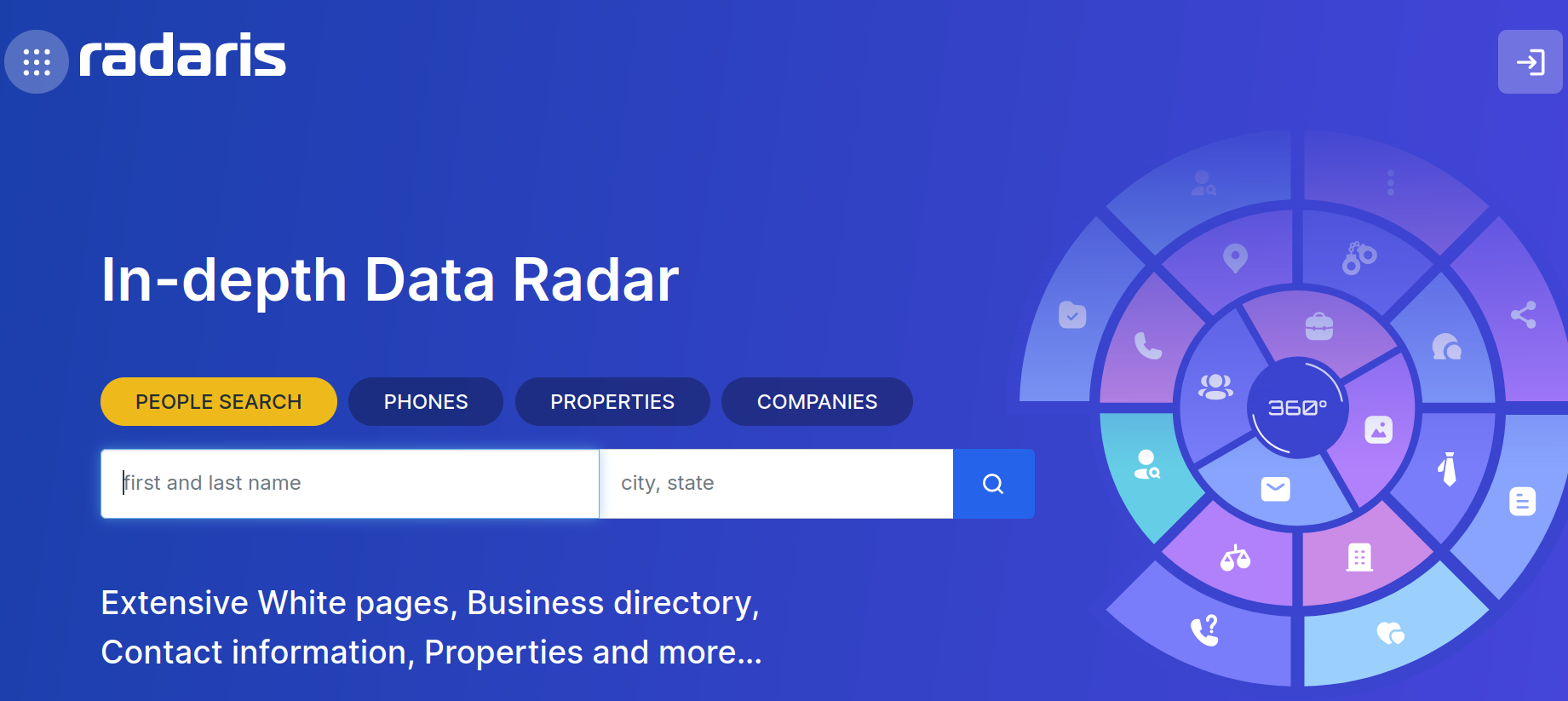
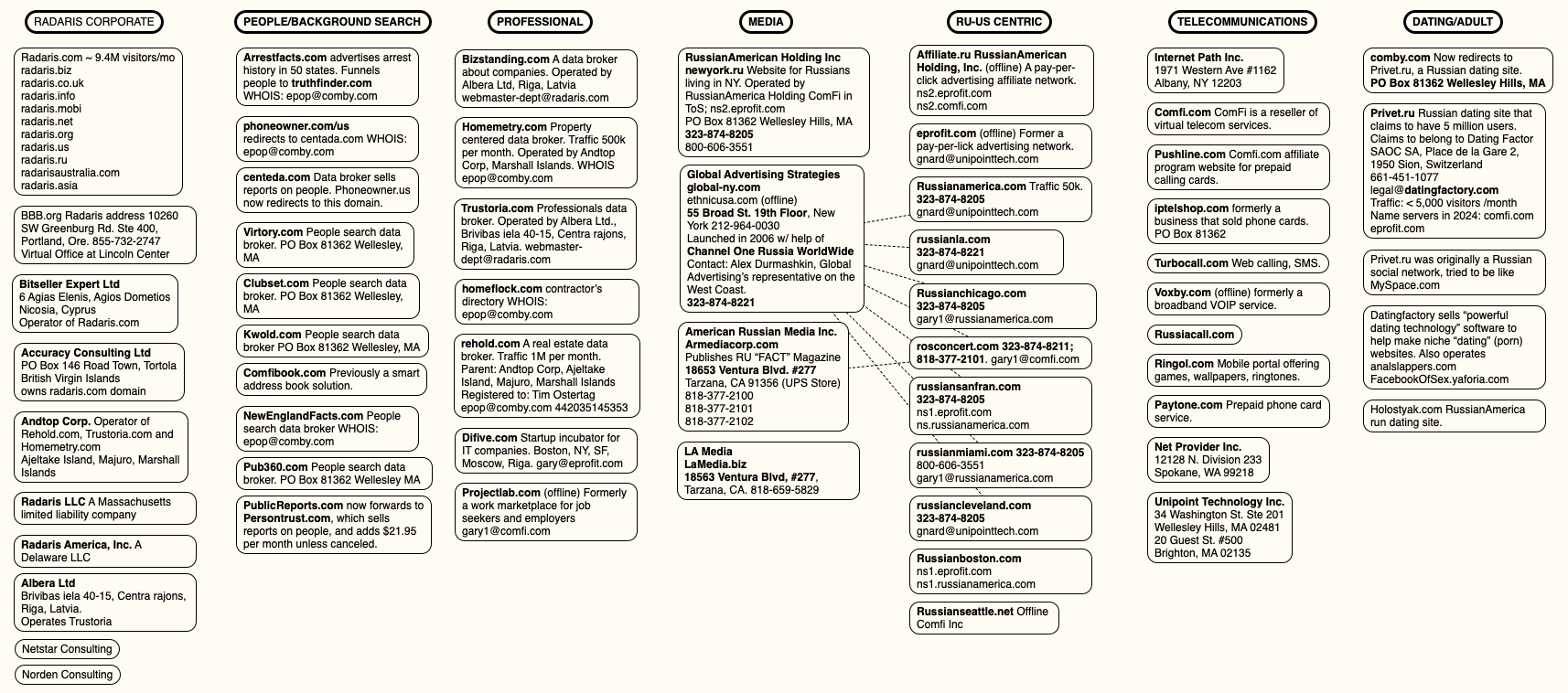
Historically, the Radaris brand has been linked to an intricate web of shell companies, including entities registered in the Marshall Islands, the British Virgin Islands, and the Seychelles. This "island-hopping" strategy allowed the operators to frequently shift legal liability. When a lawsuit would gain momentum, the specific entity named as the defendant would often be discarded, replaced by a new, foreign-incorporated successor. This technique was effectively utilized during a 2017 class-action lawsuit where the plaintiffs were unable to collect a $7.5 million default judgment because the company claimed the lawsuit had been served to the wrong corporate entity.
The pattern of delay continued through 2024 and 2025. When Atlas first brought suit, Radaris attorneys engaged in what the court perceived as consistent prevarication, including claims that the true owners were individuals residing in Ukraine, rather than the Massachusetts-based brothers. Following the exposure of this deception—most notably the use of a fictitious CEO, "Gary Norden"—the legal pressure mounted. By June 2025, Atlas re-filed its complaint, significantly expanding the scope of the suit to include a broader array of the Lubarsky family’s data-brokering assets.
Documentary Evidence and the "Small Group" Operation
The evidentiary core of the Atlas victory lies in a cache of more than 10,000 internal documents, emails, and financial records obtained during the discovery process. These records dismantle the facade of disparate, independent companies. The evidence indicates that dozens of people-search websites—including Radaris, Veripages, and various others—are, in fact, a singular operation.
These sites share a centralized administrative, financial, and technical infrastructure. The internal communications link these domains to common email domains and a unified set of payment processors and banking accounts. According to summary reports provided by Atlas, the Radaris network generates significant monthly revenue. Radaris.com alone is estimated to bring in roughly $42,000 monthly, while affiliated sites like Veripages.com pull in upwards of $45,000. These figures are bolstered by strategic partnerships with major marketing and data-privacy firms, including the Lifetime Value Company and Onerep.

The inclusion of Onerep in this ecosystem is particularly noteworthy, as the company markets itself as a solution for removing personal data from the very sources it is effectively tethered to. This "selling the cure" business model has become a central point of criticism among privacy experts, who argue that the data-broker industry is incentivized to maintain the existence of public databases to fuel their own downstream service offerings.
Legal Counter-Arguments and Constitutional Challenges
The defense, led by attorney Victor Worms, has maintained that the domain transfer is legally flawed. In a formal response to the New Jersey court, defense counsel argued that the judgment was void, contending that the court had transferred assets to a "non-entity" (Radaris.com itself is a domain, not a legal corporation) and that the forfeiture violated constitutional due process rights. Despite these assertions, the court found that the defendants were afforded ample opportunity to mount a substantive defense and repeatedly chose to ignore the court’s proceedings.
The broader data-broker industry is now mobilizing to prevent the precedent set by the New Jersey ruling from spreading. Currently, over 150 lawsuits initiated by Atlas are winding through various court systems. In response, data brokers have sought to move at least 70 of these cases to federal court, arguing that Daniel’s Law is overly broad and constitutes an infringement on First Amendment rights. The constitutional validity of these statutes is a flashpoint; while New Jersey continues to enforce its law, a federal district court in West Virginia recently ruled their version of Daniel’s Law to be "facially unconstitutional."
The Broader Privacy Landscape
The struggle over Radaris reflects a systemic failure in American legislative policy regarding data privacy. Privacy expert Justin Sherman, author of the forthcoming "The Middlemen," notes that the data-broker industry remains one of the most powerful and influential lobbying blocks in Washington. The difficulty in passing comprehensive federal privacy legislation is compounded by the fact that most state-level privacy protections contain broad exemptions for "public" or "government" records.
These exemptions leave vast quantities of information—voter registries, property filings, marriage certificates, and motor vehicle records—available for scraping and resale. The result is an environment where identity theft and harassment are fueled by the very data the government collects for legitimate public administration. The recent breach at IDScan.net, which exposed the driver’s license records of 153 million Americans, serves as a grim reminder of the risks posed by the lack of federal oversight. Without a federal mandate to govern how data brokers collect, store, and monetize government-sourced records, state-level initiatives like Daniel’s Law serve as stop-gap measures in a much larger crisis.
Future Implications and Outlook
The transfer of the Radaris domains to Atlas represents a tactical victory, but the war for digital privacy remains in a state of flux. With the case likely headed toward the U.S. Supreme Court, the legal community is watching closely to see how the judiciary balances individual privacy rights against the commercial interests of the data-broker industry.
For the millions of Americans whose data is currently indexed on hundreds of similar, less-scrutinized websites, the Radaris case highlights a simple, uncomfortable reality: in the absence of a federal privacy framework, the burden of protecting personal information falls on the individual. Until legislative bodies move beyond the "wake-up call" stage of policy-making, the data-broker industry will likely continue to adapt, moving its assets through foreign jurisdictions and re-branding under new corporate shells. The Radaris seizure is a significant blow to one of the most visible players in this industry, but as long as the underlying "public record" data remains for sale, the fundamental threat to privacy remains intact.
Related posts: