Versioning and Tracking Scikit-LLM Experiments with MLflow and Scikit-Learn Pipelines

The rapid integration of Large Language Models (LLMs) into standard machine learning workflows has introduced a complex challenge: how to effectively manage, version, and deploy models that rely on volatile backends. As development teams shift from traditional predictive modeling to LLM-driven architectures, the need for robust reproducibility and governance has never been higher. By combining the Scikit-LLM library—which bridges the gap between scikit-learn syntax and LLM inference—with MLflow’s comprehensive experiment tracking and model registry, developers can establish a standardized lifecycle for their generative AI projects.
The Evolution of LLM Lifecycle Management
In the early stages of the generative AI boom, many organizations treated LLM applications as "black boxes," often bypassing traditional MLOps (Machine Learning Operations) practices. However, as these models move from prototype to production, the risks associated with unversioned changes—such as shifting model weights, changing prompt engineering strategies, or backend provider outages—have become apparent.
The industry is currently witnessing a transition toward structured, audit-ready workflows. According to recent industry surveys on MLOps maturity, over 60% of engineering teams cite model reproducibility as their primary hurdle when deploying LLM-based pipelines. The Scikit-LLM library addresses this by exposing LLM functionality through the familiar fit/predict API, while MLflow provides the necessary infrastructure to capture these experiments as distinct, traceable units of work.
Setting the Foundation for Reproducible AI
To build a production-grade environment, practitioners must first establish a stable configuration. The process begins with the installation of necessary dependencies: scikit-llm and mlflow. It is critical to utilize the specific extras, such as gpt4all, to ensure compatibility with local model execution. This approach is particularly advantageous for privacy-conscious organizations that require local inferencing capabilities without exposing sensitive data to third-party cloud APIs.
Configuration involves initializing the Scikit-LLM backend with appropriate credentials. For local setups, dummy keys are sufficient to enable interaction with GGUF or GGML formats, which are industry standards for running quantized models on commodity hardware. Concurrently, configuring MLflow to point to a SQL-based backend, such as SQLite, provides a persistent record of every experiment run. This allows teams to maintain a chronological log of all iterations, which is essential for compliance and debugging.
A Chronological Approach to Pipeline Development
The lifecycle of an LLM pipeline typically begins with a baseline model. In a practical scenario—such as zero-shot classification of customer feedback—developers start by selecting a lightweight model, such as Orca Mini. By wrapping this logic within an MLflow start_run block, every iteration is tagged with metadata, including the specific model file version, the backend framework, and the dataset used for validation.
The use of cloudpickle as a serialization format is a vital technical detail in this workflow. Unlike standard pickle, which can struggle with complex lambda functions or dynamically defined classes often found in LLM pipelines, cloudpickle ensures that the entire environment context is captured. This prevents "missing component" errors during deployment, a common issue that plagues teams transitioning from notebooks to production environments.
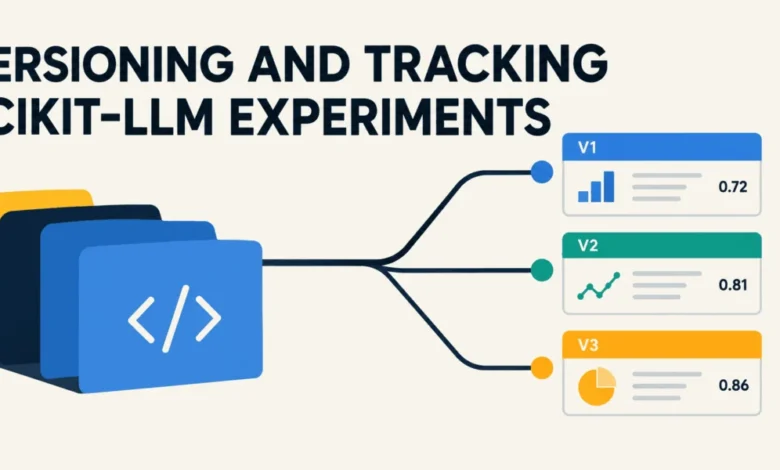
Following the baseline, the transition to an "upgraded" model—perhaps a more robust architecture like Falcon—serves as the second phase of the development lifecycle. By isolating this in a separate MLflow run, the engineering team creates a clean, side-by-side comparison. This methodology ensures that performance improvements (or regressions) can be attributed directly to the specific model version or parameter change, rather than environmental drift.
Auditing and Comparative Analysis
Once multiple versions of a pipeline have been logged, the auditing phase provides the empirical basis for model selection. By leveraging the MLflow Search API, developers can extract run data into a pandas DataFrame, allowing for a structured review of experimental outcomes. This data typically includes status markers (e.g., FINISHED or FAILED), run IDs, and custom tags.
This stage is essential for team accountability. By visualizing the history of runs, stakeholders can quickly identify which configurations led to errors and which consistently yielded the highest accuracy. This "experiment audit" is a standard practice in regulated industries, where the ability to prove why a specific model was chosen for production is a legal requirement.
From Experimentation to Production Registry
The final, and most significant, step is the transition from an experimental run to a registered model. In MLflow, the Model Registry acts as the "source of truth." When a model is registered, it receives a version number, transitioning from a transient experiment artifact to a formal asset ready for deployment.
The registration process can be either manual or automated. For instance, a common best practice is to programmatically identify the "winner" by querying the experiment database for the highest accuracy metric across all finished runs. By sorting the runs by their performance metrics, developers can trigger an automated registration script that promotes the top-performing model to the registry, complete with documentation and status labels. This reduces the risk of human error, where an inferior or deprecated model might accidentally be deployed to a production environment.
Implications for the Broader AI Ecosystem
The adoption of this structured workflow has profound implications for the industry. First, it democratizes access to sophisticated MLOps. Previously, only large enterprises with dedicated platform teams could afford to build custom versioning tools for their LLMs. Now, the integration of Scikit-LLM and MLflow provides a scalable solution that works for individual researchers and large development teams alike.
Second, it shifts the focus from "prompt hacking" to "system engineering." By treating the LLM as a component within a larger, version-controlled pipeline, developers are incentivized to think about the entire data-to-decision path. This perspective shift is necessary for the long-term sustainability of AI projects. If a model fails in the field, the team can quickly roll back to a previously known-good state, just as they would with traditional software releases.
Finally, this framework supports the growing movement toward model transparency. As government regulations concerning AI safety and bias begin to take effect, the ability to maintain an immutable log of model versions—who trained them, what data they used, and how they performed—will become a non-negotiable aspect of AI development.
Conclusion
Building, tracking, and registering LLM-based pipelines does not have to be an chaotic endeavor. By implementing a systematic approach that utilizes Scikit-LLM for model execution and MLflow for lifecycle governance, teams can effectively navigate the complexities of modern generative AI. This workflow ensures that every experiment—from the first, flawed prototype to the final, high-performing model—is recorded, analyzed, and ready for deployment. As the industry matures, these foundational practices will serve as the guardrails that enable organizations to innovate safely and reliably in an increasingly automated world. By adopting these standards today, developers are not just building better models; they are building the infrastructure for the next decade of intelligent, reproducible technology.
Related posts: