BIN Chief and Digital Ministry Spearhead Strategic Consolidation to Fortify Indonesia’s National Cyber Sovereignty

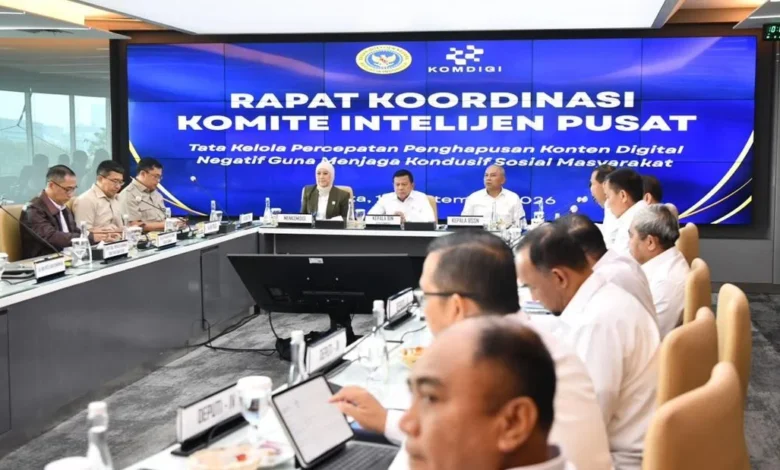
In a landmark shift toward a more integrated national security framework, the Head of the State Intelligence Agency (BIN), retired General M. Herindra, convened a high-level consolidation meeting of the Central Intelligence Committee (Kominpus) at the Ministry of Communication and Digital (Komdigi) office in Jakarta on Wednesday, September 16, 2026. This gathering marked a historic precedent as the first time the Kominpus session was held outside the headquarters of the State Intelligence Agency, signaling a paradigm shift in how Indonesia addresses the convergence of physical and digital national security threats.
The meeting was attended by Minister of Communication and Digital Meutya Hafid and the Head of the National Cyber and Crypto Agency (BSSN), retired General Nugroho Sulistyo Budi. The forum brought together a cross-section of Indonesia’s defense and intelligence architecture, including senior officials from the Indonesian National Armed Forces (TNI), the Indonesian National Police (Polri), and the Ministry of Defense. The primary objective of this assembly was to synchronize intelligence gathering and cybersecurity protocols to protect Indonesia’s expanding digital ecosystem from increasingly sophisticated domestic and international threats.
The Strategic Imperative of Digital Sovereignty
As Indonesia continues to accelerate its digital transformation—marked by the widespread adoption of digital government services, e-commerce, and digital financial systems—the attack surface for malicious actors has expanded exponentially. Minister Meutya Hafid emphasized that the digital realm is no longer a peripheral concern but a core component of national strategic interest.
"The security of our national digital ecosystem is a collective responsibility that transcends institutional silos," Meutya stated during the press briefing following the meeting. "We must ensure that the rapid evolution of technology is matched by our institutional capacity to detect, prevent, and respond to threats in real-time."
The integration of intelligence data with cyber defense capabilities is designed to bridge the gap between human intelligence—often handled by BIN—and technical cyber defense, which is the primary mandate of BSSN. By centralizing these perspectives, the government aims to create a "defensive shield" that can preemptively identify risks before they manifest as systemic disruptions to public infrastructure or national stability.
Chronology of the Kominpus Coordination
The Kominpus acts as the premier forum for evaluating strategic situations that impact national security. Traditionally, these meetings have focused on political and security stability in the physical domain. However, the decision to host the session at the Ministry of Communication and Digital marks a strategic pivot.
The coordination meeting follows months of heightened scrutiny regarding the integrity of Indonesia’s digital infrastructure. Over the past year, the Indonesian government has faced mounting pressure to address vulnerabilities in national data centers and mitigate the rise of malicious digital content. The meeting agenda specifically targeted the acceleration of "clean-up" operations regarding high-risk digital content, including:
- Terrorism Recruitment: Monitoring and dismantling radicalization networks operating through encrypted messaging and social media platforms.
- Child Exploitation: Implementing advanced AI-driven filters to eradicate child pornography and grooming activities.
- Illegal Gambling: A major focus area following recent legislative and enforcement efforts to clamp down on offshore gambling servers targeting Indonesian citizens.
- Disinformation and Hate Speech: Developing robust mechanisms to curb the spread of narratives designed to polarize society, particularly during election cycles or periods of national sensitivity.
Analytical Perspective: The Convergence of Threats
Cybersecurity experts observe that the threats facing Indonesia are no longer purely technical; they are increasingly hybrid. Foreign actors may use disinformation campaigns to undermine public trust in government institutions, while cybercriminals exploit domestic financial systems to fund illicit activities.
"The move to synchronize BIN, BSSN, and the Ministry of Communication and Digital is a necessary evolution," says an independent analyst specializing in Southeast Asian security policy. "Intelligence agencies provide the ‘who’ and the ‘why,’ while the Ministry and BSSN provide the ‘how’—the technical infrastructure to block, trace, and neutralize threats. By forcing these agencies into the same room, the government is reducing the ‘response latency’ that hackers and bad actors often exploit."
Supporting Data and Digital Landscape
Indonesia’s digital landscape presents both a vast opportunity and a significant security challenge. As of mid-2026, the country boasts an internet penetration rate exceeding 80%, with over 220 million active users. This demographic density in the digital space makes it a primary target for global cyber syndicates.
Data from the Ministry of Communication and Digital suggests that the volume of negative content—ranging from gambling to extremist propaganda—has seen a 30% year-on-year increase in reported incidents. Furthermore, the economic impact of cyber-related crimes in Indonesia is estimated to cost the national economy billions of rupiah annually, affecting everything from banking integrity to public administrative services.
The government’s decision to move toward a more integrated model is also aligned with the ASEAN Cybersecurity Cooperation Strategy, which encourages member states to develop national Computer Emergency Response Teams (CERTs) that work in tandem with intelligence apparatuses.
Official Stance and Future Roadmap
During the deliberations, the participating agencies reached a consensus on the need for a shared intelligence platform. This platform would allow for the instantaneous exchange of data regarding IP addresses linked to criminal activity, patterns of coordinated inauthentic behavior (CIB), and vulnerabilities in critical national information infrastructure (CNII).
Minister Meutya underscored that while security is paramount, it must not stifle the growth of the digital economy. "We are not building a wall around the internet. We are building a foundation of trust," she explained. "When citizens know that their digital transactions are protected and that the digital environment is free from fraud and exploitation, they are more likely to participate in the digital economy, which in turn fosters growth and innovation."
The Kominpus meeting concluded with a directive for the formation of a cross-agency task force. This task force will be responsible for implementing a "fast-track" protocol for content moderation and cyber-incident response. This means that if BIN detects a potential threat originating from a specific digital platform, the Ministry of Communication and Digital will have the operational clearance to act within hours, rather than days, of receiving the intelligence.
Implications for National Resilience
The long-term implication of this consolidation is a more resilient Indonesian state. By treating digital infrastructure as a critical asset equivalent to energy or transportation grids, the government is signaling that it views the internet as the new front line of national defense.
The inclusion of the TNI and Polri in these discussions also highlights the recognition that cyber-threats often spill over into physical threats. For instance, online radicalization can lead to real-world violence, and financial fraud can fund illegal armed groups. By integrating these agencies, the state ensures a seamless transition from intelligence gathering to law enforcement intervention.
As the meeting wrapped up, the commitment was clear: the era of fragmented oversight is ending. The success of this initiative will now depend on the interoperability of the systems these agencies use and the commitment of the personnel to maintain high levels of information security. For Indonesia, the message sent from the Ministry of Communication and Digital on this Wednesday in September is that the nation’s digital future will be built on a foundation of proactive defense, rigorous coordination, and unwavering national sovereignty.