AWS Weekly Roundup: Generative AI in Agriculture and the Evolution of Vulnerability Management

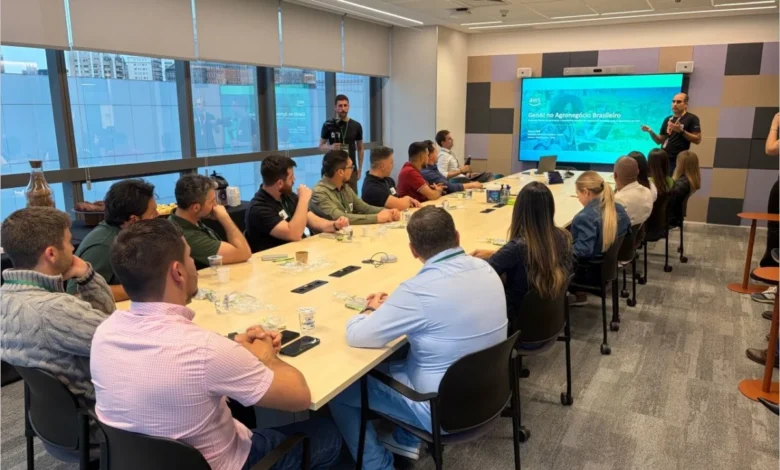
A recent presentation at the AWS office in São Paulo underscored a fundamental shift in the deployment of generative artificial intelligence: the transition from theoretical boardroom discussion to practical, field-based utility in the agribusiness sector. While leadership teams in Brazil debated the integration of AI, the consensus focused not on the "if" of technology adoption, but on the "how"—specifically regarding delivery mechanisms. In an industry where key decision-makers often operate from the field or while traveling between production sites, voice-activated interfaces have become the primary bridge between complex data and the user. This necessity highlights the significance of the latest Amazon Polly generative engine upgrade, which introduced 14 new voices, including two in Brazilian Portuguese. For an operator behind the wheel of a tractor or a transit vehicle, voice is no longer a luxury; it is the fundamental interface for interacting with mission-critical systems.
The Security Paradigm Shift: Addressing the Vulnerability Gap
While advancements in user experience continue to evolve, the underlying security landscape has entered a more aggressive phase. AWS recently launched a new security service, AWS Continuum, predicated on the reality that the window between the disclosure of a vulnerability and its active exploitation has effectively vanished.
The rationale for this service was validated by internal AWS honeypot data, which demonstrated that exploitation attempts are often occurring before the public even learns of a vulnerability. Specifically, Amazon Threat Intelligence identified a PHP2Shell exploitation attempt in their MadPot telemetry on October 17, 2026. This occurred four days prior to the public disclosure of CVE-2026-109618 and CVE-2026-109619. Furthermore, proof-of-concept exploits for these vulnerabilities were circulating publicly by 02:00 UTC on the day of disclosure, fully twelve hours before the official embargo was set to lift at 14:00 UTC.
This timeline exposes the obsolescence of traditional patching windows that rely on days or weeks of manual assessment. AWS Continuum addresses this by reframing vulnerability management as an end-to-end operational workflow. Rather than providing a static list of vulnerabilities, the service constructs a context graph linking code repositories with the active AWS environment. It reproduces exploitable findings within an isolated sandbox, offering concrete proof-of-concept code rather than abstract severity scores. By ranking these findings based on their proximity to business-critical systems, the system generates automated pull requests for remediation. Currently, the system requires human approval before merging, though it is designed to eventually support autonomous remediation classes governed by confidence thresholds.
Architectural Efficiency: The Introduction of Amazon ECS Gateway
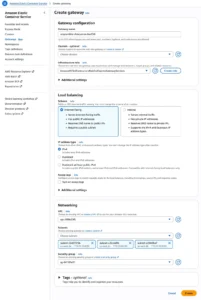
In parallel with security enhancements, AWS has introduced the Amazon ECS Gateway, a service designed to optimize the relationship between platform engineering teams and application developers. Historically, the burden of exposing a service—covering subnets, TLS certificates, and security group configurations—has created friction in the deployment pipeline.
The ECS Gateway effectively decouples the network ownership from the application logic. Platform teams are responsible for defining a singular gateway encompassing organizational security parameters and WAF web ACLs. Application teams then utilize a gateway connector within their service definition to automatically provision necessary resources, including DNS hostnames, listener rules, and targeted security groups.
The economic implications for enterprise-scale deployments are substantial. A single Application Load Balancer (ALB) can now support up to 25 services, with AWS dynamically provisioning and de-provisioning ALBs based on demand. With a capacity of 10,000 clusters per gateway and five gateways per cluster, the system offers significant horizontal scalability. This service is currently available across all commercial regions and supports incremental adoption, allowing organizations to migrate existing services without interrupting traffic flow.
Advancements in Machine Learning and Model Customization
The machine learning ecosystem saw significant updates this week, most notably the expansion of Amazon Polly’s capabilities. The generative engine now boasts a catalog of 57 voices across 11 languages and 25 locales. The addition of Hindi and Finnish, alongside the expanded Brazilian Portuguese portfolio, marks a continued commitment to global accessibility. Because this upgrade functions as a drop-in replacement, existing API calls to SynthesizeSpeech remain functional, ensuring that developers can benefit from more natural, expressive output without refactoring their applications.
For organizations leveraging high-performance compute, the introduction of TorchNeuron—currently in public beta—represents a strategic move toward hardware flexibility. TorchNeuron provides an open-source PyTorch backend that allows models to run on AWS Trainium instances via simple configuration changes rather than extensive code rewrites. This development supports the broader industry trend of preventing software-to-hardware lock-in, enabling researchers to maintain their existing workflows while leveraging the efficiency of custom silicon.
Simultaneously, Amazon SageMaker AI has expanded its model customization suite. The new training session APIs allow developers to manage the post-training loop—including reward signals and custom loss functions—without the administrative overhead of managing underlying GPU infrastructure. By abstracting away the complexities of distributed execution, fault recovery, and checkpoint storage, AWS is lowering the barrier to entry for fine-tuning large language models. This includes support for several high-performance models, such as Muse Glimmer, Qwen 3.8, and Ministral 3.
Industry Integration and Data-Driven Migrations
The practical application of these tools is best illustrated by real-world enterprise migrations. U.S. Bank recently completed a significant transition, migrating 119 terabytes of data from Oracle Exadata to Amazon RDS for Oracle. This project utilized a config-driven pipeline incorporating Oracle XTTS (Cross-Platform Transportable Tablespaces), AWS DataSync, and Amazon EFS.

The migration timeline highlights the efficiency of modern cloud-native migration tools:
- Preparation: Initial baseline copy finished in seven days.
- Execution: Four databases were migrated with zero data loss.
- Cutover: Average downtime was limited to approximately four hours per database, successfully executed over a bandwidth-capped Direct Connect link.
Furthermore, the introduction of the AWS Agent Registry provides a centralized, managed catalog for MCP (Model Context Protocol) servers and agent skills. This allows orchestrators to discover capabilities at runtime, facilitating a more dynamic interaction between agents and enterprise tools.
Broader Implications and Future Outlook
The developments of the past week signal a maturing cloud ecosystem where security, developer experience, and AI accessibility are converging. The shift toward "security by design"—as evidenced by the automated remediation pathways in AWS Continuum—suggests that the industry is moving toward a model where infrastructure resilience is proactive rather than reactive.
As developers look toward the upcoming AWS re:Invent, scheduled for November 30 to December 4 in Las Vegas, the focus is expected to remain on the integration of these high-level abstractions. With over 2,200 sessions planned, the event will likely emphasize how these tools—from ECS Gateway to structured outputs for Claude models—reduce the technical debt associated with scaling enterprise applications.
The rapid evolution of generative AI, particularly in sectors as traditional as agriculture, suggests that the "AI revolution" is transitioning from a period of hype to a period of institutional integration. By prioritizing voice interfaces, automating the identification and remediation of security threats, and simplifying the orchestration of agentic workflows, cloud service providers are positioning their platforms as the foundational substrate for the next decade of digital transformation. The ability to move, secure, and intelligently interact with data at scale remains the primary competitive differentiator for organizations operating in a globally distributed, high-threat digital environment.
Related posts: