Domain Seizure of Radaris Marks Major Legal Escalation Against Consumer Data Brokers


The digital landscape for personal information brokerage has undergone a seismic shift as a New Jersey court ordered the transfer of Radaris.com and over a dozen affiliated domains to the plaintiff, Atlas Data Privacy Corp. This unprecedented move serves as a culmination of years of litigation regarding the unauthorized aggregation and sale of sensitive personal data belonging to state law enforcement officers, judges, and government personnel. The ruling underscores the intensifying friction between the lucrative "people-search" industry and emerging state-level privacy protections like New Jersey’s Daniel’s Law.
For over a decade, Radaris.com functioned as a cornerstone of a vast, interconnected network of data-scraping services. While the site maintained a reputation for ignoring consumer requests to excise personal information, the legal tide turned when Atlas Data Privacy Corp began systematically targeting brokers for violations of Daniel’s Law. This statute, which carries penalties of $1,000 per violation, was designed to protect the safety of public officials by mandating the removal of their personal data from commercial search engines.
A Chronology of Evasion and Litigation
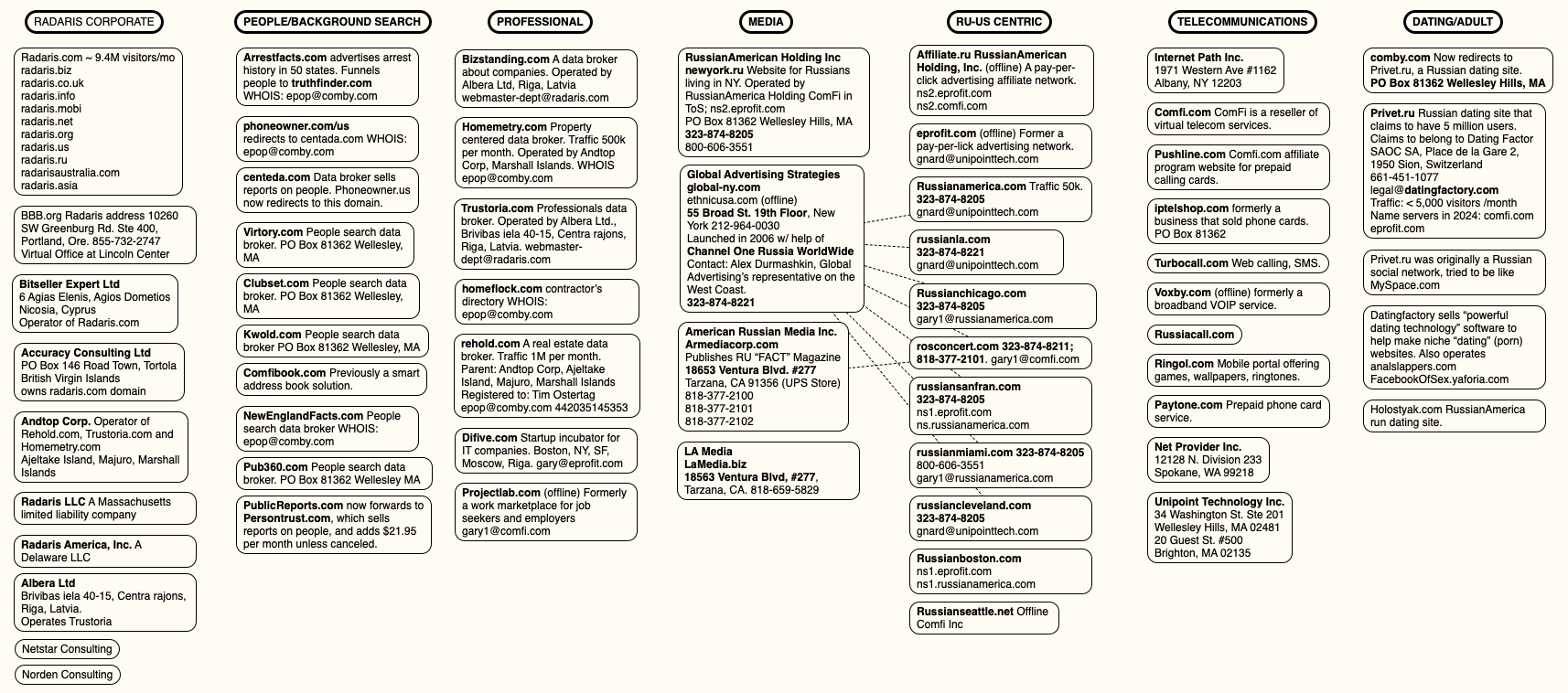
The legal battle against the Radaris network was marked by a series of sophisticated, often opaque, maneuvers by the company’s operators. In February 2024, the initial lawsuit filed by Atlas began to peel back the layers of the organization. Investigative reporting later identified the true architects behind the enterprise as Russian-born brothers Igor and Dmitry Lubarsky. Residing in Massachusetts, the brothers allegedly utilized a labyrinthine structure of shell companies and offshore entities—spanning the Marshall Islands, the British Virgin Islands, and the Seychelles—to shield the operation from domestic accountability.
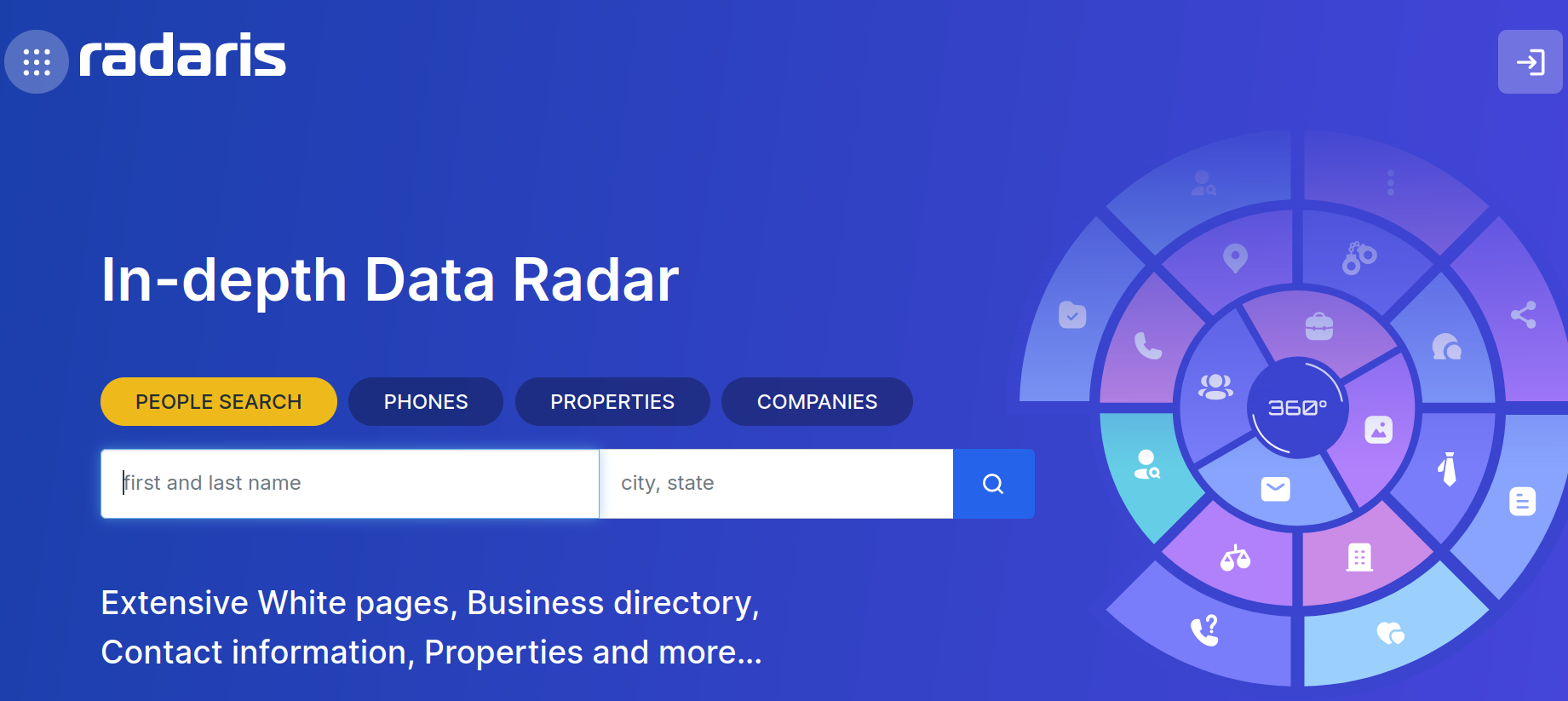
The litigation revealed a pattern of "island-hopping," where the company frequently amended its terms of service and ownership claims to obfuscate responsibility. When faced with service of process or court mandates, the defense frequently shifted the legal liability to newly created, often non-existent, entities. In 2017, a similar class-action suit against Radaris resulted in a $7.5 million default judgment that remained uncollected because the company allegedly moved assets and re-incorporated under new names, such as Andtop Company, to avoid enforcement.
The current standoff reached a breaking point in June 2025, when Atlas refiled its suit with an expanded scope. By then, the plaintiffs had gathered significant internal documentation, including over 10,000 emails and financial records, that linked Radaris to at least twenty-five other people-search websites. These documents demonstrated that, despite claims of independent management, the entire portfolio was governed by a singular administrative core operating from the Boston area.
The Anatomy of the Radaris Empire
Evidence presented in court suggests that the Radaris network is highly profitable, with individual domains like Radaris.com and Veripages.com generating tens of thousands of dollars in monthly revenue. The financial ecosystem of these sites relies heavily on advertising partnerships with firms such as the Lifetime Value Company. Furthermore, the documents indicated a paradoxical relationship with the privacy industry; the Radaris family of sites allegedly earned substantial monthly fees through partnerships with "data removal" services like Onerep. This relationship highlights a recurring industry criticism: that some companies profit simultaneously from the sale of data and the service of "removing" it, effectively capitalizing on the anxiety caused by their own business models.
The legal team representing the Lubarsky brothers, led by attorney Val Gurvits, initially contested the reporting of their clients’ identities, threatening defamation suits and claiming the true owners were based in Ukraine. However, subsequent filings and the eventual discovery process confirmed that the operation relied on a fictitious CEO persona, "Gary Norden," to provide a veneer of corporate legitimacy during investor solicitations. This admission of identity fabrication by the defense significantly weakened their credibility in the eyes of the court.
Official Responses and Defense Strategy
Following the August 2026 court order to transfer the domains, the legal representatives for the Radaris network shifted their strategy. Attorney Victor Worms, representing the defendants, has since sought to vacate the default judgment. His argument centers on the contention that "Radaris.com" is a domain name rather than a legal entity, and therefore lacks the capacity to be sued. Mr. Worms stated that his clients intend to pursue appeals, characterizing the domain transfer as an unconstitutional forfeiture of private property.
Atlas Data Privacy Corp, led by CEO Matt Adkisson, remains undeterred. Adkisson argues that the court’s decision was the only logical outcome after years of procedural stonewalling. "We refer to this period as their island-hopping phase," Adkisson remarked. "Behind the scenes, it felt like a shell game. Defense lawyers told the court that certain entities merely operated the domains and were the proper parties to sue. But by the time a judgment neared, those entities would be discarded and new entities would appear."
Broader Implications for Data Privacy
The Radaris case serves as a microcosm of the broader struggle for digital privacy in the United States. While Daniel’s Law has been a potent tool in New Jersey, it faces significant constitutional challenges in federal courts, where data brokers argue that such restrictions infringe upon First Amendment rights regarding the dissemination of public record information.
Privacy expert Justin Sherman, author of The Middlemen, emphasizes that the current legal framework is fundamentally ill-equipped to handle the scale of modern data aggregation. "The lack of a comprehensive federal privacy law is not for a lack of knowledge," Sherman noted. "We’ve had eight million wake-up calls already."
The crux of the issue lies in the broad legal definitions of "public" or "government" records. Data brokers leverage these exemptions to collect and monetize everything from property filings and marriage certificates to professional licenses and criminal records. Because these documents are technically public, brokers argue their distribution is protected speech. Consequently, even as 14 states move to implement protections modeled after Daniel’s Law, the industry continues to push back, with some courts—such as in West Virginia—ruling that such laws are facially unconstitutional.
The implications of the Radaris domain transfer extend beyond just one company. It establishes a potential precedent where the digital infrastructure of a data broker—their domain names—can be treated as attachable assets when they fail to comply with court-ordered privacy mandates. This could force the industry to reconsider the cost-benefit analysis of ignoring data removal requests.
However, until federal legislation addresses the underlying issue of data scraping and the commercialization of government records, individuals remain vulnerable. The recent breach at IDScan.net, which exposed the driver’s license data of 153 million Americans, underscores the systemic fragility of the data ecosystem. Whether the Radaris case acts as a deterrent or merely a temporary hurdle for the industry remains to be seen. As the litigation heads toward the appellate level and potentially the Supreme Court, the outcome will likely define the boundaries of digital privacy for years to come, balancing the tension between public records, free speech, and the personal safety of the citizenry.