Bruce Straley issues formal apology to Santa Monica Studio following controversial remarks on the state of AAA game development

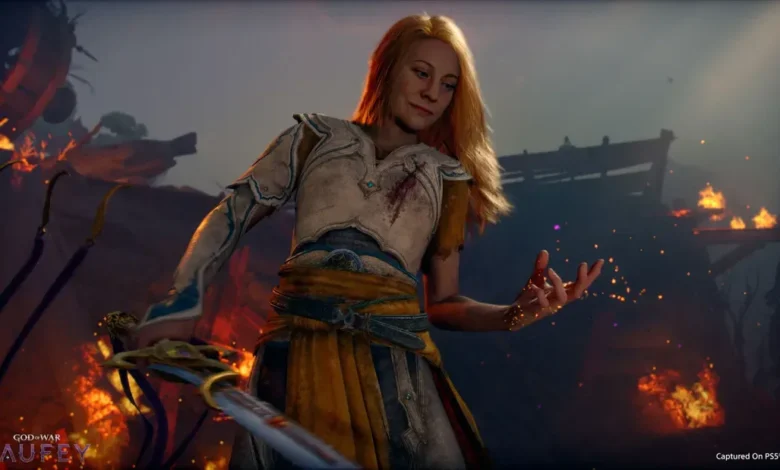
The landscape of modern high-budget video game development has found itself under intense scrutiny following a series of comments made by industry veteran Bruce Straley, the former game director at Naughty Dog and a central figure in the creation of The Last of Us and Uncharted series. Straley, who recently sat down for an interview with Edge Magazine, sparked a significant backlash across the gaming community after characterizing the current state of AAA development as “boring” and lacking in genuine innovation. The subsequent fallout necessitated a public apology from Straley, who sought to clarify that his comments were intended as a critique of systemic industry trends rather than a disparagement of specific developers or individual titles.
The Genesis of the Controversy
The discourse began when Straley, in a feature published in the September 2026 issue of Edge Magazine, discussed the challenges inherent in the current AAA ecosystem. When asked about his perspective on the direction of high-budget gaming, Straley expressed a candid concern regarding the repetitiveness of contemporary mechanics.
“I think the verbs and the experiences that we’re providing in the triple-A space are—I want to say, boring,” Straley remarked during the interview. While he acknowledged the technical prowess and artistic achievement inherent in modern blockbusters, he argued that the underlying structural innovations have stagnated. To illustrate his point, Straley specifically referenced Sony Santa Monica’s God of War series, noting that while the visual fidelity and technical execution of the game are undeniably master-class, the underlying gameplay loop failed to ignite a sense of novelty for him.
Examining the Critique: Technical Excellence vs. Design Innovation
Straley’s critique centers on a nuance that is frequently debated within the game design community: the distinction between visual and technical perfection and the evolution of player interaction. In his commentary, Straley was explicit in his admiration for the labor behind the God of War franchise.
“God of War, Laufey—I look at that game, and every pixel is breathtaking. The amount of hard work and skill that has been poured into every single frame is something I’ve done myself, and I am still in awe of it,” Straley clarified. However, he followed this with the observation that, despite the aesthetic triumph, the core experience felt derivative. “When I really look at what you’re doing in that game? I’m not excited. And that’s not a criticism of the God of War team. It’s just that, overall, in AAA, it feels like there is no room to inject fresh, innovative ideas.”
This sentiment reflects a growing anxiety among long-term developers who believe that the rising costs of production—often reaching hundreds of millions of dollars per title—have forced studios into a risk-averse cycle. When a project carries a massive budget, developers are often discouraged from experimenting with novel mechanics, instead relying on proven formulas to ensure a return on investment.
Chronology of the Fallout
Following the publication of the interview, the gaming community’s reaction was swift and largely polarized. On social media platforms and gaming forums, many users interpreted Straley’s comments as an attack on the developers of God of War, viewing his specific mention of the studio as an unnecessary provocation.
By late September 2026, the volume of criticism directed at Straley and the defensive posture taken by fans of the God of War franchise prompted the veteran developer to address the matter directly. On September 21, 2026, Straley issued a formal apology directed specifically at the team at Santa Monica Studio.
“I want to apologize to the Laufey team for dragging you all into this uninvited and unnecessary negative attention,” Straley wrote in a statement. He emphasized that his words had been stripped of their broader context, leading to a narrative that served only as clickbait rather than a constructive discussion on industry health. “My mistake was naming your game, which was used out of context and for clickbait. You don’t need this. I am sorry.”
The Economics of AAA Development: A Fact-Based Analysis
Straley’s frustration touches upon the "Triple-A Paradox." As reported by various industry analysts, the cost of developing a single high-end title has increased exponentially over the last two decades. According to data from the Game Developers Conference (GDC) State of the Industry reports, the average development time for a flagship title has grown from approximately two to three years in the mid-2000s to five to seven years in the current cycle.
This extended development timeline, coupled with budgets that can exceed $300 million inclusive of marketing, creates a high-pressure environment where innovation is frequently sacrificed for stability. Studios are increasingly incentivized to build upon existing franchises and established engine technologies rather than risking resources on unproven mechanics. This creates a feedback loop where players receive high-quality, polished experiences that nonetheless feel increasingly similar to titles released over the past two decades.
Broader Implications for the Industry
The controversy highlights a deepening divide in the gaming industry between "prestige" AAA titles and the independent sector. While indie developers are often praised for their willingness to experiment with mechanics, narrative structures, and artistic styles, the AAA space is currently defined by a "standardization of quality."
Industry analysts suggest that Straley’s comments serve as a canary in the coal mine. If veterans of the industry—those who helped define the modern action-adventure genre—are expressing fatigue with the current output, it suggests that the industry may be reaching a point of saturation. The reliance on photorealism and cinematic storytelling, while highly successful in terms of sales, may be reaching a ceiling in terms of what it can offer the player in terms of novel agency.
Furthermore, the reaction to Straley’s comments underscores the sensitivity of studio reputations. In an era where online discourse can immediately pivot to vitriol, even constructive criticism from industry peers can be weaponized by algorithm-driven media. Straley’s apology serves as a reminder that the line between artistic critique and professional insult is thin, particularly when specific teams are highlighted in a negative light.
Conclusion: The Path Forward
The situation involving Bruce Straley and Santa Monica Studio serves as a microcosm of the challenges facing the multi-billion-dollar gaming industry. While the technical achievements of games like God of War remain the gold standard for production value, the industry is clearly grappling with the question of how to maintain that level of excellence while fostering a culture that encourages risk and novelty.
As the industry looks toward the next generation of hardware and shifting consumer expectations, the debate started by Straley is likely to continue. Whether studios will be able to balance the high financial stakes of AAA production with the need for creative evolution remains the primary challenge of the coming decade. For now, the episode stands as a cautionary tale on the importance of framing criticism, the pressure on creative leaders, and the ongoing struggle to define the future of interactive entertainment.
Related posts: