Office Depot Rebrands Parent Company to Office Depot Group and Retires ODP Business Solutions Name in Major Strategic Shift

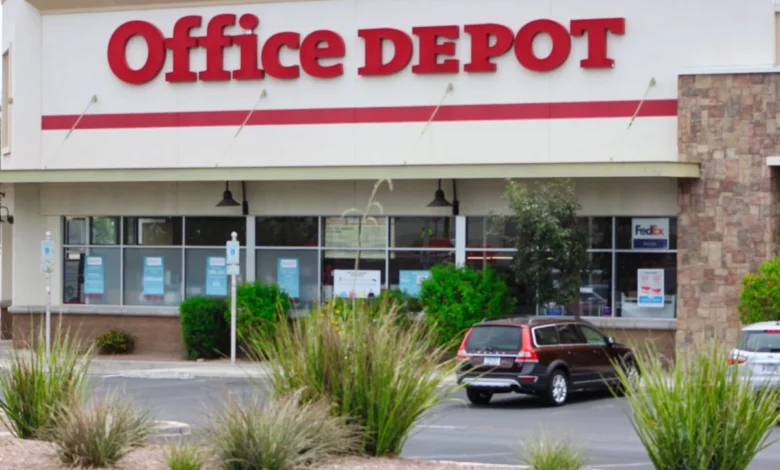
Office Depot’s parent company, formerly operating under the corporate banner of The ODP Group, has officially announced a sweeping corporate rebrand to Office Depot Group. As part of this comprehensive restructuring, the company is retiring the name of its B2B distribution and business services arm, ODP Business Solutions, transitioning the division entirely to the moniker Office Depot Business. This strategic pivot is designed to unify the four-decade-old Office Depot brand firmly across both its traditional retail storefronts and its extensive business-to-business (B2B) distribution operations.
Company executives have championed the rebrand as a vital step toward achieving long-overdue brand consistency, leveraging a legacy built over 40 years of consumer and commercial engagement. However, industry analysts and marketing experts are already weighing the dual-edged nature of the decision, noting that while the move instantly recaptures powerful historical recognition, it also introduces unique strategic hurdles as the company attempts to redefine its identity in a modern, highly competitive digital economy.
The Evolution of a Legacy Brand
The decision to consolidate operations under the singular Office Depot Group banner brings closure to a multi-year period of corporate fragmentation. For years, the enterprise had split its identity between consumer-facing retail operations and enterprise-level logistics, a separation that leadership ultimately concluded created unnecessary friction in the marketplace. By collapsing these distinct brand identifiers, the organization aims to present a cohesive front to clients, partners, and suppliers alike.
Craig Gunckel, the Chief Executive Officer at Office Depot, announced the transition through a public statement on professional networking platforms, emphasizing the irreplaceable value of the company’s extensive history.
Office Depot is a brand with more than 40 years of history behind it — the kind of recognition that can’t be built overnight, only earned over decades by showing up for our customers, our partners and the communities we serve, Gunckel wrote.
According to internal timelines, the newly minted Office Depot Group branding will roll out across all corporate websites, digital communications, customer portals, and social media channels over the coming weeks. Leadership remains optimistic that the visual and structural alignment will resonate deeply with institutional purchasers and everyday consumers who have relied on the brand for generations.
As we continue rebuilding this business for the future, we believe returning to that legacy will have a tremendous, positive impact — for our co-workers, our customers and everyone who has relied on Office Depot for a generation, Gunckel added.
Market Position and Industry Standing
The structural realignment comes at a critical juncture for the company, which maintains a formidable footprint within the North American retail and ecommerce sectors. In the digital commerce landscape, Office Depot holds the No. 24 position within the comprehensive Top 2000 Database, a premier industry benchmark that ranks North American online retailers by annual ecommerce sales and digital performance metrics. Furthermore, within the specialized Office Supplies retail category, Office Depot stands firmly as the second-largest player in the market, trailing only industry competitor Staples.
Despite its strong foundational standing, the company operates within an evolving commercial ecosystem where traditional office products are increasingly overshadowed by broader digital services, workspace solutions, and complex supply chain requirements. This operational shift makes the transition of ODP Business Solutions into Office Depot Business more than a mere cosmetic change; it represents an aggressive bet that legacy name recognition can drive deeper enterprise-level engagement.
Navigating the Risks of Legacy Positioning
While corporate leadership views the unification as an undisputed win for brand clarity, branding and marketing experts caution that the pivot carries notable strategic risks. Reconnecting so explicitly with a historical identity can inadvertently shackle a modern enterprise to outdated perceptions.
One big concern is that procurement officers have already built four decades of connotations to the Office Depot brand as a brick-and-mortar entity, which could dilute the identity of the company and its perceived areas of expertise, said Alys Reynders, chief marketing officer at operations platform Quickbase.
Reynders points out that enterprises purchasing complex business solutions often look for specialized partners rather than traditional retail outlets. By leaning into a name historically associated with retail storefronts, Office Depot risks narrowing how prospective clients view its capabilities.
This may carry an unwanted impact where the aligned branding masks the broader scope of the company as a whole, which runs the risk of limiting what clients believe the firm can and can’t do for them, Reynders noted.
Nevertheless, Reynders acknowledges that from a purely operational and marketing standpoint, eliminating internal brand friction remains a sensible objective. Overall, this stronger alignment means that Office Depot has the opportunity to unify its identities beyond the barriers created by operating under different names. It can take some smoothing out by marketing teams, but when managed effectively, operating under a single entity can stamp out customer confusion about who the brand is and its heritage, she assessed.
The B2B Challenge: Stretching Credibility
The most intricate testing ground for the rebrand lies within the B2B sector, where Office Depot Business must compete against agile supply chain giants, specialized distributors, and technology-driven office solution providers.
Shailendra Pratap Jain, a professor of marketing at the Foster School of Business at the University of Washington, analyzed the delicate balancing act the company faces. He noted that while the new nomenclature grants immediate legitimacy, it simultaneously inherits the operational boundaries of the past.
The B2B side is particularly interesting. Renaming ODP Business Solutions as Office Depot Business gives the company immediate familiarity and legitimacy, he stated. It also creates a strategic challenge: can a brand strongly associated with retail office supplies stretch credibly into a broader B2B solutions and distribution identity?
Jain describes the rebrand as an effective signal of corporate intent and turnaround momentum, though he emphasizes that nomenclature alone cannot guarantee structural success.
But the name itself cannot accomplish the turnaround, he cautioned. The real test is whether Office Depot can convert legacy brand awareness into a new meaning — from ‘the place where businesses buy office supplies’ to ‘the company that helps businesses operate.’
According to Jain, the success of this transition will depend heavily on disciplined execution across multiple commercial dimensions, including targeted customer acquisition, refined product mix strategies, competitive pricing models, robust logistics distribution, and forward-looking promotional campaigns. Whether the move successfully accomplishes this shift will determine whether returning to the past becomes an asset for the future, he concluded.
Broader Implications for the Retail and Distribution Sectors
Office Depot’s transition reflects a broader macro-trend among legacy retailers and distributors striving to simplify their corporate structures in the face of economic headwinds and shifting consumer habits. Over the past decade, numerous legacy enterprises have experimented with multi-brand strategies, holding companies, and specialized subsidiaries, only to find that customer confusion and fragmented marketing budgets frequently outweigh the purported benefits of market segmentation.
By consolidating under a singular, globally recognized banner, Office Depot Group is betting that brand recognition and institutional trust will outweigh the specialized branding trends of the previous decade. As the company completes its digital and physical rollout in the coming weeks, industry observers will be watching closely to see if Office Depot Business can successfully capture market share in the enterprise space while preserving its core retail legacy. The ultimate verdict will rest on the company’s ability to evolve its service offerings beyond paper, ink, and traditional office supplies to meet the complex demands of the modern corporate workforce.