Radaris Domain Seizure Marks Landmark Shift in Battle Against Shadowy Data Broker Networks


The digital architecture of the American people-search industry has faced a seismic disruption following a New Jersey court’s decision to transfer ownership of Radaris.com and over a dozen associated domains to the plaintiffs in a high-stakes privacy litigation. The move follows a protracted legal battle brought by Atlas Data Privacy Corp, which successfully argued that the Radaris network systematically ignored removal requests protected under New Jersey’s Daniel’s Law. This statute, named in honor of Daniel Anderl, the son of U.S. District Judge Esther Salas, was enacted to safeguard the personal information of state law enforcement officials, judges, and government personnel from the reach of predatory data brokers.
For years, Radaris operated with a reputation for administrative opacity, often disregarding formal takedown notices while utilizing a complex web of international shell companies to obscure its true ownership. The court-ordered transfer of these domains represents a significant departure from the historical trend where data brokers frequently escaped accountability through jurisdictional shell games and procedural exhaustion.
A Chronology of Evasion and Litigation
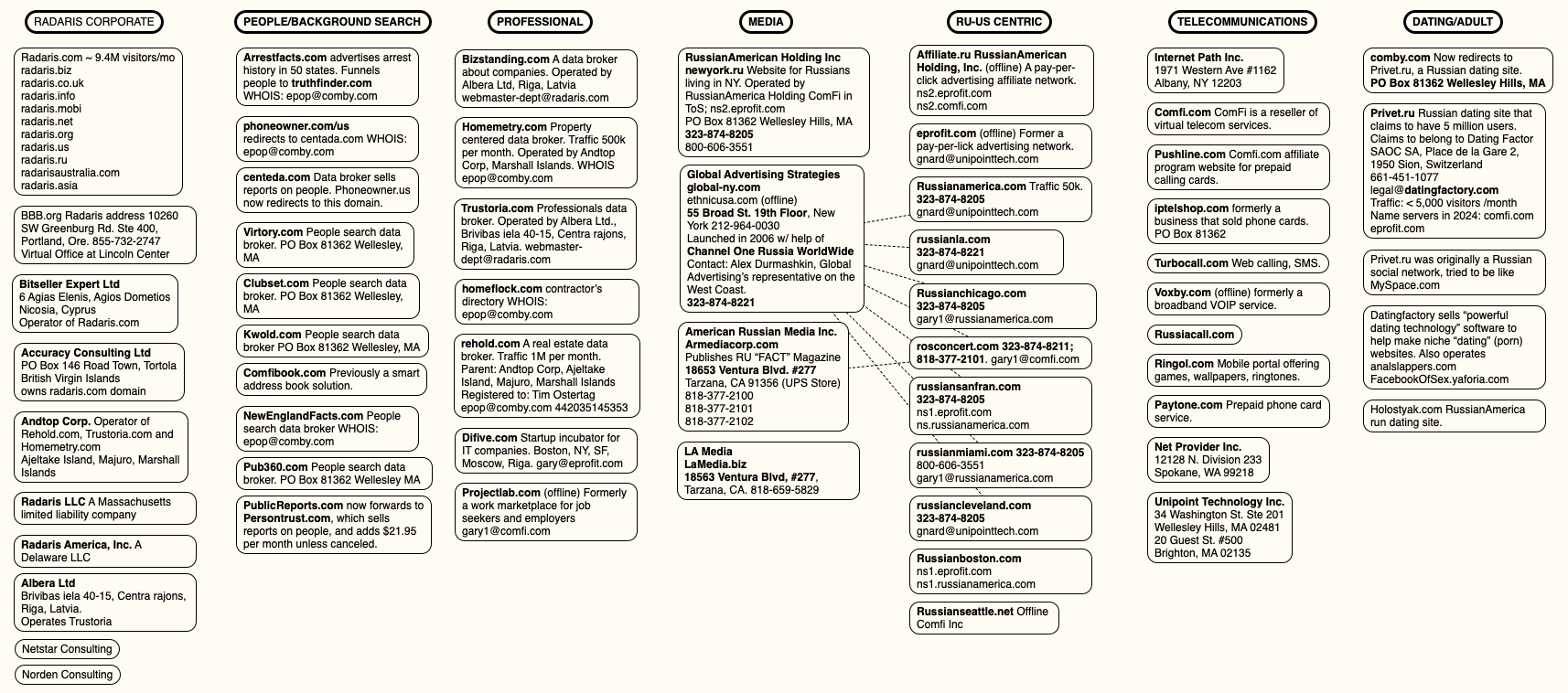
The conflict between Atlas Data Privacy Corp and the operators of Radaris dates back to early 2024, when the initial lawsuit was filed. However, the operational history of the entity is far older, characterized by what industry observers describe as an "island-hopping" strategy. Throughout the legal proceedings, Radaris and its associated entities frequently shifted their legal domiciles—moving between jurisdictions such as the Marshall Islands, the British Virgin Islands, and the Seychelles—to evade service of process and satisfy regulatory scrutiny.
In March 2024, investigative reports began to illuminate the identities behind the curtain: Igor and Dmitry Lubarsky, Russian-born brothers based in Massachusetts. Despite the brothers’ initial threats of defamation litigation and their attempts to attribute ownership to Ukrainian entities, subsequent investigations revealed that the brothers maintained control over an expansive portfolio of data-scraping operations.
The legal strategy employed by the defense was marked by a pattern of "last-minute" court appearances, attempts to delay, and the invention of fictitious executive personas. Most notably, the company admitted to utilizing a fabricated CEO named "Gary Norden" in press releases and investor communications to present an air of corporate legitimacy. By June 2025, Atlas re-filed its complaint, significantly expanding the scope of the litigation to include a wider array of the Lubarsky-linked data broker portfolio. The resulting default judgment, finalized in late August 2026, serves as a critical precedent for how courts may handle non-compliant, foreign-registered data brokers that attempt to hide behind anonymous holding companies.
The Anatomy of a Data Empire
Documents obtained during the discovery phase of the litigation provide a rare, granular look into the economics of the people-search industry. According to data shared by Atlas, the Radaris ecosystem is far more consolidated than the public-facing sites suggest. While the sites are branded individually—with names like Veripages, Nuwber, and others—they share backend infrastructure, payment processors, and administrative mail domains.
Analysis of over 10,000 internal emails and financial documents suggests that these websites function as a singular, highly lucrative enterprise. Monthly revenue estimates for the network reach deep into six figures, bolstered by advertising partnerships with major marketing firms such as the Lifetime Value Company. Furthermore, the documents reveal a symbiotic, if not parasitic, relationship with "privacy removal" services. Some of these removal firms, which charge consumers to have their data scrubbed, have historically maintained back-end partnerships with the very data brokers they claim to protect users from, effectively monetizing the threat and the cure simultaneously.
The Constitutional Front and the Future of Privacy Law
The Radaris case is not an isolated incident but a focal point of a broader constitutional struggle. Across the United States, roughly 150 lawsuits are currently testing the limits of state-level privacy statutes like Daniel’s Law. Data broker trade groups have mounted an aggressive defense, filing motions to move these cases into federal courts and challenging the laws as infringements on First Amendment rights.
The defense, led by attorneys such as Victor Worms, maintains that the transfer of Radaris.com is a violation of due process, arguing that the domain is owned by distinct legal entities that were not properly served or represented in the default judgment. "We intend to pursue all appropriate appeals because we believe the transfer of Radaris.com amounts to a forfeiture in violation of various constitutional principles," Worms stated in recent filings.

The judiciary remains divided. While a federal court in West Virginia recently ruled that a similar version of Daniel’s Law was facially unconstitutional, the New Jersey court’s decision to move forward with the domain transfer suggests a growing judicial impatience with the obfuscation tactics employed by the data broker industry.
Broader Implications for Digital Surveillance
Privacy experts argue that the Radaris case highlights a fundamental failure in the American legislative approach to data protection. Justin Sherman, a prominent privacy researcher, notes that while Daniel’s Law provides necessary protections for public officials, the vast majority of American citizens remain vulnerable to the commercialization of their personal lives.
The root of the issue lies in the broad exemptions carved out for "public records." Because data brokers rely on harvesting information from voting registries, property filings, marriage certificates, and motor vehicle records, they often argue their business models are protected by the First Amendment. This creates a regulatory "wild west" where the sale of sensitive, non-public data—such as home addresses and phone numbers—is often bundled with public data, making it nearly impossible for the average consumer to opt out effectively.
Furthermore, the lack of federal standards for data handling has allowed for a proliferation of security risks. Recent incidents, such as the catastrophic breach at IDScan.net, which exposed 153 million driver’s licenses, underscore the dangers of a system where sensitive identity documents are scanned and stored by third-party intermediaries without federal oversight.
Looking Toward Federal Reform
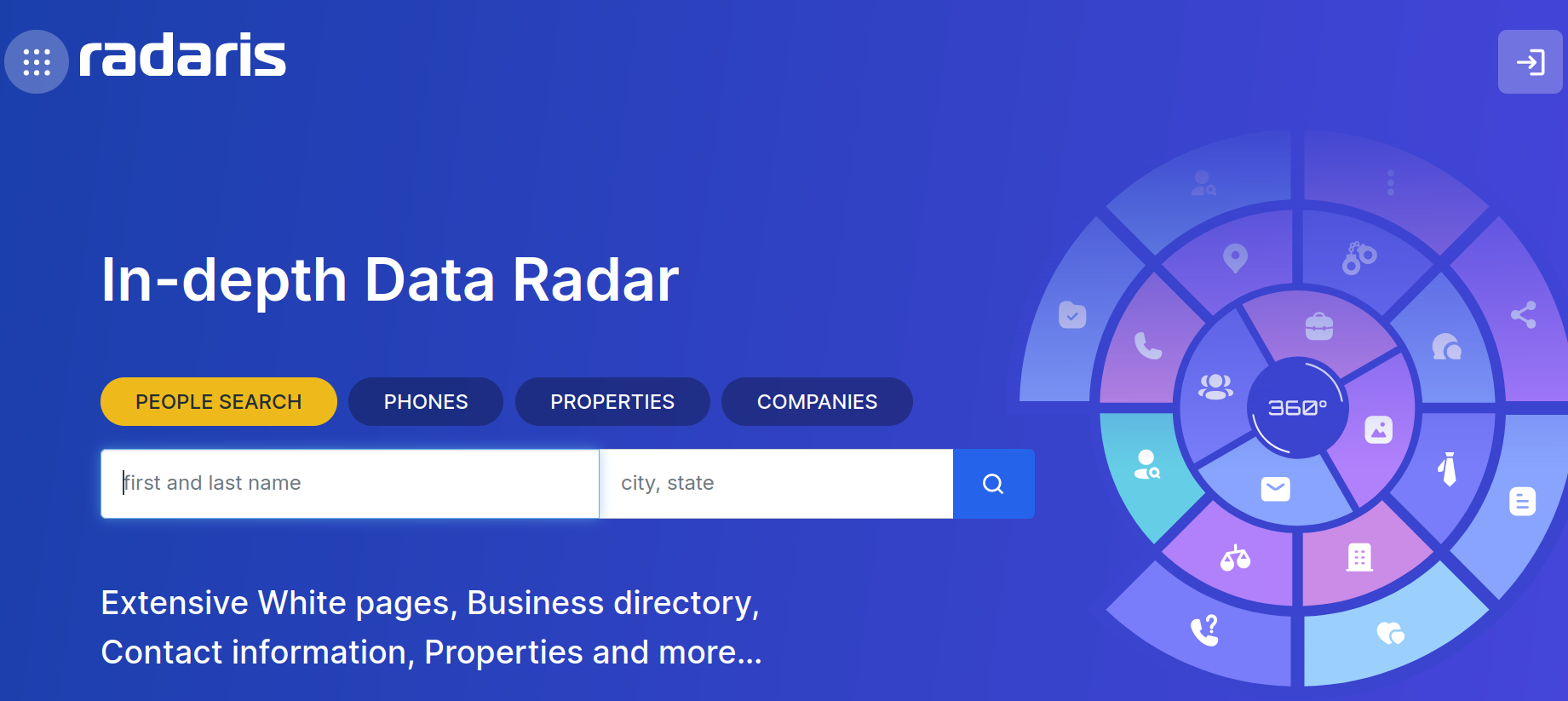
The transition of Radaris.com to a site that informs users about the legal action taken against it is a symbolic victory, but its long-term impact depends on the pending appellate rulings. The U.S. Supreme Court is widely expected to eventually weigh in on the constitutionality of Daniel’s Law, potentially setting a national standard for whether states have the authority to restrict the publication of sensitive personal information by private commercial entities.
Until federal legislation is enacted to close the loopholes currently exploited by the data broker industry, the burden of protection remains skewed toward those with the resources to pursue litigation. As Sherman concludes, the reliance on state-by-state laws is a stopgap measure. "We don’t need more wake-up calls," he observed. "The lack of comprehensive federal privacy law is not for a lack of knowledge."
As the Radaris domains remain under the control of Atlas Data Privacy Corp, the industry is watching closely. If the domain transfers are upheld on appeal, it could signal the beginning of a new era where the cost of non-compliance—specifically the loss of digital real estate and the ability to operate—finally outweighs the profits of selling personal data. For now, the Radaris homepage serves as a stark reminder that even the most obscure digital empires can be brought to account when legal pressure is applied with sufficient focus and persistence.
Related posts: