AI-Powered Initiative Releases 3D Structures for Thousands of Viral Protein Complexes to Fortify Global Pandemic Preparedness

When the SARS-CoV-2 virus emerged at the end of 2019, triggering the global COVID-19 pandemic, the scientific community possessed a critical head start. Decades of prior academic and pharmaceutical research on coronaviruses had already mapped out the virus’s key proteins in rigorous detail. This foundational knowledge allowed researchers to design, test, and manufacture effective vaccines in record-shattering timeframes. However, epidemiologists and virologists warn that the next global health emergency may not offer the same luxury of prior preparation. Emerging pathogens often come from entirely unexpected viral families, leaving researchers scrambling to understand their molecular architecture from scratch.
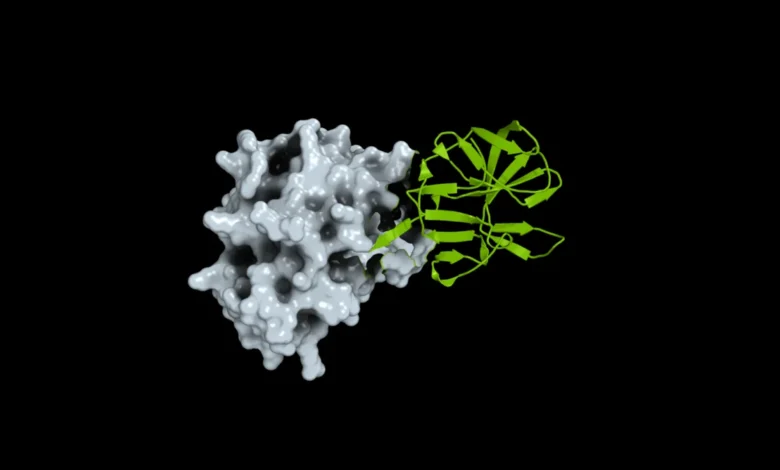
To dramatically improve global odds against future biological threats, a coalition of premier research institutions and technology leaders—including NVIDIA, Google DeepMind, and the European Molecular Biology Institute’s European Bioinformatics Institute (EMBL-EBI)—has announced the public release of predicted 3D structures for the protein complexes of more than 2,800 viruses. This monumental dataset has been made openly available to researchers, academics, and pharmaceutical developers worldwide through the AlphaFold Database, effectively removing financial and logistical barriers to foundational biological data.
Scaling Structural Biology Through Artificial Intelligence
The generation of this unprecedented dataset was made possible by combining Google DeepMind’s revolutionary AlphaFold2 AI model—which predicts how linear amino acid sequences fold into intricate three-dimensional shapes—with the high-throughput optimization capabilities of the NVIDIA BioNeMo Inference Runtime. Traditionally, mapping a single protein structure required years of painstaking laboratory work, involving protein crystallization and X-ray crystallography, with costs scaling into the thousands of dollars per structure. By leveraging GPU-accelerated computing, the coalition was able to scale inference to thousands of viral proteomes simultaneously, predicting complex groups of interacting proteins within each virus in a matter of minutes.
The collaborative effort systematically targeted viral families known to infect humans, ranging from common-cold pathogens to high-consequence emerging threats such as the Mpox virus. Crucially, approximately 30 percent of the protein interactions mapped within this new release are entirely novel to science. These structures reveal interaction geometries that have never been documented in the Protein Data Bank, the premier global repository for experimentally determined protein structures. This massive influx of data provides the global scientific community with an unprecedented foundation for hypothesis generation, drug discovery, and diagnostic development.
A Race Against Time: The Growing Threat of Future Pandemics
The urgency of preemptive structural biology is underscored by sobering statistical models. According to comprehensive risk analyses conducted by the Center for Global Development, there is a roughly 50 percent statistical probability that the world will face a pandemic as severe and disruptive as COVID-19 by the year 2050. This heightened risk profile is driven by a convergence of environmental, ecological, and sociological factors, including increased human encroachment into wildlife habitats, accelerated global travel, and changing climatic zones that expand the natural ranges of vector-borne and zoonotic diseases.
Experts emphasize that waiting for a novel pathogen to emerge before beginning structural research is an increasingly untenable strategy. When a new pathogen leaps from animal populations to humans, researchers often face a profound knowledge deficit. By proactively mapping the proteomes of thousands of viruses that possess pandemic potential, the scientific community is essentially building a comprehensive intelligence library ahead of time. This proactive stockpiling of biological data ensures that if a novel pathogen causes an outbreak, therapeutics and vaccine development pipelines can bypass months of foundational guesswork.
International Collaboration and Open-Access Philosophy
The timing of the dataset’s release aligns with high-level international policy discussions. The announcement coincided with a United Nations General Assembly meeting convened by the World Economic Forum in New York City, dedicated entirely to global pandemic prevention, preparedness, and response frameworks. The coalition behind the initiative is truly global, uniting organizations such as the Coalition for Epidemic Preparedness Innovations (CEPI), EMBL-EBI, Google DeepMind, NVIDIA, Seoul National University, Sungkyunkwan University, the Swiss Institute of Bioinformatics, and the University of Glasgow.
With this latest inclusion, the AlphaFold Database now houses more than 260 million individual protein and protein complex predictions, covering virtually every cataloged protein known to science. By making these complex structures freely available, the project democratizes advanced biological research. Scientists operating in low-resource settings, who frequently find themselves on the front lines of localized disease outbreaks, now possess direct access to high-fidelity structural data without needing expensive institutional subscriptions or specialized supercomputing infrastructure.
Implications for Drug Discovery, Diagnostics, and Academia
Most biological functions within living organisms are not executed by isolated proteins, but rather by intricate complexes composed of multiple interacting molecules. It is typically these multi-protein complexes that serve as the primary targets for pharmacological interventions, antiviral drugs, and neutralizing antibodies. Understanding the exact 3D geometry of these complexes allows medicinal chemists to design molecules that can physically disrupt viral replication mechanisms with high precision.
The implications of this open-access database extend deeply into academic training and foundational science. Early-career researchers and graduate students no longer need to navigate structural biology in the dark or spend years attempting to crystallize unknown proteins for their dissertations. Instead, they can utilize high-confidence structural predictions to accelerate their hypotheses and transition rapidly into experimental validation. As computational biology and artificial intelligence continue to converge, initiatives like the BioNeMo Structure Prediction Pipeline and the AlphaFold Database represent a paradigm shift in how humanity anticipates, understands, and ultimately neutralizes biological threats before they escalate into global crises.