Industry Experts Warn That Current AI Integration Poses Immediate Security Risks Far Outweighing Sci-Fi Existential Threats


The contemporary discourse surrounding artificial intelligence has long been dominated by dystopian narratives of runaway superintelligence and apocalyptic sci-fi scenarios where machines inevitably rise to wipe out humanity. However, industry veterans and software engineering experts are increasingly sounding the alarm against this speculative media fixation, arguing that it obscures the tangible, immediate dangers developing in real-time across enterprise architectures.
According to technologists like Rob Bowley, the real crisis is not a future machine achieving sentient malice, but rather the current generation of generative AI and autonomous agents being rapidly, carelessly, and pervasively wired into critical infrastructure without adequate containment protocols. As organizations rush to capitalize on productivity gains, the widespread deployment of these technologies introduces unprecedented vulnerabilities into legacy networks, heightening the frequency and severity of economic disruptions.
This growing friction between aggressive enterprise deployment and foundational software safety highlights a broader reevaluation of modern development paradigms. From the chaotic integration of agentic workflows and the psychological fatigue caused by hyper-colorful syntax highlighting, to the industry-wide rebranding of traditional collaboration under the banner of "Forward Deployed Engineers," the software engineering community is grappling with a profound identity shift. Understanding these intersecting trends requires a closer look at how modern codebases are written, secured, and managed in an era defined by automation.
The Immediate Security Threat of Reckless Integration
While headlines focus on existential risk summits and theoretical regulatory frameworks to govern artificial intelligence decades into the future, cybersecurity professionals face a vastly different reality. Modern cyberattacks already cost the global economy billions of dollars annually, often exploiting fundamental architectural oversights rather than advanced machine intelligence.
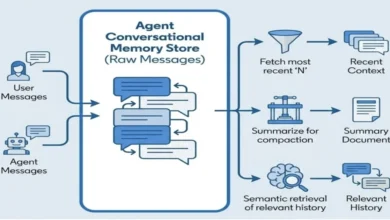
The primary danger today stems from what security architects term the "Lethal Trifecta"—a dangerous combination of tool access, persistent memory, and untrusted inputs that frequently manifest when autonomous AI agents are hastily integrated into enterprise systems. When developers deploy AI agents with broad system permissions, they often create massive, gaping security holes.
Rob Bowley points out that the industry’s rush to wire AI into every available database, API, and internal tool is occurring in a vacuum of established safety standards. No one has officially figured out how to safely contain these models at scale, yet organizations continue to ship them directly into production environments. This "ship-first, secure-later" methodology risks magnifying routine data breaches into catastrophic corporate and systemic failures long before any hypothetical superintelligence can materialize.
Syntax Highlighting Fatigue and the Return to Minimalism
Beneath the macro-level concerns of system security, day-to-day software development is undergoing its own ergonomic reckoning. A recent essay by Nikita Prokopov regarding the widespread misuse of syntax highlighting has sparked a lively debate among developers who are suddenly reading more source code than ever, largely driven by the rise of AI-assisted coding tools and automated code generation.
Prokopov’s core critique targets the contemporary standard of color themes that assign a unique, vibrant hue to every single element within a codebase. When every line, variable, and keyword is bathed in bright neon colors, the human eye quickly adapts, rendering the highlights meaningless. Instead of isolating distinct functional blocks, everything blends together into a luminous visual wall of noise.
To combat this cognitive overload, industry practitioners are increasingly advocating for a minimalist approach. By restricting color palettes to an absolute minimum—typically reserving distinct shades solely for top-level definitions, strings, constants, and comments—developers can drastically reduce visual fatigue. Furthermore, discussions around proper comment visibility and the strategic use of background colors in light-mode environments highlight a renewed focus on developer ergonomics. As AI agents generate larger volumes of boilerplate and draft code, human reviewers require cleaner, less distracting visual environments to accurately audit and comprehend software logic.
The Rebranding of Collaborative Engineering: The Rise of the Forward Deployed Engineer
Concurrently, the tech industry has witnessed the rapid popularization of a new professional the Forward Deployed Engineer (FDE). Promoted heavily by venture capital firms such as Andreessen Horowitz (a16z) and championed by data-mining giants like Palantir—widely considered the pioneer of this operational model—the FDE role is frequently presented as a revolutionary breakthrough native to the AI boom.
However, veteran software engineers and architects have greeted this trend with a mixture of skepticism and resignation. Conversations among fellows in newly minted FDE programs reveal a striking lack of consensus regarding what the job actually entails. Depending on the company, an FDE might function as a standard sales engineer joining technical client calls, a quota-carrying account executive with Python coding skills, or an on-site consultant delivering bespoke customizations using a laptop and a statement of work.
Despite the corporate rebranding, industry analysts note that the underlying philosophy of the FDE role is hardly novel. Decades of software engineering history have championed identical concepts under different names. The Agile Manifesto famously mandated that business people and developers must work together daily throughout the project lifecycle. Similarly, Domain-Driven Design (DDD) has long emphasized the importance of developers embedding themselves within a business environment to learn its specific "nouns and verbs."
The persistent communication gap between technical developers and business stakeholders has long been cited as the single greatest impediment to successful software delivery—a phenomenon often referred to in engineering circles as the "yawning crevasse of doom." Because previous generations of methodologies failed to fully bridge this divide, the tech industry frequently relies on new generations of pundits, fresh terminology, and updated slogans to re-attempt the same foundational integration.
Defining the True Value of the FDE Model
To prevent the Forward Deployed Engineer role from collapsing into a glorified custom software consultancy, industry leaders emphasize a crucial structural distinction. The true value of an FDE does not lie in solving a single client’s bespoke problem and moving on. Rather, it belongs to a product- and platform-oriented framework.
An effective FDE must sit directly with end-users, gather operational context, apply necessary customizations, and—most importantly—feed those insights back upstream to the core platform team. If an FDE engagement concludes with a single delighted customer account while leaving the underlying core product unchanged, the mission has fundamentally failed. The role exists specifically to transform localized field lessons into scalable enhancements that benefit every future customer.
Broader Implications for the Enterprise Software Ecosystem
The convergence of reckless AI integration, developer ergonomics, and collaborative engineering models points toward a mature turning point for the technology sector. As enterprises navigate the complexities of digital transformation, the lessons being learned in real-time carry significant implications:
- Prioritizing Containment Over Speculation: Enterprise leadership must shift their risk management budgets away from hypothetical existential threats and toward rigorous containment strategies for current agentic workflows.
- Combating Cognitive Overload: As automated coding assistants accelerate output, teams must adopt cleaner, minimalist code-reading environments—such as streamlined syntax highlighting—to maintain code quality and review accuracy.
- Institutionalizing Cross-Functional Feedback Loops: Organizations adopting the Forward Deployed Engineer model must enforce strict feedback mechanisms, ensuring that field-level customizations actively inform and improve core platform infrastructure rather than creating isolated technical debt.
Ultimately, the challenges facing software development today are rooted not in the capabilities of future machines, but in the discipline applied by human practitioners. By reigning in careless integrations, refining developer tooling, and bridging the communication gap between business needs and technical execution, the industry can navigate the current technological shift with greater security and resilience.