Unlocking Universal Quantum Computing: Researchers Demonstrate Full Gate Set Using Non-Abelian Anyons

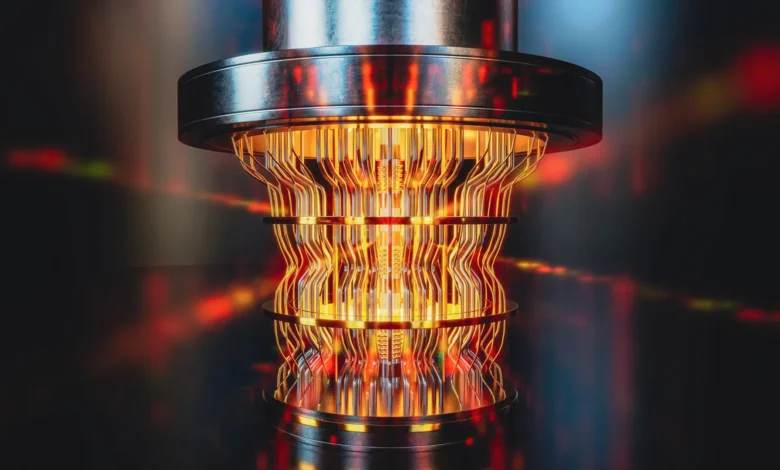
The pursuit of a practical, fault-tolerant quantum computer has long been hindered by a fundamental architectural dilemma: how to build a machine capable of executing any arbitrary quantum algorithm while simultaneously protecting delicate quantum information from environmental noise. Conventional quantum computers rely on standard qubits that are notoriously susceptible to decoherence and external interference, requiring massive overhead in error-correction protocols. However, a collaborative team of researchers from the University of Chicago Pritzker School of Molecular Engineering (UChicago PME), Harvard University, Stony Brook University, and quantum computing firm Quantinuum has unveiled a breakthrough that could fundamentally alter this trajectory. By generating and manipulating exotic quasiparticles known as non-Abelian anyons on a commercial trapped-ion processor, the scientific team has successfully demonstrated a complete universal gate set, pointing the way toward a more efficient generation of fault-tolerant quantum hardware.
The findings, published in the peer-reviewed scientific journal Nature, mark a critical milestone in experimental physics and computer science. For decades, non-Abelian anyons existed primarily as theoretical constructs—exotic mathematical entities proposed to solve the topological protection of quantum data. Now, by leveraging 54 entangled qubits on Quantinuum’s H2 advanced hardware platform, researchers have translated these abstract theories into physical reality. This achievement not only proves that non-Abelian anyons can support the broad range of operations required for universal quantum computing, but it also suggests a potential shortcut around one of the most resource-intensive bottlenecks in contemporary quantum architecture: magic state distillation.
Main Facts and the Breakthrough Architecture
To understand the magnitude of the recent demonstration, one must examine the limitations of traditional quantum computing architectures. Standard quantum computers encode data in individual qubits—the quantum equivalent of classical bits—which can exist in a superposition of zero and one. Because these states are fragile, environmental fluctuations can easily induce errors. To combat this, modern fault-tolerant designs spread logical information across dozens or even hundreds of physical qubits using complex error-correction codes.
While these codes protect data against stray magnetic fields and thermal noise, they inherently restrict the types of direct mathematical operations that can be performed on the protected information. To perform a universal set of computations—meaning any algorithmic operation a programmer might wish to run—engineers must supplement these codes with specially prepared resources called magic states. Producing these magic states requires an intensive purification procedure known as distillation. In many proposed fault-tolerant architectures, magic state distillation can consume upward of 80 to 90 percent of a quantum computer’s physical resources, drastically slowing down processing speeds and inflating hardware requirements.
The new research demonstrates that non-Abelian anyons can bypass this expensive paradigm. Unlike ordinary particles in our three-dimensional universe, non-Abelian anyons do not appear as fundamental elementary particles. Instead, they are emergent quasiparticles engineered within the intricate landscapes of quantum circuits. By entangling numerous conventional qubits into a collective state, scientists create a controlled environment—effectively a specialized microcosm—that obeys distinct physical laws.
Ruben Verresen, assistant professor of molecular engineering at UChicago PME and a co-author of the study, described the conceptual framework behind the work by noting that these codes construct alternative universes that reflect specific topological properties. Within these engineered spaces, each anyon carries an internal state that undergoes transformation when one anyon is physically or logically moved around another in a process called braiding. Because the term "non-Abelian" indicates that the sequence of these braiding operations matters, the order of manipulation directly alters the mathematical outcome. This allows information to be encoded in a globally distributed, topologically protected manner that is inherently resilient to localized noise.
A Chronological Timeline of Topological Quantum Milestones
The path toward utilizing non-Abelian anyons for universal quantum computation has evolved over more than two decades, transitioning from theoretical physics to rigorous experimental implementation.
The foundational theoretical architecture was laid in 2003 by physicist Carlos Mochon, who was then a doctoral student under the supervision of renowned theoretical physicist John Preskill at the California Institute of Technology (Caltech). Mochon mathematically outlined how specific non-Abelian anyonic systems, particularly those associated with discrete symmetry groups like S3 (the symmetries of an equilateral triangle), could theoretically support universal quantum computation when combined with specific measurement techniques. However, for nearly twenty years, these concepts remained strictly on paper, as contemporary quantum hardware lacked the coherence, scale, and control required to simulate them.
The technological landscape began to shift dramatically in the early 2020s with the maturation of trapped-ion quantum processors. A major breakthrough occurred in 2024, when a research team including Verresen utilized Quantinuum’s trapped-ion hardware to experimentally create anyons associated with a symmetry group known as D4—representing the rotations and reflections that leave a square unchanged. This landmark experiment marked the first time non-Abelian order had been successfully demonstrated and manipulated on programmable quantum hardware.
Despite the success of the 2024 experiment, that specific configuration possessed a critical limitation: braiding the D4 anyons alone was insufficient to carry out every operation required for universal quantum computing. As Verresen noted regarding that prior phase, the specific universe created in the lab lacked the computational power necessary for universal operations; braiding alone could not unlock the full mathematical repertoire needed for arbitrary software execution.
The recent study represents the culmination of this evolutionary timeline. Recognizing that the D4 symmetry group was insufficient, the research collective transitioned to the S3 symmetry group. By deploying Quantinuum’s H2 processor and orchestrating 54 entangled qubits, the team successfully instantiated S3 anyons and demonstrated that combining braiding with a secondary operation known as fusion unlocked a complete universal gate set.
The Mechanics of Fusion and Topological Qutrits
The transition from D4 to S3 symmetry was not merely a matter of scaling up qubit counts; it required a fundamental shift in how quantum information was manipulated. While braiding provides a robust way to alter quantum states through topological movement, it cannot generate every required mathematical transformation on its own.
To bridge this gap, the researchers integrated "fusion" into the operational cycle. During fusion, two non-Abelian anyons are brought together, and the resulting combined state is physically measured. This destructive or semi-destructive measurement collapses the collective state in a controlled manner, yielding critical computational outcomes that cannot be achieved through pure braiding alone.
To maximize the efficiency of this approach, the team utilized pairs of anyons to encode what they termed "topological qutrits." Unlike standard qubits, which store information in two discrete levels (zero and one), qutrits operate across three distinct levels of quantum information. This higher-dimensional encoding significantly increases the information density per particle.
Through a precise sequence of braiding and fusion operations, the researchers successfully demonstrated three foundational computational tools: an entangling gate produced exclusively through braiding, and two distinct measurement protocols created via fusion. Together, these operations form a mathematically complete universal gate set, capable in principle of executing any quantum algorithm. Furthermore, the team demonstrated that these topological operations could directly generate a magic state, bypassing the resource-heavy distillation pipelines traditionally required in fault-tolerant architectures.
Official Responses and Scientific Reactions
The collaboration spanning academic institutions and private industry drew widespread praise from the quantum computing community, highlighting the unique synergy between theoretical physics and advanced hardware engineering.
Henrik Dreyer, managing director and scientific lead at Quantinuum’s Munich office and a co-author of the study, emphasized the disruptive potential of the work for error correction strategies. "Non-Abelian codes are a dark horse in the race to quantum error correction," Dreyer stated. He noted that the experiment provides the first empirical proof that fault-tolerant computations can theoretically be executed without relying on magic state distillation or cultivation, which currently represent the most computationally expensive operations in standard quantum error correction codes.
Graduate students Anasuya Lyons and Chiu Fan Bowen Lo of Harvard University, who worked within the research group led by Professor Ashvin Vishwanath and helped spearhead the experimental design, expressed deep personal satisfaction seeing decades-old theories validated in a physical laboratory setting. They credited the rapid acceleration of quantum hardware capabilities over the preceding few years as the primary catalyst that transformed theoretical concepts into verifiable laboratory results.
Broader Impact, Analysis, and Future Implications
While the implications of this research are profound, scientists emphasize that the recent demonstration represents a vital proof-of-principle rather than an immediate commercial deployment. Crucially, the current experimental setup did not incorporate active, real-time error correction. The primary objective was to isolate and validate the individual building blocks of the S3 non-Abelian architecture—confirming that entanglement, braiding, and fusion could operate in harmony to produce a valid universal gate set and generate magic states consistent with theoretical predictions.
The next phase of research will focus on the formidable task of integrating these topological operations with active, continuous error-correction frameworks. If research teams can successfully merge non-Abelian anyonic protection with fault-tolerant error syndication, the implications for the quantum computing industry will be transformative.
By eliminating or drastically reducing the need for magic state distillation, hardware developers could reclaim vast processing overhead, allowing a significantly higher percentage of physical qubits to be dedicated to actual algorithmic computation rather than error overhead management. This could dramatically accelerate the timeline toward commercially viable, fault-tolerant quantum computers capable of solving intractable problems in cryptography, molecular chemistry, materials science, and global optimization.
As Ruben Verresen and his colleagues at the Pritzker School of Molecular Engineering continue developing new techniques for stabilizing non-Abelian quantum memories, the scientific community moves one step closer to realizing the ultimate vision of general-purpose quantum machinery—turning exotic theoretical physics into the reliable software-running hardware of tomorrow.