DHL eCommerce aggressively targets Eastern European expansion as part of a five-year revenue doubling strategy

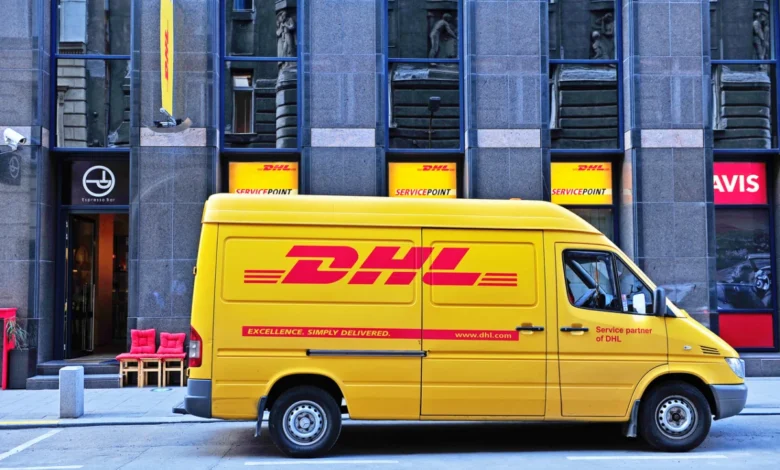
The logistics landscape in Europe is undergoing a seismic shift as DHL eCommerce, a core division of the DHL Group, pivots its strategic focus toward Eastern Europe to secure its dominance in the cross-border parcel market. Following a series of tactical consolidations in Western and Southern Europe, the company has identified the Baltic and Eastern European corridors as the primary frontier for its next phase of growth. CEO Pablo Ciano recently confirmed that the organization is actively seeking further acquisition targets in the region, marking a departure from the consolidated markets of the West toward the high-growth, fragmented logistics landscapes of the East.
A Strategic Pivot Toward Eastern Europe
For years, DHL eCommerce prioritized stabilizing its footprint in the mature markets of the United Kingdom, Germany, and the Iberian Peninsula. Having successfully merged its UK parcel operations with the logistics provider Evri and established a robust strategic partnership with CTT in Portugal and Spain, the company has effectively "filled the gaps" in its Western European network. According to industry analysts, these moves were intended to create a seamless, interconnected infrastructure capable of handling the ballooning volume of e-commerce goods.
With those regions stabilized, the executive leadership at DHL has turned its gaze eastward. The decision is driven by a desire to control the entire supply chain, from the initial "first mile" of domestic collection to the "last mile" of delivery to the consumer’s doorstep. By acquiring local players, DHL avoids the arduous task of building infrastructure from scratch in markets where regulatory and geographic hurdles are significant. The goal is to create a unified, frictionless cross-border network that allows a parcel to move from a warehouse in Lithuania to a consumer in Germany with the same ease as a domestic shipment.
The Venipak Acquisition: A Blueprint for Growth
The cornerstone of this new Eastern European strategy is the acquisition of Venipak, a deal formally announced in July. The transaction, which remains subject to customary regulatory approvals, provides DHL with an immediate, mature operational base in Lithuania, Latvia, and Estonia. Venipak is not merely a delivery company; it is a technology-integrated logistics provider with a network of approximately 800 parcel lockers and an extensive fleet of collection points.
This acquisition is illustrative of DHL’s broader philosophy: buying into local intelligence. By absorbing Venipak’s existing domestic delivery network, DHL bypasses the time-consuming process of establishing local brand trust and logistical routes. Once the integration is finalized, DHL plans to weave these 800 lockers into its global tracking and management systems. This will allow international e-commerce merchants to offer standardized, high-speed delivery options to Baltic consumers, effectively bringing these previously peripheral markets into the mainstream of European e-commerce.
Chronology of Recent Logistical Consolidations
The expansion into the Baltics is the latest chapter in a multi-year effort to restructure DHL’s European operations. The timeline of these efforts reveals a deliberate, calculated approach to market dominance:
- 2023–2024 (Western Focus): DHL completes the integration of its UK parcel business with Evri, creating a powerhouse in the British market. Simultaneously, it initiates the joint venture with Poste Italiane to deploy a widespread network of automated parcel lockers throughout Italy.
- Early 2025 (Iberian Integration): The strategic partnership with CTT in Portugal and Spain is formalized, creating a corridor that significantly reduces transit times for goods moving between the Mediterranean and the rest of Europe.
- July 2025 (Baltic Entry): The agreement to acquire Venipak is announced, signaling a shift in investment toward the Baltics.
- Late 2025–Present (The Eastern Push): DHL leadership begins openly courting further acquisition targets in Eastern Europe, signaling that the Venipak deal was a launchpad rather than a standalone event.
The Rise of the Second-Hand Economy and Parcel Points
Beyond traditional e-commerce, DHL is reacting to a radical shift in consumer behavior: the rise of the circular economy. The surge in second-hand marketplaces, such as Vinted, has created a new class of logistics demand that differs significantly from traditional retail shipments. In traditional retail, goods move from a warehouse to a consumer. In the second-hand economy, individual consumers are both senders and receivers, often moving lower-value, high-frequency items across borders.
Data from the market highlights the scale of this phenomenon. Vinted reported a Gross Merchandise Value (GMV) of 10.8 billion euros in 2025, a staggering 47 percent increase year-over-year. As these platforms connect buyers and sellers across national boundaries, the demand for affordable, efficient, and accessible drop-off points has skyrocketed.
DHL is uniquely positioned to capitalize on this. CEO Pablo Ciano noted that volumes handled through parcel shops and lockers are growing by approximately 50 percent annually. By expanding the locker network—whether through direct ownership or joint ventures—DHL is creating the physical infrastructure required to support the second-hand market. The partnership between DHL and Vinted in Germany, which simplifies the process of using DHL lockers for peer-to-peer shipments, serves as a pilot program for similar initiatives expected to roll out across the rest of Europe.
Financial Implications and Long-Term Objectives
The financial stakes are significant. In 2025, DHL eCommerce generated 6.9 billion euros in revenue. The company has set a public, strategic goal to double this figure over the next five years. While this is an ambitious target, it is underpinned by the consistent 15 percent annual growth rate currently observed in its cross-border parcel division.
Analysts point out that the revenue target is not merely a reflection of increased volume but of increased efficiency. By owning the local delivery network, DHL reduces its reliance on third-party contractors, which can fluctuate in price and reliability. Furthermore, by developing specialized routes between Europe and the Americas, the company is diversifying its revenue streams, ensuring that a slowdown in one region can be offset by growth in another.
Official Stance and Market Reaction
The executive team at DHL has maintained a consistent narrative regarding this expansion. During interviews with trade publications like DVZ, leadership has emphasized that the goal is not to become a "delivery giant" in the traditional sense, but to act as the primary connective tissue for the European digital economy.
Industry experts suggest that DHL’s strategy is a direct response to the "Amazon effect." As retailers and platforms seek to provide faster, cheaper delivery to maintain customer loyalty, the burden of logistics becomes a competitive differentiator. By controlling the parcel lockers and the local distribution hubs, DHL ensures it remains the partner of choice for major marketplaces. Competitors, particularly regional postal services, may find themselves at a disadvantage as they struggle to match the technological integration and cross-border capabilities that DHL is rapidly assembling.
Future Outlook and Challenges
While the expansion strategy appears robust, it is not without challenges. The integration of varied local technologies into a single unified platform is a complex IT undertaking. Furthermore, the regulatory landscape in Eastern Europe is fluid; cross-border operations must comply with varying labor laws, environmental regulations, and data privacy standards across the European Union and its neighbors.
However, the trajectory is clear. By prioritizing the acquisition of local assets and investing heavily in the "parcel-point" model, DHL eCommerce is attempting to insulate itself from the volatility of traditional courier models. As the second-hand market continues to mature and consumer expectations for "next-day" delivery become standard, the infrastructure being built today will likely define the logistics landscape of the next decade. The focus on Eastern Europe, therefore, is not merely an opportunistic expansion—it is a critical pillar of a long-term plan to dominate the evolving map of European commerce.