AI-Powered Global Coalition Releases 3D Structures for Thousands of Viral Proteins to Bolster Preemptive Pandemic Defense

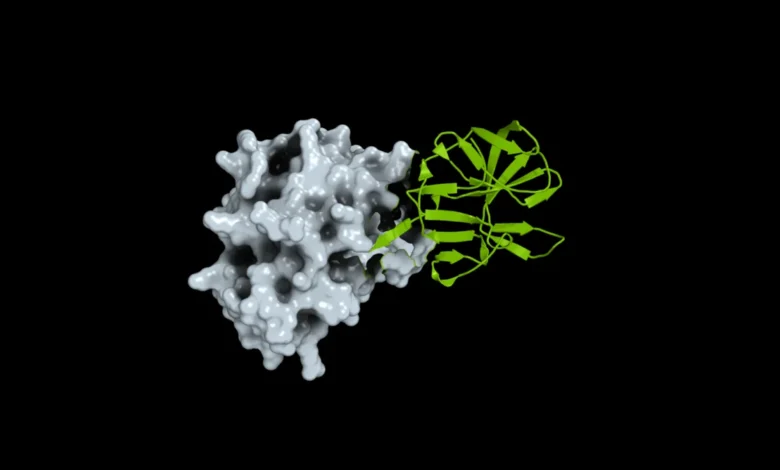
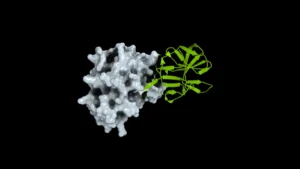
The global scientific community has taken a monumental step forward in proactive biological defense as a coalition of elite research organizations, spearheaded by NVIDIA, Google DeepMind, and the European Molecular Biology Laboratory’s European Bioinformatics Institute (EMBL-EBI), publicly released predicted three-dimensional structures for the protein complexes of more than 2,800 viruses. This unprecedented dataset, made openly available to researchers worldwide through the AlphaFold Database, aims to bridge a critical knowledge gap that could dictate humanity’s readiness for the next global health crisis.
When the SARS-CoV-2 virus emerged in late 2019, scientists retained a distinct advantage: decades of foundational research on coronaviruses meant researchers already understood the pathogen’s key proteins well enough to conceptualize and design life-saving vaccines in record-breaking time. However, epidemiologists and virologists warn that the next pandemic may not afford humanity the same luxury. Pathogens emerging from obscurity—frequently referred to by the scientific community as "Disease X"—could catch global health systems entirely off guard, lacking the structural blueprints traditionally required to rapidly develop diagnostics, treatments, and vaccines.
To fundamentally alter this dynamic, the newly unveiled dataset serves as a biological stockpile of structural intelligence. Crucially, roughly 30 percent of the protein interactions included in the release are entirely unprecedented to science, exhibiting geometric configurations and interaction shapes never before documented in the Protein Data Bank, the traditional repository for experimentally determined protein structures. By democratizing access to this complex biological data, the collaborative initiative intends to transform how researchers anticipate, model, and neutralize emerging infectious threats long before they cross over into widespread human transmission.
The Technological Breakthrough: Scaling AlphaFold2 with NVIDIA BioNeMo
The sheer scale of this biological dataset was made possible by marrying Google DeepMind’s revolutionary AlphaFold2 artificial intelligence model with NVIDIA’s high-performance computing architecture. AlphaFold2, renowned for solving the decades-old protein folding problem by accurately predicting how linear amino acid sequences fold into intricate 3D shapes, was optimized using the NVIDIA BioNeMo Inference Runtime.
Traditional experimental methods for determining protein structures—such as X-ray crystallography, nuclear magnetic resonance spectroscopy, and cryogenic electron microscopy—are notoriously arduous. These conventional techniques often require years of painstaking laboratory work and can cost thousands of dollars per individual structure. In contrast, the GPU-accelerated pipeline developed for this initiative enabled the research team to scale inference across thousands of viral proteomes in a fraction of the time, predicting the structures of complex multi-protein assemblies in mere minutes.
Furthermore, NVIDIA is openly releasing the BioNeMo Structure Prediction Pipeline, the exact GPU-accelerated workflow utilized to generate the dataset. This open-source release empowers independent researchers, academic institutions, and biotechnology startups to transition seamlessly from a raw protein sequence to a predicted 3D structure for their specific targets, drastically lowering the barrier to entry for structural biology research on a global scale.
The Looming Threat: Why Preemptive Defense Matters Now
The urgency of this data release is underscored by sober epidemiological projections. An exhaustive analysis conducted by the Center for Global Development estimates a roughly 50 percent statistical probability that the world will face another pandemic as severe as COVID-19 by the year 2050. As global interconnectedness, climate change, and urbanization continue to drive close interfaces between human and animal populations, the velocity at which novel pathogens can emerge and spread has accelerated significantly.
Historically, virology has been largely reactive. Researchers wait for an outbreak to occur, isolate the pathogen, and subsequently scramble to understand its molecular machinery. This reactive stance inevitably costs months of critical time during which infections multiply and economic disruption compounds. By systematically mapping out the proteomes of viral families known to infect humans—spanning everything from common cold viruses to high-consequence pathogens like Mpox—the coalition’s dataset represents a deliberate shift from reactive containment to proactive preparedness.
Collaborative Synergy and Global Access
The initiative is the culmination of a vast international partnership uniting organizations at the vanguard of artificial intelligence, structural biology, and public health. Alongside NVIDIA and Google DeepMind, the coalition includes the European Bioinformatics Institute (EMBL-EBI), the Coalition for Epidemic Preparedness Innovations (CEPI), Seoul National University, Sungkyunkwan University, the Swiss Institute of Bioinformatics, and the University of Glasgow.
The timing of the dataset’s unveiling was strategically aligned with a United Nations General Assembly high-level meeting convened by the World Economic Forum in New York City, focusing specifically on pandemic prevention, preparedness, and response. With this latest integration, the AlphaFold Database now houses more than 260 million protein and protein complex predictions, effectively cataloging nearly every known protein structure cataloged by science.
Crucially, the decision to keep the data completely open-access is designed to level the playing field for researchers working in low-resource settings. In many developing nations that bear the brunt of emerging infectious disease outbreaks, laboratories frequently lack the advanced hardware or capital required to perform high-throughput structural biology. By placing these high-confidence predictions directly into the hands of scientists on the front lines, the initiative ensures that global health defense is not restricted by geographic or financial limitations.
Perspectives from the Scientific Community
The profound implications of the new database are already resonating deeply across academic and applied research sectors. Leaders within the coalition emphasize that the release is not merely a static library of shapes, but a dynamic engine for scientific hypothesis generation.
"Our ambition with the AlphaFold Database has always been to democratize access to foundational biology at scale," noted Risha Patel, life sciences partnerships manager at Google DeepMind. "This collaboration to bring thousands of viral complexes into the database will equip scientists around the world with insights they need to help prepare for future outbreaks."
For veteran virologists who spent decades navigating the blind spots of early structural biology, the contrast is stark. Joe Grove, a professor of molecular virology at the Medical Research Council-University of Glasgow Centre for Virus Research and a key collaborator on the project, reflected on the evolution of the field. "When I did my Ph.D., there were no structures for any of the proteins we were investigating. It was like working in the dark—we had to guess what was going on," Grove explained. "When the next pandemic happens, there may be something that comes out of the blue, and we’ll be lacking the knowledge we had for COVID. What we’re trying to do is stockpile some of that knowledge ahead of time. This dataset is a powerful tool for all the researchers doing their Ph.D.s now, giving them high-quality structural data that’s going to accelerate fundamental science."
From an artificial intelligence and digital biology perspective, the release marks a critical evolution in how computational models interpret biological systems. Chris Dallago, applied research science team lead in digital biology at NVIDIA, emphasized the importance of looking beyond isolated molecules. "This database is an engine for hypothesis generation," Dallago stated. "We’re enabling biologists and the AI community to investigate protein interactions, not just as single molecules but as complexes, so the whole field can move forward."
Implications for Therapeutics, Diagnostics, and Future Research
Proteins rarely operate in isolation; rather, they form sophisticated molecular complexes to execute biological functions, replicate within host cells, and evade immune responses. It is these complex architectures that typically serve as the primary binding sites for therapeutic drugs and neutralizing antibodies. Understanding the precise three-dimensional geometry of these complexes is what allows medicinal chemists to design molecules that can successfully disrupt viral replication.
By mapping these interactions with high confidence, the dataset provides immediate utility for the development of broad-spectrum antiviral drugs and diagnostics. Even in cases where predictions require experimental verification, having a high-confidence structural model drastically cuts down the exploratory timeline, allowing wet-lab scientists to validate hypotheses in weeks rather than years.
Furthermore, EMBL-EBI interim director Jo McEntyre underscored the systemic value of the release for global health equity. "Making this data open is critical for understanding viral diagnostics and developing treatments and vaccines," McEntyre said. "The dataset also covers lesser-studied viruses and lowers the barriers for scientists in low-resource settings who are confronting outbreaks firsthand."
As the scientific community absorbs the sheer volume of data now accessible through the AlphaFold Database Pandemic Preparedness Portal, the broader realization is clear: the architecture of future pandemic defense will rely heavily on the synthesis of artificial intelligence, high-performance computing, and open-science collaboration. While the exact nature of the next global pathogen remains unknown, humanity is now measurably better equipped to decode, understand, and neutralize it before it begins its spread.
Related posts: