U.S. Army Soldier Sentenced to Prison for Massive Telecom Data Breach and Extortion Scheme

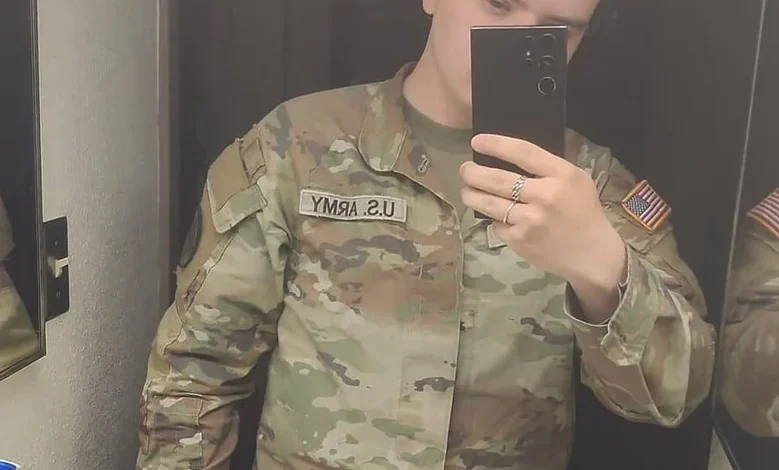
Cameron John Wagenius, a 22-year-old U.S. Army soldier formerly stationed in South Korea, has been sentenced to 70 months in federal prison following his role in one of the most significant telecommunications data breaches in recent history. The sentencing, handed down by a federal judge in Seattle, concludes a high-stakes investigation into a cybercriminal persona known as "Kiberphant0m," whose actions compromised the metadata of more than 100 million AT&T customers and triggered an inter-agency federal manhunt. In addition to his prison term, Wagenius has been ordered to pay $294,978 in restitution to the victimized entities.
The sentencing highlights the vulnerability of major cloud infrastructure to credential theft and underscores the growing threat posed by "insider" actors who possess both technical aptitude and high-level security clearances.
The Rise and Fall of Kiberphant0m
Wagenius operated under the handle Kiberphant0m, a persona that gained notoriety in late 2024 for claims of systematic infiltration into global telecommunications infrastructure. Working alongside a network of cybercriminals, he exploited exposed credentials and a lack of multi-factor authentication (MFA) within Snowflake, a widely used cloud data storage platform. By targeting major companies that utilized Snowflake’s services, Wagenius and his co-conspirators gained unauthorized access to massive troves of data.
The breach was not merely an act of data exfiltration; it was an extortion campaign. Wagenius boasted on various cybercrime forums about his ability to access call and text metadata—including destination numbers, timestamps, and call durations—for tens of millions of users. His reach extended beyond AT&T, allegedly impacting over a dozen telecommunications firms worldwide, including Verizon’s specialized business communication channels.
The trail began to cool until November 2024, when cybersecurity journalist Brian Krebs identified a strong correlation between the Kiberphant0m persona and a U.S. soldier deployed in South Korea. The subsequent investigation was a collaborative effort involving the FBI, the Army Criminal Investigative Division (CID), the U.S. Secret Service, and the Defense Criminal Investigative Service (DCIS). Wagenius was apprehended in late 2024 and subsequently pleaded guilty to all charges in two separate federal indictments.
Chronology of the Breach and Prosecution
The timeline of the Kiberphant0m operation reveals a rapid escalation from digital intrusion to international extortion:
- Mid-2024: Wagenius and his associates leverage compromised credentials from Snowflake environments to exfiltrate vast amounts of telecommunications metadata.
- October 2024: Kiberphant0m begins publicly bragging on dark-web forums about the scale of the AT&T data breach and attempts to extort the company.
- November 2024: KrebsOnSecurity publishes a report linking the hacker’s identity to a U.S. service member stationed in South Korea.
- December 2024: Federal authorities arrest Wagenius. He is indicted on multiple counts of wire fraud, conspiracy, and extortion.
- August 2026: Conor Riley Moucka, a key co-conspirator, enters a guilty plea in a Canadian court, marking a significant step in the dismantling of the syndicate.
- September 2026: Federal prosecutors file a sentencing memorandum revealing that, even while incarcerated and awaiting trial, Wagenius attempted to probe the Bureau of Prisons’ (BOP) network for vulnerabilities.
- Present Day: Wagenius receives his 70-month sentence in a Seattle federal courtroom.
The Anatomy of an Insider Threat
Paul Russell, a resident agent in charge at the DCIS, noted the gravity of the situation, emphasizing the rarity of a case involving a soldier with secret clearance engaging in such complex criminal activity. "We don’t often get leads where there’s an active duty soldier with a secret clearance who’s creating hacking tools and trafficking in data," Russell stated. The involvement of the Department of Defense signaled the high-level security risks posed by the breach, particularly when the extortion efforts pivoted toward the leaking of national security documents.
One of the most alarming aspects of the case occurred after a $370,000 Bitcoin ransom was paid by AT&T. When law enforcement began closing in on his associates, Kiberphant0m retaliated by leaking what he purported to be the call logs of high-ranking U.S. officials, including President-elect Donald Trump and Vice President Kamala Harris. He also threatened to release classified schematics stolen from the National Security Agency (NSA).
Continued Malfeasance While Incarcerated
Perhaps the most startling aspect of the legal proceedings was the revelation that Wagenius did not cease his illicit activities upon his arrest. According to court filings, during his time in federal custody, he attempted to manipulate the Bureau of Prisons’ computer systems. Using the email accounts of fellow inmates, he attempted to bypass security filters on commercial AI tools to generate code for privilege escalation and network exploits.
Prosecutors documented instances where Wagenius attempted "prompt injection" techniques—a method of tricking AI models into disregarding their safety guardrails—to research vulnerabilities in Windows 10 and D-Link networking hardware. Furthermore, he sought information on constructing makeshift radio antennas and researching prison escape logistics. While the government noted no evidence that he successfully deployed these exploits against the BOP, the attempts showcased a persistent intent to commit further cybercrimes even under lock and key.
Broader Implications for Cybersecurity
The case of Cameron Wagenius serves as a stark reminder of the "weakest link" theory in cybersecurity. Despite the immense financial value of the data stolen, the extortion scheme was largely a failure. Prosecutors noted that Wagenius earned a mere $1,500 from his efforts, a paltry sum compared to the legal and professional destruction of his life.
The breach has forced a fundamental shift in how cloud providers and their corporate clients manage access. Snowflake has since mandated multi-factor authentication across all accounts, a move that security experts agree should have been standard practice years ago. However, the incident also highlights the difficulty of mitigating "insider threats." When an individual with legitimate access and a high level of security clearance decides to weaponize their credentials, the traditional defensive perimeter of a corporation is often insufficient.
Furthermore, the involvement of other figures like Kenneth Schuchman—a known operator of the Satori IoT botnet—and John Erin Binns, who remains a person of interest in the 2021 T-Mobile breach, illustrates the interconnected nature of modern cybercrime syndicates. These groups often operate across borders, utilizing a mix of stolen data, extortion, and public threats to destabilize large organizations.
Conclusion and Impact
The sentencing of Wagenius is a victory for federal investigators, but it also leaves many questions regarding the long-term protection of sensitive metadata. As telecommunications companies continue to consolidate massive amounts of data in cloud environments, the potential for catastrophic leaks remains high. The case demonstrates that the intersection of military intelligence, advanced technical skills, and criminal intent represents a critical frontier for national security.
While the court acknowledged Wagenius’s cooperation following his arrest, the sentencing memorandum made it clear that the nature of his crimes—and his continued attempts to exploit systems while in custody—necessitated a significant period of incarceration. For the victims of the AT&T breach, the resolution brings some sense of closure, though the reality of their compromised personal metadata remains a lasting consequence of the "Kiberphant0m" operation. As the digital landscape continues to evolve, the case will likely serve as a cautionary study for the Department of Defense and corporate cybersecurity teams for years to come.
Related posts: