AWS Continuum for code vulnerabilities launches to automate security remediation and prioritize risk across cloud environments

The landscape of software development is undergoing a paradigm shift as the integration of generative artificial intelligence and advanced machine learning models accelerates the pace at which code is produced and, conversely, the speed at which it can be exploited. In response to the growing burden of vulnerability management, Amazon Web Services (AWS) has announced the general availability of AWS Continuum for code vulnerabilities. This new service is designed to move beyond traditional, static security scanning by actively validating whether identified vulnerabilities are truly exploitable within a specific, live AWS environment. By correlating code-level findings with real-time cloud infrastructure context, the service aims to alleviate the "alert fatigue" currently plaguing DevOps and security operations teams.
The Growing Crisis of Vulnerability Management
For years, enterprise organizations have struggled with the sheer volume of data generated by static application security testing (SAST) and software composition analysis (SCA) tools. Modern security scanners often produce thousands of findings daily, many of which are false positives, unreachable in production, or mitigated by existing network configurations. According to recent cybersecurity industry benchmarks, the average time to remediate a critical vulnerability remains stubbornly high, often measured in weeks or months, largely due to the manual effort required to triage findings and assess their actual risk to the business.

The threat landscape has evolved significantly as well. Threat actors are increasingly utilizing frontier AI models to automate the discovery of vulnerabilities and rapidly generate functional exploit code within minutes of a disclosure. This asymmetry—where attackers can move at machine speed while defenders remain bogged down in manual verification—has created a critical gap in organizational security postures. AWS Continuum seeks to close this gap by providing a contextual layer that transforms raw scanner output into prioritized, actionable intelligence.
Operational Mechanics: How AWS Continuum Functions
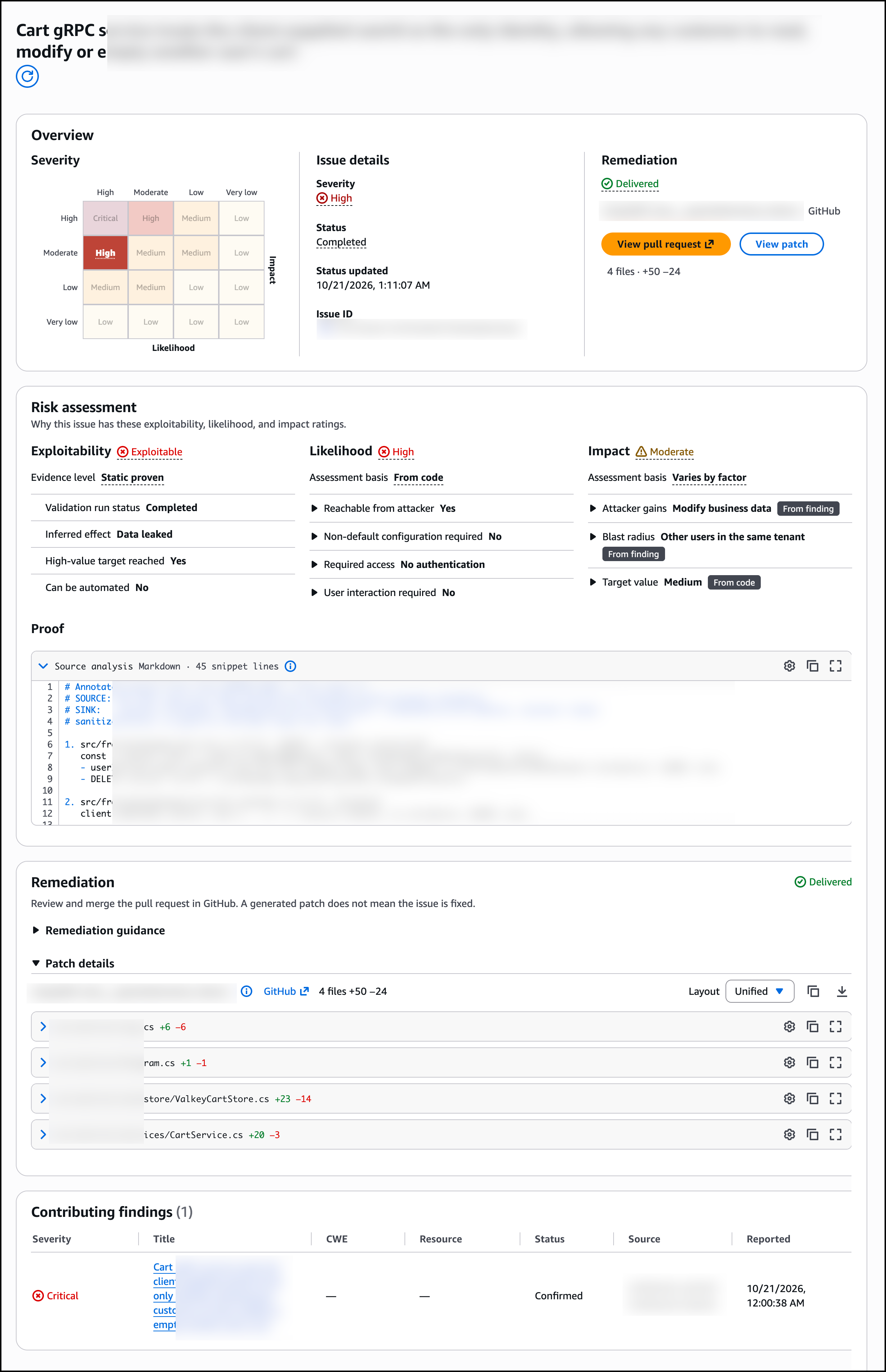
AWS Continuum operates by constructing a comprehensive "context graph" that maps the relationship between an organization’s code repositories and its live AWS environment. By deploying a collector within specific accounts and regions, the service gains visibility into AWS Config resources and network configurations. This allows the system to determine not just the presence of a flaw, but its reachability.
If a vulnerability exists in a piece of code that is not exposed to the internet, or if it is shielded by existing security controls such as WAF (Web Application Firewall) rules or specific IAM policies, the system identifies it as lower risk. Conversely, if a vulnerability is located in a high-value service—such as a payment processing pipeline or a customer data store—the service elevates its priority. This business-centric approach allows security teams to focus their limited resources on the flaws that pose the most immediate threat to the organization’s core assets.

Validation, Proof of Concept, and Remediation
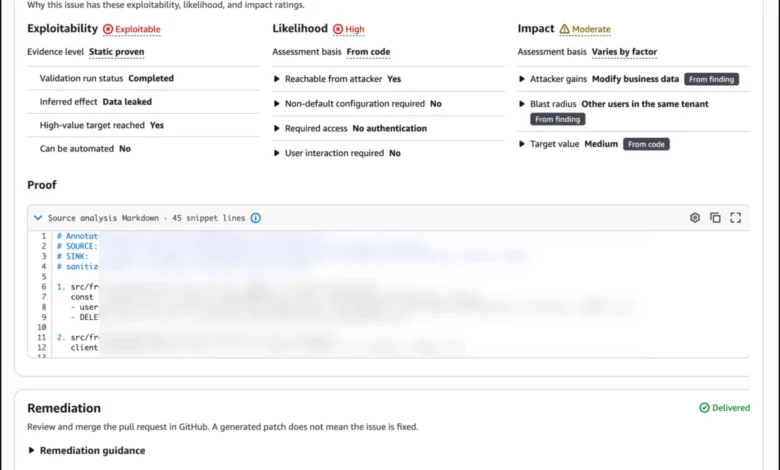
One of the most distinct features of AWS Continuum is its ability to perform automated validation. For findings that it can reproduce, the service executes the potential exploit within an isolated, secure sandbox. This process generates proof-of-concept code and reproduction steps, providing developers with empirical evidence that a vulnerability is genuine rather than theoretical.
Once a finding is validated, the service evaluates the potential "blast radius"—the extent of the damage an attacker could cause if the vulnerability were successfully exploited. Following this assessment, Continuum generates a proposed fix, which may include a code patch, a dependency version upgrade, or a specific configuration change. These fixes are delivered directly to the user’s version control system as a pull request.
To maintain security and operational stability, every remediation generated by the service requires human approval. The developer or security engineer reviews the pull request, assesses the proposed changes, and decides whether to merge them. This "human-in-the-loop" design ensures that teams maintain full control over their deployment pipelines, with the ultimate goal of transitioning toward automated remediation for specific, low-risk classes of vulnerabilities in the future.
Chronology of Development and Integration
The path to the release of AWS Continuum reflects the ongoing evolution of AWS’s security portfolio. Over the past three years, the cloud provider has incrementally expanded its security offerings, moving from basic compliance reporting to integrated, active threat management.
- Initial Research and Development: Following the widespread adoption of AI-assisted coding tools, internal AWS teams identified the need for a system capable of parsing the increased complexity of modern cloud architectures.
- Beta Phase: Select enterprise clients were granted access to the tool under early-access programs to refine the context-graph capabilities and ensure that the remediation suggestions were accurate and non-disruptive.
- Infrastructure Rollout: During the preliminary testing phases, AWS focused on ensuring that the collectors could handle the massive scale of enterprise environments without introducing significant latency.
- General Availability: As of October 2026, the service is now available to the public in the US East (N. Virginia) and US West (Oregon) Regions, marking a significant milestone in the company’s push toward autonomous security operations.
Industry Implications and Future Outlook
The introduction of AWS Continuum underscores a broader industry trend toward "security as code." By automating the triage and remediation process, organizations can theoretically reduce the "mean time to remediate" (MTTR), a metric that has long been a primary KPI for CISOs.
Industry analysts suggest that the impact of this technology will be felt most acutely in large-scale enterprises that maintain complex microservices architectures. In such environments, manual assessment is no longer feasible. By shifting the burden of investigation to a context-aware AI, companies can move away from "security by volume"—where all alerts are treated as urgent—to "security by risk," where only the most impactful vulnerabilities demand immediate human attention.
However, the shift toward AI-driven remediation also brings new considerations for governance. While the current model requires human approval for all changes, the eventual transition to autonomous patching will require rigorous testing frameworks. Organizations will need to ensure that their CI/CD pipelines have sufficient test coverage to prevent automated patches from introducing regressions or breaking critical functionality.
Official Guidance and Implementation
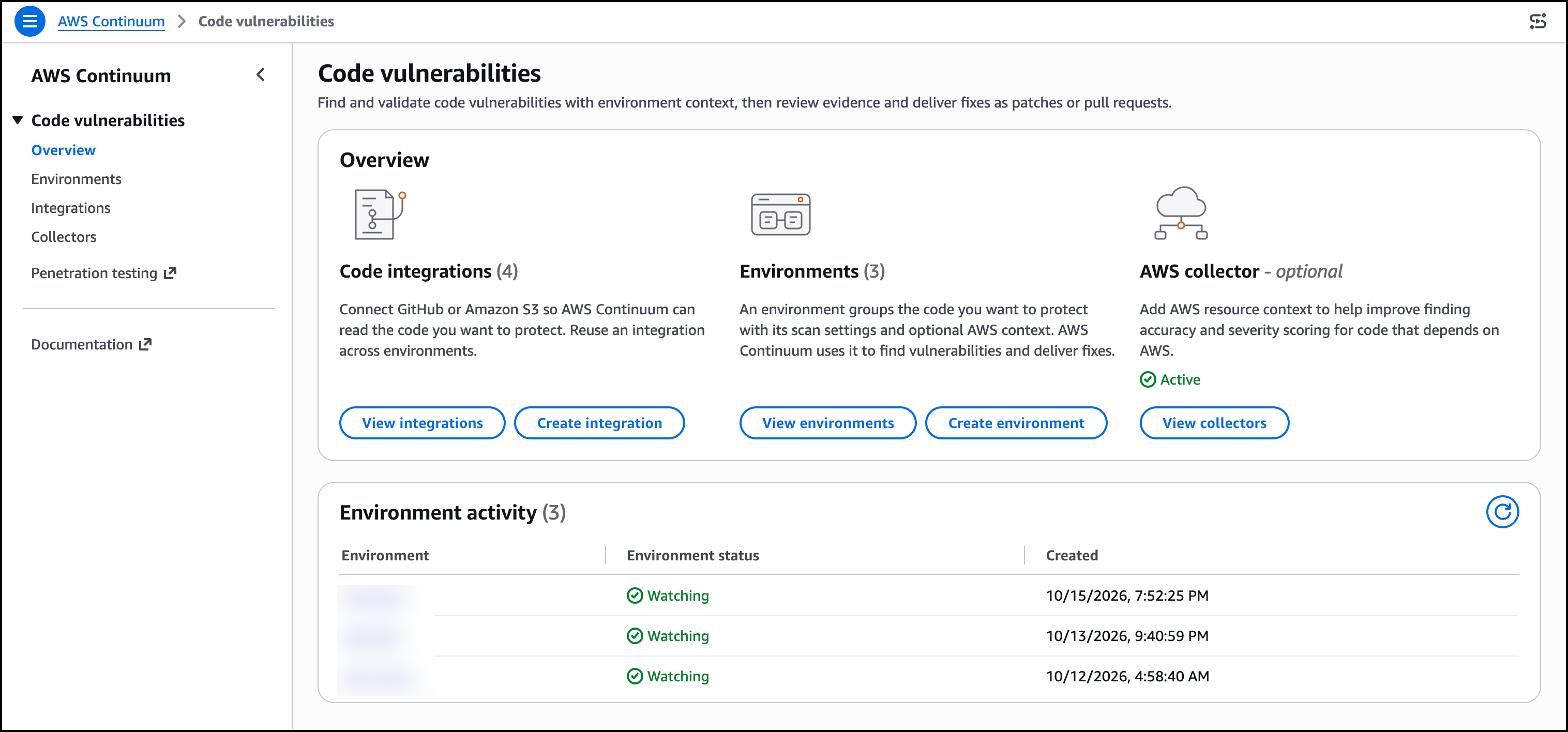
For organizations looking to adopt AWS Continuum, the onboarding process involves connecting code sources—such as GitHub or Amazon S3—and configuring the environment through the AWS Management Console. The service requires specific IAM roles to be assumed to gather the necessary infrastructure context.
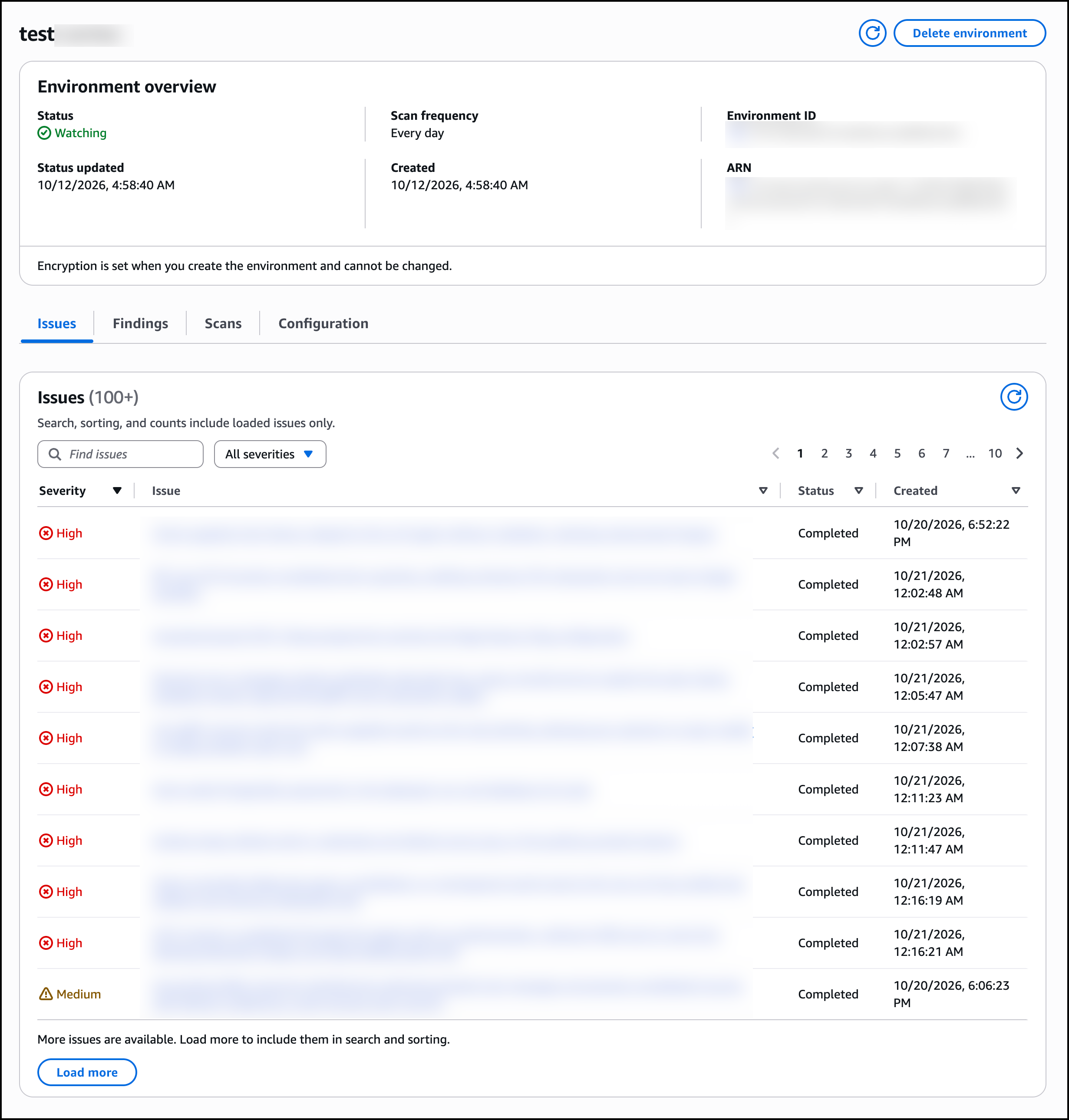
Security experts recommend a phased implementation strategy. Teams should begin by observing the findings produced by the service in a non-production environment, validating the "blast radius" assessments against their own internal risk models, and gradually increasing the cadence of scans. As trust in the system grows, the team can begin to integrate the pull-request-based remediation flow into their standard development workflows.
As of the official launch, comprehensive documentation, user guides, and pricing structures have been published on the AWS portal. The service is currently positioned as a critical tool for any organization operating at cloud scale that seeks to reconcile the speed of modern development with the necessity of a robust, verifiable security posture.
Conclusion
The release of AWS Continuum represents a strategic alignment between cloud infrastructure and application security. By leveraging AI to provide context, validation, and remediation, AWS is offering a solution to the unsustainable volume of security alerts currently challenging global IT teams. As this technology matures, it is likely to set a new standard for how security vulnerabilities are managed, moving the industry toward a future where security is not a barrier to development, but an automated, integrated component of the software lifecycle. While human oversight remains central to the process, the transition toward intelligent, risk-based remediation marks a decisive step in the ongoing effort to secure the cloud-native ecosystem against increasingly sophisticated threats.