Introducing Amazon ECS Gateway to Simplify Ingress Networking for Containerized Workloads at Scale

Managing containerized applications at scale on Amazon Elastic Container Service (ECS) has historically presented significant operational friction, particularly regarding ingress networking. For platform engineering teams, the process of exposing services to traffic—often requiring the manual or scripted provisioning of Application Load Balancers (ALBs), AWS Certificate Manager (ACM) certificates, AWS WAF web ACLs, and intricate security group configurations—has become a recurring bottleneck. As organizations grow, maintaining the synchronization of these resources with the rapidly shifting state of container services leads to configuration drift and increased deployment complexity. To address these challenges, AWS has officially launched Amazon ECS Gateway, a new account-level resource designed to automate the lifecycle management of ingress infrastructure for containerized workloads.
The Evolution of Container Networking at AWS
The complexity of managing containerized environments has increased in tandem with the adoption of microservices architectures. Historically, Amazon ECS users were required to manage ingress connectivity on a per-service basis. Each service deployment necessitated a bespoke load balancing setup. This meant that every time a new service was introduced, platform teams were responsible for ensuring that the associated infrastructure—ALBs, listener rules, and security policies—was correctly provisioned and linked to the service’s target group.
This manual or custom-automated approach often resulted in "infrastructure sprawl." When a company manages hundreds or thousands of services, the overhead of tracking which load balancer serves which endpoint becomes substantial. Furthermore, when services scale up or down, or when configurations require updates, the risk of human error in updating security groups or load balancer listeners increases significantly. The introduction of the ECS Gateway signifies a shift toward an abstraction layer that treats ingress as an integrated component of the service deployment process rather than an auxiliary task.

Understanding the ECS Gateway Architecture
Amazon ECS Gateway functions as an account-level orchestrator that manages the underlying AWS networking primitives on behalf of the user. By centralizing the management of ingress, it allows platform teams to define high-level configuration policies while delegating the tactical provisioning to the ECS control plane.
The gateway introduces a many-to-many relationship model. A single gateway can be associated with up to 10,000 ECS clusters, and conversely, a cluster can support multiple gateway associations. This flexibility is critical for organizations operating in complex multi-environment setups, where distinct gateways might be required for public-facing traffic, internal microservices communication, or compliance-restricted zones.
A core feature of the service is its ability to share ALBs across multiple services. ECS Gateway supports host-based routing, allowing up to 25 different services to utilize a single ALB. This consolidation provides immediate economic benefits by reducing the fixed costs associated with running numerous underutilized load balancers. The system is designed for intelligent lifecycle management: it automatically provisions an ALB upon the connection of the first service and scales the number of load balancers dynamically as capacity thresholds are met, subsequently decommissioning them when they are no longer required.
Operational Workflow and Implementation
The implementation process for ECS Gateway is divided into two distinct roles: the platform administrator and the application developer.

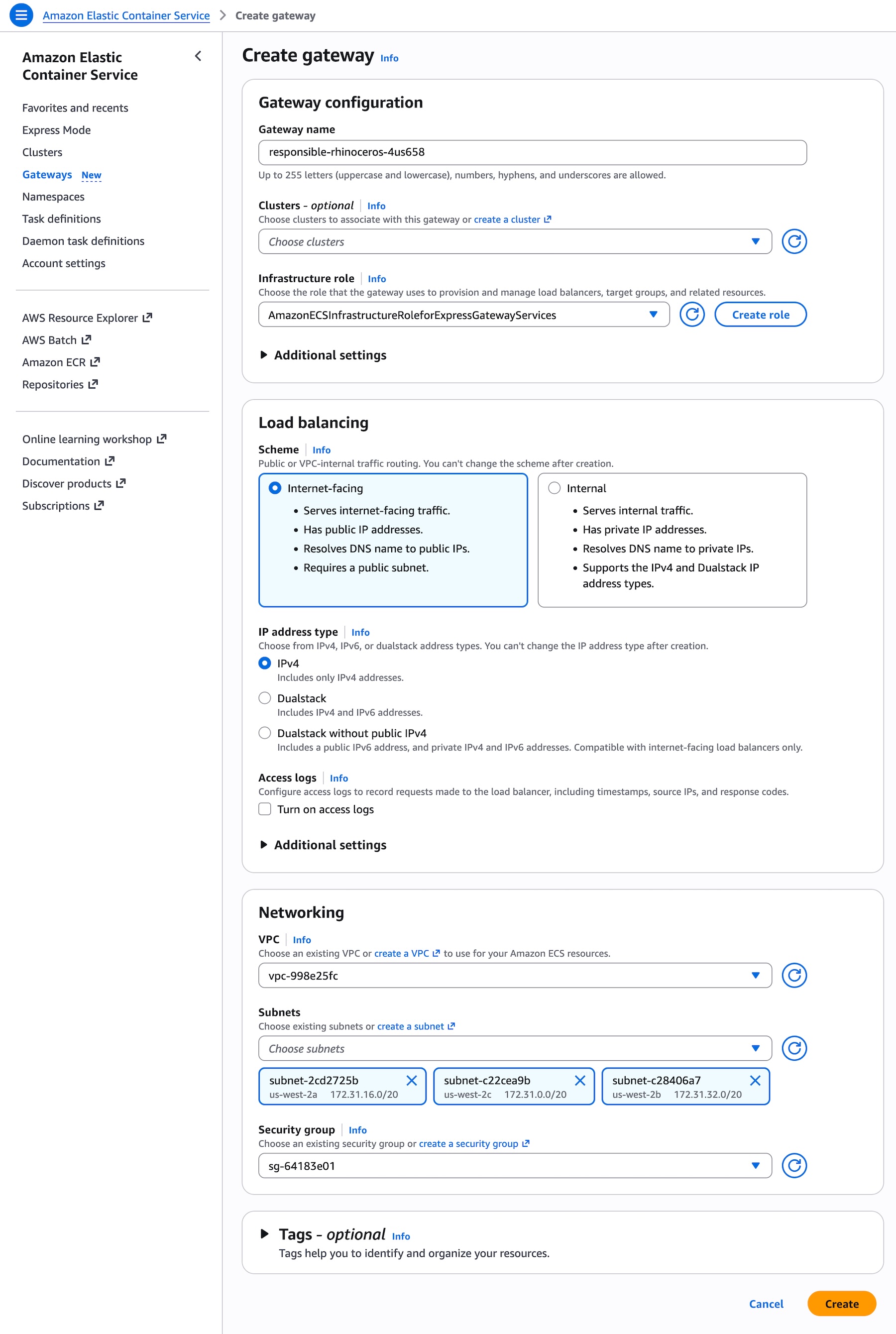
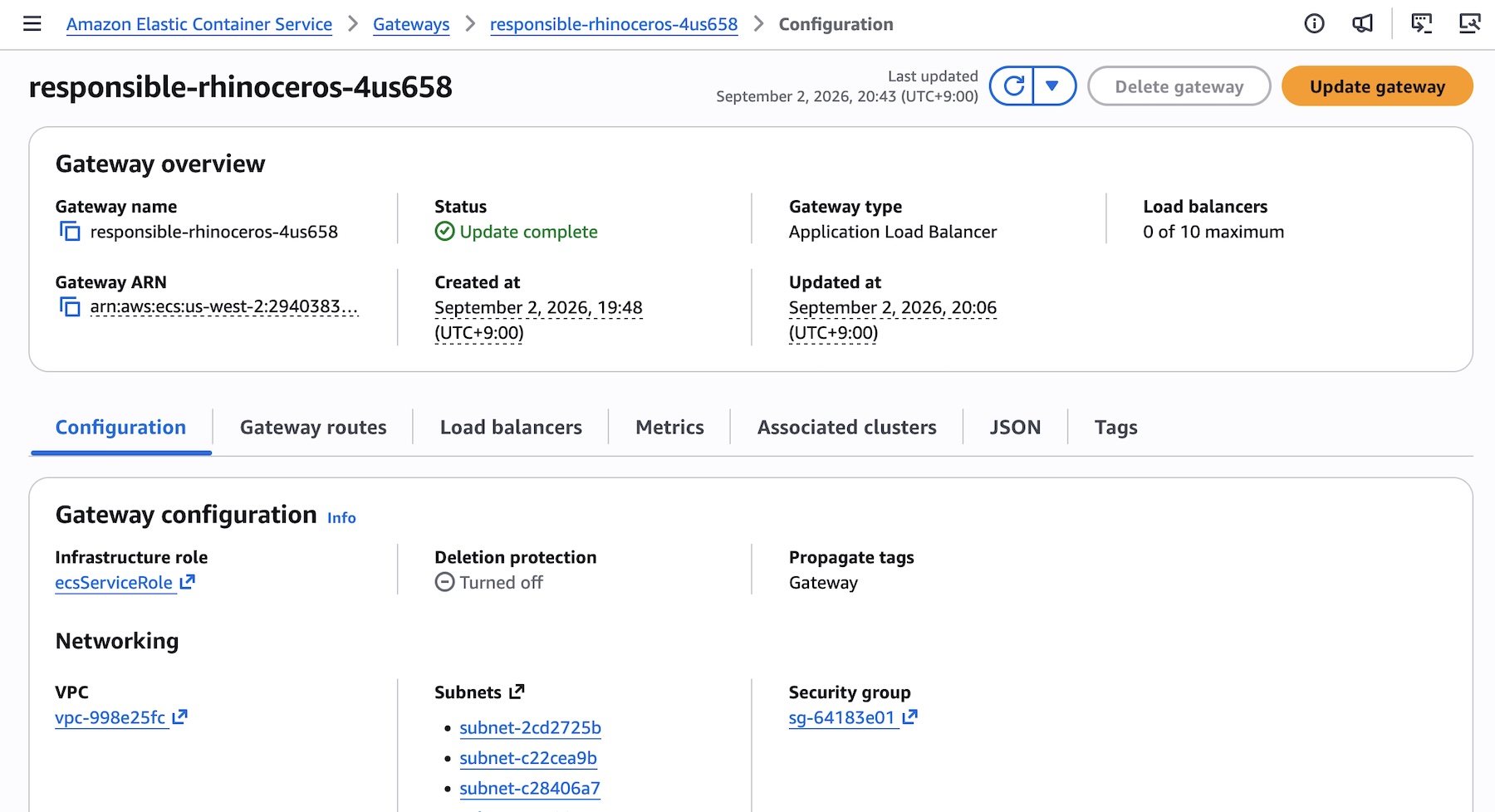
For the platform administrator, the process begins in the ECS console or via the AWS Command Line Interface (CLI). The administrator defines the gateway, specifying an infrastructure role—an IAM role that grants ECS the necessary permissions to provision and modify resources such as ALBs, security groups, and ACM certificates. This role-based access ensures that while ECS handles the automation, the security boundary remains firmly within the organization’s control.
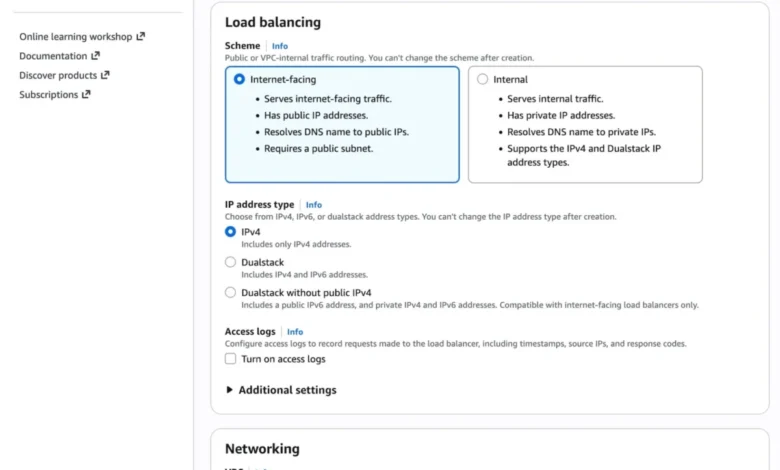
Once the gateway is created, its configuration—including the load balancing scheme (internet-facing or VPC-internal), listener protocols, and WAF associations—becomes immutable. This "set-and-forget" approach for the base configuration prevents configuration drift, a common issue in large-scale environments.
For application teams, the integration is seamless. By adding a "gateway connector" to the service definition during the deployment phase, the service is automatically registered with all compatible gateways associated with the cluster. ECS evaluates the service’s requirements—such as access types and availability zone coverage—and maps it to an appropriate gateway. The result is an automated provisioning flow:
- Provisioning: ECS allocates the service to an ALB with available capacity.
- Connectivity: It creates an ACM certificate and a unique DNS hostname.
- Security: It updates security groups to allow traffic exclusively from the ALB to the service.
- Activation: The route is marked as "ACTIVE," and the service is immediately reachable.
Technical Implications and Performance Benefits
The automation provided by ECS Gateway has immediate implications for deployment velocity. In a traditional setup, the lead time to provision a fully secured, load-balanced service could range from minutes to hours, depending on the internal ticketing or CI/CD integration requirements. With ECS Gateway, this is compressed into the service deployment lifecycle, enabling developers to ship code without waiting for infrastructure teams to manually provision networking primitives.
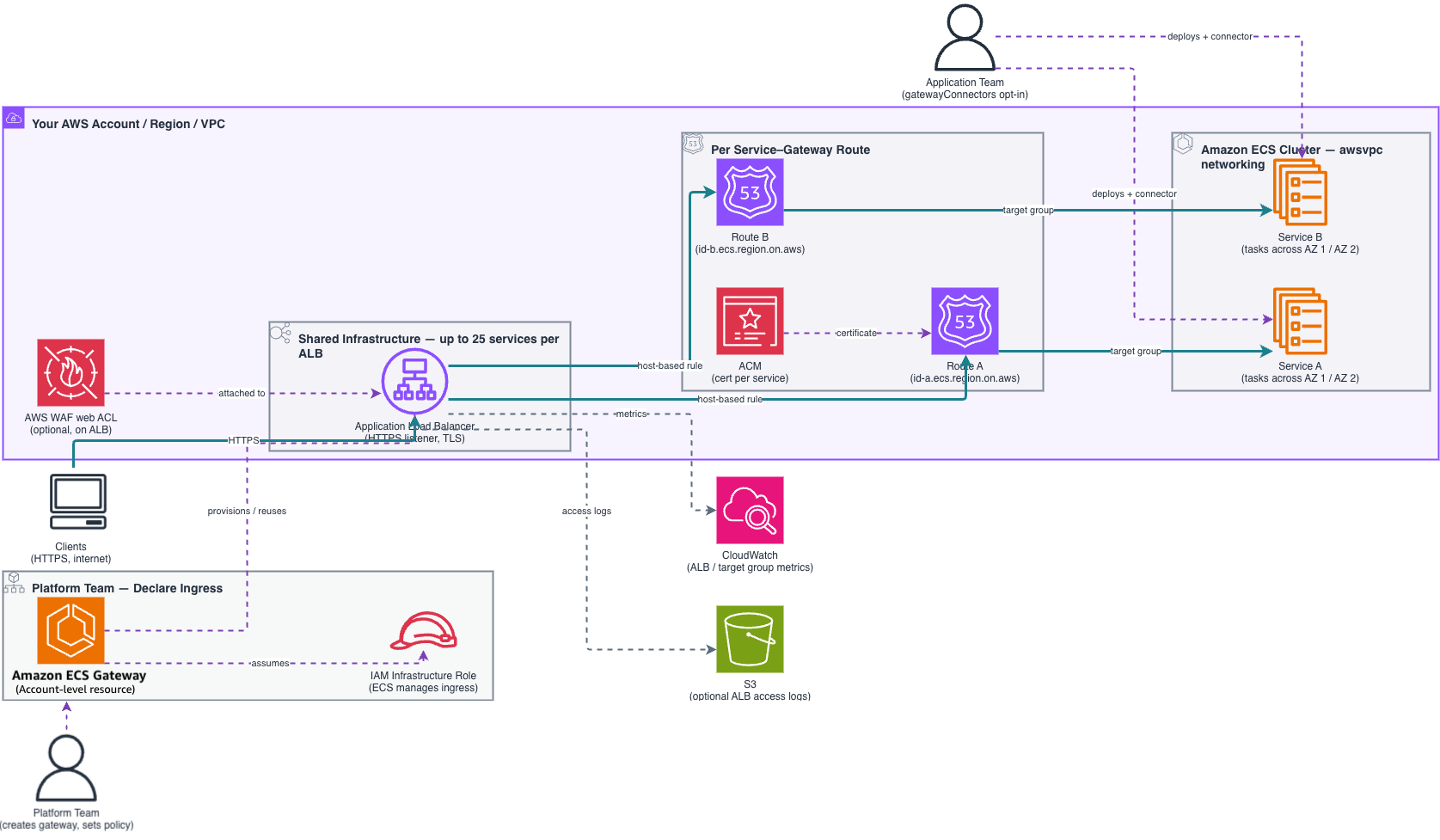
Furthermore, the integration with AWS WAF at the gateway level allows for standardized security posture across an entire fleet of services. By attaching a Web ACL to the gateway, administrators can ensure that all services routed through that gateway inherit the same WAF protection rules, thereby reducing the risk of security vulnerabilities being overlooked in individual service deployments.
The ability to perform incremental adoption is another key technical advantage. Existing ECS services that already have a dedicated load balancer can be migrated to the ECS Gateway without service disruption. By using the UpdateService API to add a gateway connector, teams can validate the new ingress path in parallel with the old one, providing a safe transition path for production-critical workloads.
Chronology of Infrastructure Abstraction
The path to ECS Gateway follows a clear industry trend toward abstraction in cloud-native computing.
- Pre-2020: The focus was on raw resource management. AWS introduced primitives like ALB and target groups, requiring deep manual integration.
- 2021-2023: The rise of service meshes and "Infrastructure as Code" (IaC) tools like Terraform and AWS CDK began to bridge the gap, but they still required teams to maintain complex state files and manage the lifecycle of the underlying AWS resources.
- 2024-2026: The industry has moved toward "Platform Engineering," where the goal is to provide developers with "self-service" infrastructure. The launch of ECS Gateway represents the culmination of this trend, moving the responsibility of infrastructure lifecycle from the user to the managed service provider.
Expert Analysis and Market Impact
From an analytical perspective, the ECS Gateway is a strategic move by AWS to lower the barrier to entry for microservices on ECS, particularly for organizations that are not large enough to employ dedicated full-time platform engineers to manage networking. By standardizing the "ingress pattern," AWS is effectively creating a "golden path" for containerized deployments.
The economic implications are equally significant. Small-to-medium enterprises often over-provision load balancers to ensure they have enough capacity, leading to waste. By providing an automated, shared ALB model, AWS is enabling higher density per load balancer, which directly correlates to a lower total cost of ownership (TCO) for containerized infrastructure.
However, some industry observers point out that this abstraction may limit fine-grained control. Advanced users who require specific, highly customized listener rules or non-standard routing logic may still find it necessary to manage their own load balancers. Despite this, the majority of enterprise workloads—which typically follow standard RESTful or gRPC patterns—will likely find the ECS Gateway’s opinionated, automated approach to be a substantial improvement over manual management.
Looking Ahead
As of the current release, Amazon ECS Gateway is available in all commercial AWS regions. While the service is currently at no additional charge, users will continue to be billed for the underlying AWS resources—ALBs, CloudWatch logs, ACM certificates, and data transfer—that the gateway provisions on their behalf.
The launch also coincides with the expansion of the AWS MCP (Model Context Protocol) Server, which allows developers to interact with the ECS Gateway via AI-powered coding assistants. This signals a future where infrastructure is increasingly managed via natural language prompts and automated agents, rather than through hundreds of lines of declarative configuration code.
For organizations currently struggling with the "networking tax" of container orchestration, the Amazon ECS Gateway provides a clear, scalable solution. By delegating the heavy lifting of load balancing and security configuration to the ECS control plane, platform teams can focus on higher-level architectural concerns, while application developers gain the agility to deploy services with minimal friction. As cloud-native patterns continue to evolve, the shift toward such intelligent, managed abstractions is expected to become the industry standard for enterprise-grade container operations.