Nextcloud Helm Chart 9.4.1 Updates and the Shift Toward Modern Cloud-Native Infrastructure

The release of Nextcloud Helm chart 9.4.1 marks a significant transition in how the popular open-source content collaboration platform is deployed within Kubernetes environments. This latest iteration effectively deprecates the reliance on the legacy Bitnami subcharts for core services, such as PostgreSQL, MariaDB, and Redis, forcing administrators to reassess their infrastructure dependencies. As the container ecosystem matures, the move away from stagnant catalogs toward more robust, cloud-native alternatives has become a central priority for organizations aiming to maintain secure and maintainable deployments.
The Bitnami Legacy Challenge
For years, the Bitnami collection of Helm charts served as the industry standard for deploying third-party applications on Kubernetes. However, the recent discovery that Nextcloud chart 9.4.1 utilizes images from the bitnamilegacy catalog has raised alarms among DevOps professionals. The bitnamilegacy repository acts as a final resting place for images that Bitnami no longer actively maintains, patches, or updates. By bundling these legacy subcharts—all of which are disabled by default—Nextcloud’s maintainers have signaled a clear shift in strategy.
When these subcharts are enabled, they draw from images that have effectively reached their end-of-life. On November 2, 2026, verification checks confirmed that these specific image tags were no longer resolvable in the primary bitnami registry, returning "manifest unknown" errors. While the chart’s internal values.yaml configuration points toward these legacy images, the official documentation often still references standard Bitnami repositories, creating a potential trap for unwary system administrators who might assume they are deploying supported, up-to-date software.
Furthermore, the default configuration for the PostgreSQL subchart lacks persistent storage, defaulting to emptyDir. In a production Kubernetes environment, this is a critical failure point; if the pod is rescheduled or the node fails, the entire database instance—and its associated data—is permanently deleted. This configuration choice underscores the importance of the chart’s secondary functionality: the ability to offload database and cache management to external, dedicated services.
Architecting for Resilience: The Kadet-Hub Approach
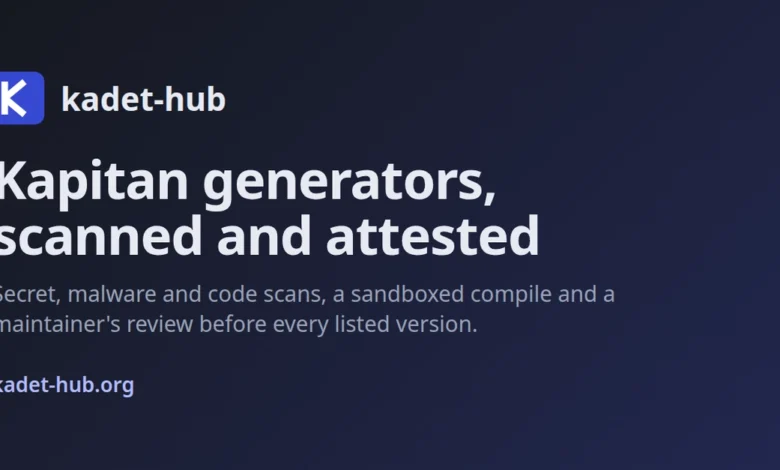
In response to these challenges, the Kadet-Hub project has developed a comprehensive recipe to replace the default subcharts with modern, production-grade alternatives. By leveraging Kapitan—a tool for templating and managing Kubernetes configurations—the Kadet-Hub recipe replaces the deprecated Bitnami subcharts with CloudNativePG for PostgreSQL management and Valkey for high-performance caching.
This approach is not merely a cosmetic change; it fundamentally alters the deployment lifecycle of the Nextcloud instance. By utilizing the CloudNativePG operator, administrators gain access to enterprise-grade features such as automated failover, point-in-time recovery, and simplified backup management through the Barman Cloud Plugin. Similarly, the transition to Valkey provides a high-performance, open-source alternative to Redis, which has become increasingly relevant as the broader community moves away from the more restrictive licensing models adopted by Redis Ltd.
Chronology of the Transition
The timeline of this shift reflects a broader trend toward "de-coupling" application charts from their infrastructure dependencies. In late October 2026, the Kadet-Hub team published version 1.0.1 of their Nextcloud recipe, designed specifically to address the limitations of the standard 9.4.1 Helm chart.
- October 27, 2026: Release of the Kadet-Hub Nextcloud recipe v1.0.1, focusing on integration with the Kubernetes Gateway API and modular infrastructure components.
- Late October 2026: CI/CD validation of the recipe on Kind (Kubernetes in Docker) clusters using version 1.37.0.
- November 2026: Discovery of the
bitnamilegacyregistry transition, solidifying the need for externalized database and cache strategies for long-term production stability.
Technical Deep Dive: Configuration and Integration
The integration of external services within the 9.4.1 chart requires a meticulous configuration of Kubernetes Secrets. Rather than relying on subchart-managed deployments, the new paradigm mandates that administrators provision their own database and cache clusters. The values.yaml structure for these deployments is explicit:
externalDatabase:
  enabled: true
  type: postgresql
  existingSecret:
    enabled: true
    secretName: postgresql-cluster-app
    # Credentials are mapped directly from existing managed secrets
This decoupling ensures that the Nextcloud application layer remains "stateless" in terms of its infrastructure requirements. The application simply consumes the connection strings and credentials provided via Secrets, allowing the database and cache layers to scale, back up, and upgrade independently of the Nextcloud pod itself.
The Kadet-Hub recipe further optimizes this by implementing the Gateway API, replacing traditional Ingress controllers. By routing traffic through a pre-existing Gateway that manages TLS termination and listener configurations, the recipe ensures a clean separation between network edge security and application logic. This setup includes automated redirects for WebDAV protocols, such as /.well-known/carddav, which are essential for the synchronization features that define Nextcloud’s utility.
Fact-Based Analysis of Implications
The primary implication of this shift is the increased operational burden placed on the end user. While the previous "all-in-one" approach of the Bitnami charts provided a low barrier to entry, it often resulted in "monolithic" deployments that were difficult to scale or secure for high-traffic environments.
The move to externalize these services aligns with the "Twelve-Factor App" methodology, which advocates for treating backing services (databases, caches, etc.) as attached resources. However, it also demands a higher level of Kubernetes competency. Organizations that rely on the default subcharts without auditing their configuration are effectively running a ticking time bomb—specifically regarding the ephemeral nature of the emptyDir storage and the lack of updates for the legacy images.
Moreover, the compatibility between Nextcloud and Valkey represents a significant milestone. While Nextcloud’s official documentation for version 35 confirms that Valkey is an expectedly compatible backend, it remains a relatively new pairing in the ecosystem. The smoke tests conducted by the Kadet-Hub CI, which verify both data persistence and file locking functionality, provide a necessary layer of empirical confidence that this configuration is stable for production use.
Limitations and Future Considerations
Despite the advancements offered by the new recipe, several gaps remain. The current version does not include built-in solutions for SMTP relay, metrics collection, or horizontal pod autoscaling. Furthermore, the reliance on the Recreate deployment strategy, necessitated by the use of ReadWriteOnce storage claims, limits the ability to run multiple replicas of the Nextcloud application simultaneously.
Backup strategies have also become the responsibility of the cluster operator. Without the installation of tools like the Barman Cloud Plugin, data protection remains a manual or peripheral task. Administrators must also be cognizant of environment-specific variables, such as TRUSTED_PROXIES and PHP_UPLOAD_LIMIT, which are not automatically reconciled by the chart and must be tuned based on the specific network topology of the deployment.
Conclusion
The evolution of the Nextcloud Helm chart 9.4.1 serves as a microcosm for the current state of Kubernetes application management. The transition away from bundled, legacy subcharts toward a modular, operator-driven architecture is a necessary evolution, despite the immediate challenges it poses for existing deployments. By embracing modern tools like CloudNativePG and Valkey, and by leveraging the Kubernetes Gateway API, administrators can build a more resilient, scalable, and maintainable Nextcloud instance. However, this shift requires a departure from the "easy install" mindset, demanding a deeper engagement with the underlying infrastructure to ensure long-term data integrity and system security. For organizations planning to upgrade, a thorough audit of their current database and caching configurations is no longer an optional best practice; it is a fundamental requirement for continued operation.