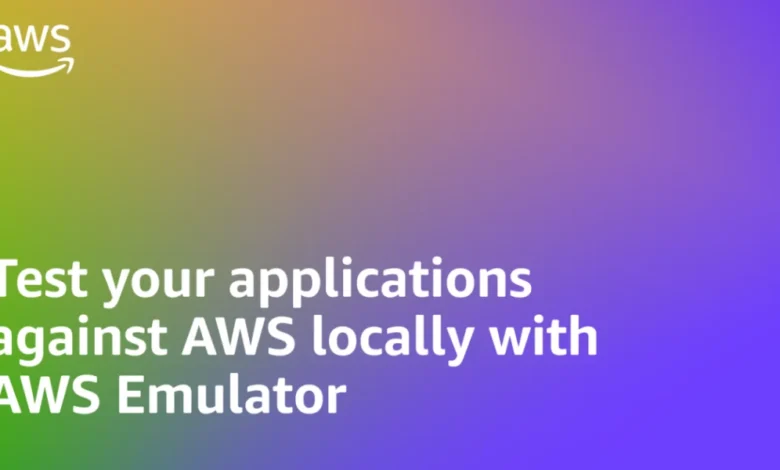
The introduction of AWS Emulator marks a significant shift in the cloud development lifecycle, providing developers with a high-fidelity, local simulation environment for Amazon Web Services (AWS) that mirrors cloud-based API behaviors on local machines. By allowing developers to run tests, scripts, and AI-driven coding agents against a local HTTPS endpoint, AWS is addressing one of the most persistent bottlenecks in modern software engineering: the friction associated with deploying to the cloud to validate every iterative change. This tool is now generally available at no additional service cost, offering a bridge between rapid local development and production-grade cloud deployment.
The Evolution of Cloud Development Tooling
For nearly two decades, the "deploy-to-test" cycle has been a standard but often cumbersome aspect of cloud-native development. Developers working on serverless architectures, microservices, or complex data processing pipelines typically rely on remote infrastructure to verify that their code interacts correctly with AWS services like DynamoDB, S3, or SQS. While this ensures that tests are run in an environment identical to production, it introduces latency, dependency on network connectivity, and costs associated with cloud resource consumption.
The emergence of the AWS Emulator represents the culmination of a broader industry trend toward "shift-left" testing—the practice of moving testing and quality assurance as close to the developer’s local environment as possible. Built using the Rust programming language, the emulator is engineered for performance, ensuring that it remains lightweight regarding CPU and memory consumption. This design choice is critical, as it allows developers to run complex test suites on standard developer workstations without performance degradation.
Operational Mechanics and Deployment
AWS Emulator is designed to integrate seamlessly into existing workflows without requiring modifications to application source code. Upon initialization, the tool generates local credentials, configuration files, and SSL certificates, writing them to a dedicated directory within the user’s home folder. By setting specific environment variables—such as AWS_ENDPOINT_URL and disabling host prefix injection—developers can redirect their AWS CLI tools and SDKs to interact with the local instance rather than the live AWS cloud.
The tool supports a dual-mode operational architecture. In its primary mode, it functions as a standalone local process, providing an HTTPS endpoint that mimics AWS services. This is particularly beneficial for developers using AI-assisted coding agents like Claude Code or Kiro, as it allows these agents to "reason" over infrastructure by creating tables, buckets, or queues and iterating on those resources instantly. In its secondary mode, "embedded mode," the emulator can be instantiated directly within a test process. This is specifically optimized for developers working with the AWS SDK for Rust, allowing them to run highly parallelized unit tests where each test instance maintains its own isolated state.
Chronology of Development and Fidelity Strategy
The architecture behind the AWS Emulator is unique in its reliance on automated systems rather than manual maintenance. The emulator is built using the same API models that power the official AWS SDKs, specifically leveraging the Smithy-based models maintained in the public AWS API models repository.
The project lifecycle is managed through a closed-loop system of automation:
- Gap Analysis: Autonomous agents compare current emulator responses against live AWS infrastructure to identify discrepancies in status codes, error messages, and payload structures.
- Implementation: Once a gap is identified, the system generates a ticket, which is then picked up by agents that write the necessary code and corresponding fidelity tests.
- Verification: A CI/CD pipeline, powered by AWS CodePipeline, runs these fidelity tests. A release is only authorized if the emulator demonstrates parity with AWS performance and behavioral standards.
- Adversarial Review: To ensure security, an independent "security agent" audits the code generated by the development agents, acting as a gatekeeper to prevent regressions or vulnerabilities.
This "Fidelity Score" methodology is a cornerstone of the project’s transparency. By publishing a score—expressed as a ratio of successful fidelity tests (e.g., 40 of 50)—AWS provides developers with a clear, quantitative measure of how much they can trust the emulator for specific operations.
Data-Driven Development and Security Considerations
While the emulator is a powerful tool, AWS maintains a clear distinction between the simulator and the production environment. The platform is not designed to replace integration testing or security validation on the actual AWS cloud. Specifically, the emulator does not currently perform granular IAM (Identity and Access Management) policy evaluation. A request that would be rejected by IAM policies in the cloud may succeed within the emulator, as the tool currently lacks the complexity of the full AWS security engine.
Furthermore, the emulator operates within a single-account context, meaning it does not simulate the complexities of cross-account or cross-region interactions. This limitation is intentional, as the goal is to provide a fast, local feedback loop for functional code testing rather than a complete replica of the AWS control plane. Users are strongly advised to keep production credentials strictly separate from the emulator environment and to treat the emulator as a functional testing tool rather than a security hardening environment.
Industry Implications and Future Outlook
The release of the AWS Emulator signals a strategic shift for Amazon, positioning itself to better support the growing ecosystem of AI-augmented development. As coding agents become more prevalent, the ability for these agents to interact with a high-fidelity simulation of the cloud is paramount. By providing this tool, AWS is essentially standardizing the local development experience, making it easier for developers to build, iterate, and debug without leaving their local terminals.
From a cost-efficiency perspective, the emulator allows organizations to reduce their "test-related" AWS spend. By shifting the bulk of the development-cycle testing to local hardware, companies can optimize their usage of cloud resources, reserving cloud deployment for final integration testing and production workloads.
Looking forward, the success of the AWS Emulator will likely be measured by the expansion of its service coverage. Currently, the tool covers a significant portion of AWS services, but the "fidelity score" system acknowledges that coverage is an iterative process. The public availability of the fidelity test suite on GitHub invites community collaboration, allowing developers to track progress and, potentially, contribute to the expansion of supported APIs.
Conclusion
The AWS Emulator is a robust addition to the developer’s toolkit, designed to solve the inherent latency and friction of cloud-native development. By leveraging Rust for performance, Smithy models for accuracy, and autonomous agents for maintenance, AWS has created a system that feels like a natural extension of the SDKs developers already use. While it is not a complete replacement for the production cloud environment—specifically regarding IAM policy enforcement—its role in accelerating the inner development loop is undeniable. As AI agents become an increasingly standard part of the software development lifecycle, tools like the AWS Emulator will be essential in ensuring that developers can move fast without breaking the complex, distributed systems they build. For developers and enterprises alike, the tool offers a path to cleaner, faster, and more cost-effective cloud development, marking a milestone in the maturity of cloud-native infrastructure.