Reimagining B2B E-commerce: How Automated Digital Catalogs Are Replacing the Six-Week Production Cycle

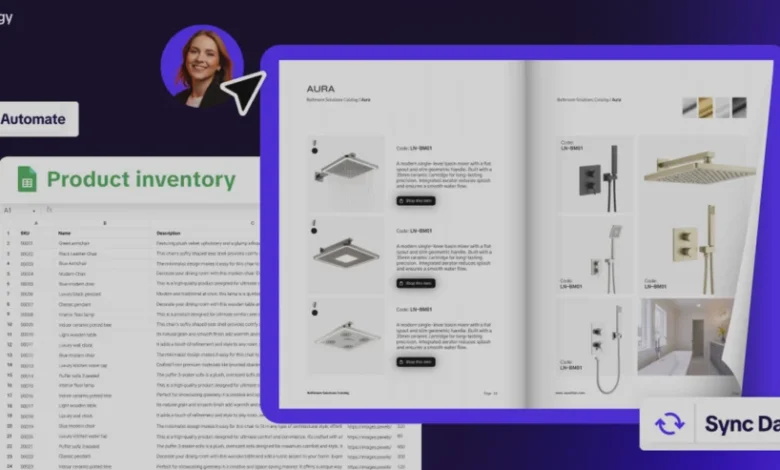
For decades, the standard timeline for producing a commercial product catalog has hovered stubbornly around six weeks. Across manufacturing, distribution, and import enterprises, merchandising managers, sales operations leads, and in-house designers have treated this grueling cycle as an immutable law of business operations. Weeks are spent meticulously placing product imagery, descriptions, and SKU codes onto page layouts one by one, only to repeat the entire process the moment a price fluctuates or a new item enters the inventory.
Yet, when enterprise teams are asked a fundamental follow-up question—how many traceable, verifiable orders their latest print or static PDF catalog actually generated—the room frequently goes quiet. That silence reveals a deeper operational inefficiency. In an era where B2B buyers increasingly expect seamless, real-time digital interactions, the traditional product catalog has become an anomaly: an expensive, time-consuming artifact that is often obsolete the moment it is dispatched.
The Evolution of the B2B Buying Journey and the Static Catalog Dilemma
As digital transformation reshapes the global supply chain, business-to-business purchasing habits have mirrored consumer e-commerce. Buyers demand up-to-the-minute pricing, immediate stock availability, and frictionless ordering pathways. Despite this digital shift, many distributors and manufacturers remain tethered to legacy publishing methods.
Data collected from enterprise catalog programs via modern digital publishing infrastructure reveals two unrelenting pressures facing modern supply chains: product ranges are continuously expanding, and pricing structures are increasingly volatile.
Traditionally, the creation of a catalog involves isolated data silos. Product information is frequently scattered across disparate spreadsheets, enterprise resource planning (ERP) systems, and ad-hoc email chains between sales representatives and clients. A single product may be manually entered into a primary database, re-typed into a catalog design file, copied into a technical specification sheet, and pasted into an updated price list. When a price changes in one location, it rarely propagates automatically to the others.
Consequently, the final deliverable is typically a static PDF or printed document that begins aging immediately. Sales teams lose visibility over client engagement; they cannot track who opened the document, which pages garnered attention, or how long a prospective buyer reviewed specific product categories. Orders arrive via cumbersome email threads, requiring internal staff to manually decipher product codes and re-enter them into order management systems. Meanwhile, outdated versions continue to circulate across hard drives, occasionally leading to legacy pricing disputes when clients attempt to order from catalogs that are two or three years old.
The Hidden Costs of Manual Publishing
The true detriment of manual catalog production rarely appears as an explicit line item on corporate financial statements. Instead, it manifests as missed opportunities: editions that leadership decides never to publish due to prohibitive labor costs, quotes delivered with expired pricing, and untraceable sales conversions.
When a five-person wholesale importer in Minnesota manages a 1,500-SKU catalog of Scandinavian home goods, fluctuating supplier costs can require price adjustments every few weeks. Under a manual framework, every price adjustment demands a complete structural rebuild of the document. Similarly, hardware and tools distributors in Latin America managing inventories exceeding 10,000 stock-keeping units face monumental bottlenecks when relying on a single designer to assemble massive, multi-page volumes by hand.
The Technological Shift: Single-Feed Synchronization and Dynamic Templates
To resolve these systemic inefficiencies, forward-thinking enterprises are transitioning from static document creation to automated data-driven publishing architectures. This modern approach begins not with a static layout file, but with a flexible master template designed to handle infinite scaling.
In a dynamic publishing framework, pages are built with designated slots for product imagery, titles, SKUs, descriptions, and pricing. Programmatic rules dictate how pages automatically reflow and expand as product ranges grow or contract. Once the structural design is established, the template is linked directly to existing enterprise data sources—such as centralized spreadsheets, master product feeds, or comprehensive ERP systems.
When market conditions necessitate a price update or an inventory addition, administrators update the master data repository and execute a single synchronization command. Every digital catalog generated from that master feed refreshes instantly under the same persistent URL. This technological leap fundamentally alters four critical operational pillars: production speed, publication frequency, pricing accuracy, and buyer engagement.
Case Studies in Automated Catalog Transformation
Recent industry datasets analyzing companies that transitioned from manual compilation to automated digital catalog platforms illustrate a dramatic compression of production timelines. While manual workflows historically consumed six weeks per edition—limiting companies to three or four publications per year—automated frameworks enable enterprises to ship new iterations in under a week while scaling publication frequency to 12 to 16 editions annually.
Consider the operational trajectory of several key international wholesalers and distributors:
A major hardware and tools distributor in Latin America previously relied on a dedicated designer to manually assemble a grueling 181-page catalog for an inventory exceeding 10,000 SKUs. By implementing automated catalog generation software, the enterprise now maintains 48 distinct, up-to-date automated catalogs covering nearly 4,000 active SKUs, significantly reducing labor overhead while accelerating revenue generation.
The Minnesota-based Scandinavian home goods importer faced perpetual bottlenecks due to rapid price fluctuations across its 1,500-SKU catalog. By adopting a system that links directly to their inventory feed, the owner gained the ability to adjust a single price point dynamically without undergoing repetitive, manual file re-uploads.
An Australian pottery wholesaler routinely received supplier product information in unformatted PDF formats, forcing staff to spend five to ten days manually rebuilding hundreds of pages per supplier. Utilizing automated template generation, the company compressed that timeline to under 24 hours across a 900-product inventory.
A global distributor operating across 20 international markets previously lacked a formalized catalog program in select regions, despite managing thousands of products across dozens of brands on its trade platforms. Today, the organization deploys 32 automated catalogs that update on a monthly schedule with zero manual page editing required, as confirmed by internal e-merchandising leadership.
Hyper-Personalization at Scale
Beyond operational speed, automated catalog platforms solve the perennial problem of one-size-fits-all marketing materials. Historically, sending fifteen different versions of a catalog to fifteen distinct clients required immense administrative bandwidth.
Modern digital publishing tools empower sales representatives to bypass the marketing department entirely. By accessing a centralized master product feed, a sales rep can apply custom filters to select only the specific product lines relevant to an individual client. Within minutes, a fully branded, customized catalog featuring the client’s corporate logo is generated and distributed via a secure, trackable link.
Critically, when master product pricing updates, these personalized catalogs refresh automatically while preserving the specific product selections curated by the sales representative for that particular buyer.
Implications for the Future of B2B Commerce
The transition from static print and PDF documents to dynamic, data-driven sales channels represents a foundational evolution in B2B commerce. While many organizations remain hesitant to abandon familiar workflows, the measurable advantages of automation—ranging from eliminated production backlogs to real-time pricing integrity and enhanced buyer analytics—are rendering traditional methods obsolete.
Ultimately, the metric of success for a modern product catalog is no longer measured by the sheer number of weeks required to print or compile it, but by its capacity to drive transparent, frictionless, and traceable commerce directly from the page.