Google Play Expands Multi-Surface Commerce Capabilities to Help Developers Reach Users Beyond the App Interface

For over a decade, the monetization of mobile applications followed a rigid, predictable trajectory. Developers relied almost exclusively on active users opening an application, navigating to a dedicated digital storefront or paywall, and completing a transaction in-app. However, modern digital consumer behavior has fragmented across a vast network of digital touchpoints. Today, potential buyers discover, evaluate, and purchase digital products through search engine results pages, web landing pages, connected television screens, and conversational artificial intelligence interfaces.
To adapt to this paradigm shift in consumer habits, Google has announced a major expansion of its Google Play commerce ecosystem. The initiative empowers developers to configure their product catalogs within the Google Play Console and deploy flexible, multi-surface checkout experiences across every touchpoint existing outside the traditional confines of the mobile app. By bridging the gap between discovery and transaction, the platform aims to deliver the right product, to the right consumer, precisely at the moment of highest intent.
Strategic Implications for Apps and Games
Reaching users outside the traditional application environment requires a nuanced, tailored approach depending on whether the digital product is a utility application or an interactive game. Industry analytics indicate that a one-size-fits-all monetization strategy no longer serves the diverse needs of modern software developers.

For productivity, lifestyle, and utility applications, channel expansion functions primarily as an acquisition and conversion catalyst. Many potential users abandon download funnels if forced to register, open an app, and navigate a complex onboarding sequence merely to understand subscription pricing. By surfacing subscription tiers and promotional trials directly within search results and web landing pages, developers can convert high-intent prospects before they even install the software.
Conversely, for mobile gaming ecosystems, multi-surface interventions act as powerful re-engagement and retention drivers. Games typically monetize an existing user base rather than acquiring net-new buyers at checkout. By surfacing limited-time events, seasonal booster packs, or progression bundles across external surfaces—such as web-based player hubs or partner platforms—game publishers can rekindle interest among lapsed players, driving long-term player lifetime value (LTV) without requiring them to launch the game client first.
Unified Operations Through the Play Console
Historically, coordinating product catalogs, pricing tiers, and promotional offers across disparate digital channels required engineering teams to juggle multiple backend tools, custom API integrations, and error-prone manual updates. This fragmentation often resulted in pricing discrepancies, inventory sync errors, and delayed marketing campaigns.
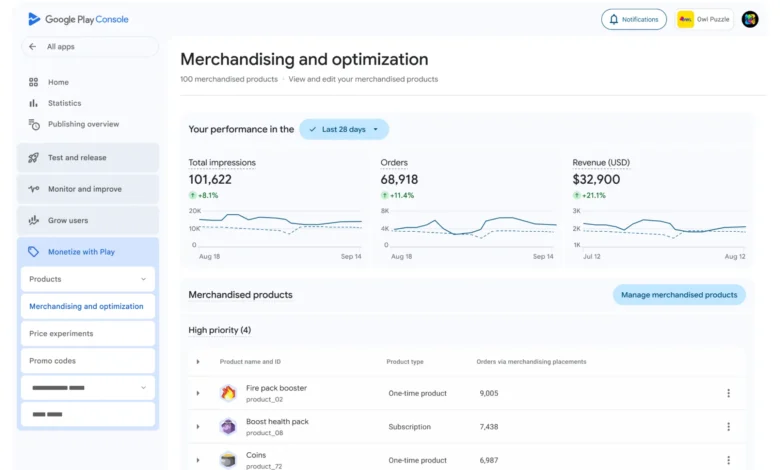
Google has streamlined this operational bottleneck by introducing a centralized Merchandising and optimization workspace within the Google Play Console. This unified dashboard consolidates product selection, surface placement rules, and audience eligibility criteria into a single administrative workflow. Growth and marketing teams can now configure, test, and deploy multi-surface product and offer exposures in a matter of minutes, eliminating the friction of cross-channel management.
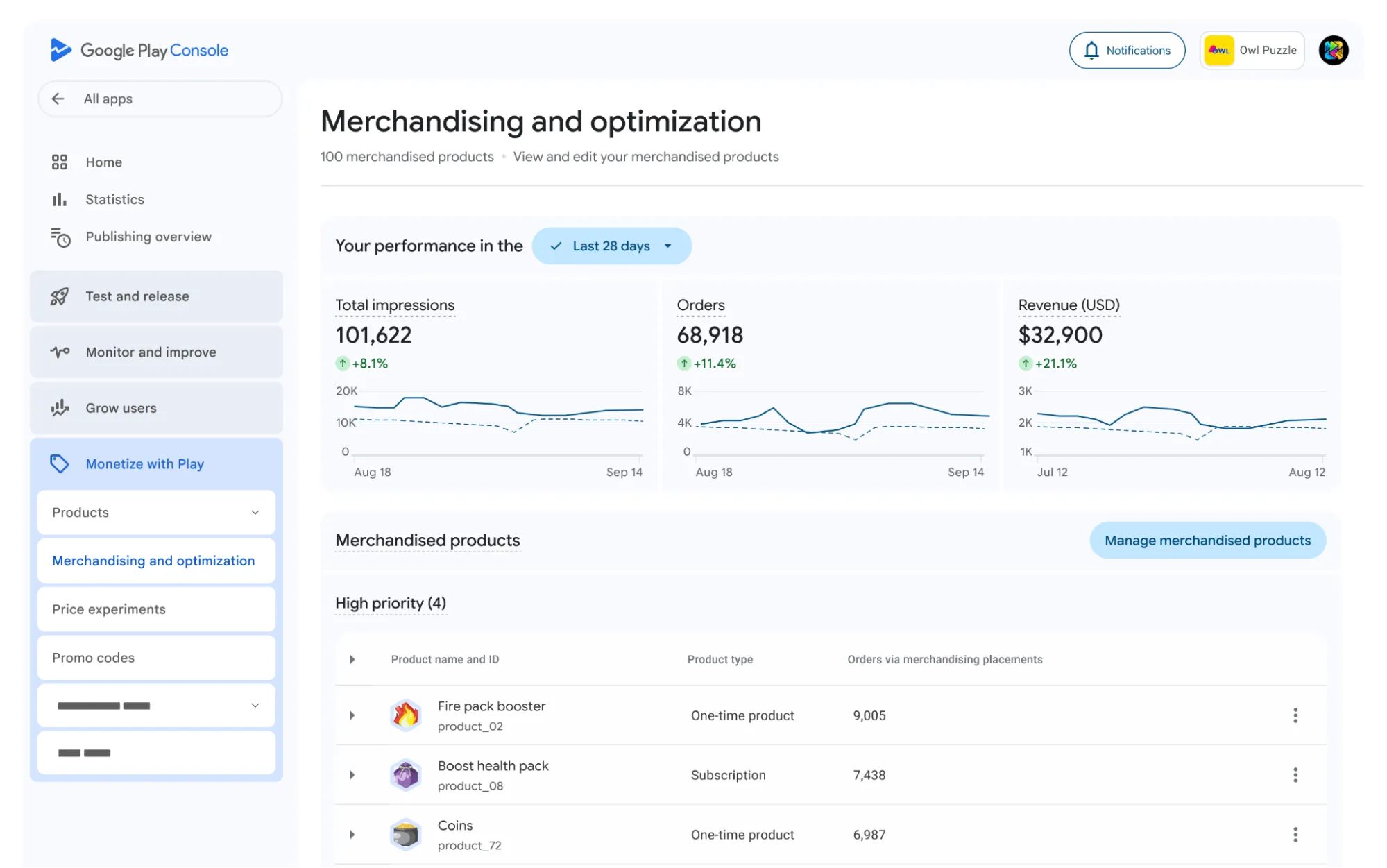
Early adopters of the unified workflow have reported substantial commercial improvements. MYBO Games, a prominent international game development studio, reported a 60% increase in user spending originating outside of their core game environment after implementing the new merchandising and optimization flow. Furthermore, internal Google Play data reveals that over 7,700 developers are already utilizing the Play Console feature to scale their channel reach, generating additive revenue streams without cannibalizing existing in-app purchasing channels.
Expanding the Discovery Footprint Across High-Intent Surfaces
With a centralized configuration framework established, developers can opt their product catalogs into Google Play’s multi-surface architecture with a single administrative action. Google Play manages the underlying infrastructure required to route products to high-intent discovery channels dynamically.
The Google Play Store, which serves over 2.5 billion active monthly users globally, acts as the primary anchor for these interventions. Developers can merchandise digital goods and promotional offerings directly within Store search results, category pages, and personalized recommendation modules. Additionally, the platform addresses one of digital commerce’s most persistent challenges: cart abandonment. Utilizing automated cart abandonment reminders deployed natively within the Google Play interface, developers can re-engage users who left items in their digital shopping carts, gently nudging them to complete transactions through personalized incentives.
Beyond traditional store discovery, the platform introduces contextual purchase flow recommendations. During the native Google Play checkout process, the system can intelligently suggest relevant add-ons, expansions, or bundled consumables based on real-time cart analysis. By suggesting complementary items at the exact moment of purchase, developers can increase their Average Revenue Per Paying User (ARPPU) without intrusive marketing tactics.
Extending Play Billing to External Web and Conversational Commerce
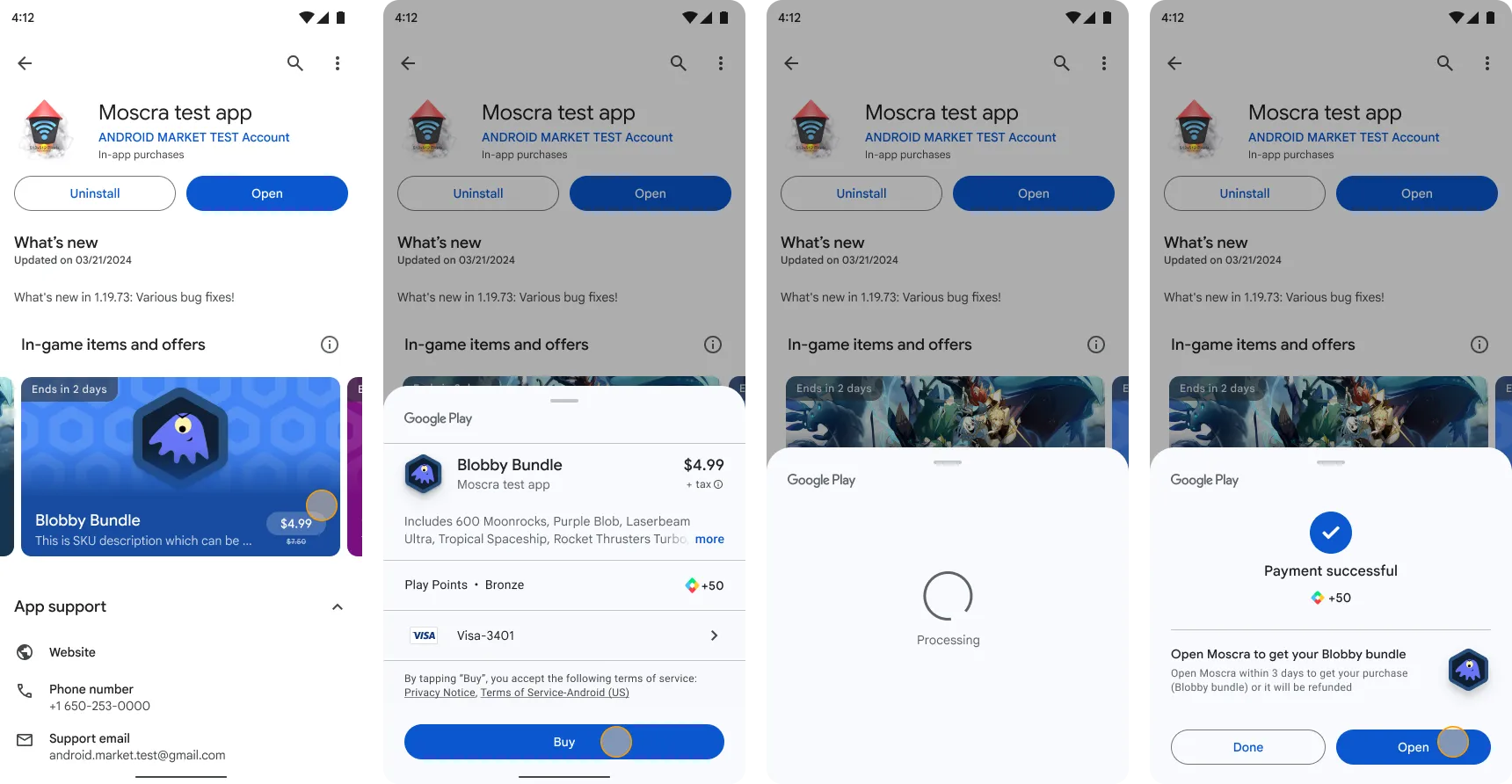
In a significant strategic evolution, Google is extending the speed, security, and global payment coverage of Google Play Billing beyond Android devices and into external web storefronts and digital partner platforms. Developers can now integrate Google Play Billing into external deep links and independent web stores. This allows end users to enjoy their familiar, trusted one-tap checkout experience while developers maintain consolidated financial reporting, tax compliance, and subscription management directly inside the Play Console.
Furthermore, Google is pioneering the next frontier of commerce through contextual and agentic commerce integrations within its Gemini artificial intelligence ecosystem. Through early access pilot programs, developers can surface digital goods—ranging from gaming power-ups to streaming media subscriptions—directly within natural language conversations with Gemini. If a user asks the AI assistant to compare music streaming plans or recommend virtual gaming items, Gemini can surface relevant products, apply promotional offers, and facilitate a one-tap Google Play checkout directly inside the chat interface, eliminating the need to launch a separate application.
Platform Safeguards, Governance, and Testing Infrastructure
Scaling digital commerce across experimental and conversational surfaces introduces complex challenges regarding brand safety, margin protection, and consumer trust. Industry analysts have frequently cautioned that aggressive external monetization channels can degrade user experience if not strictly regulated.
To mitigate these risks, Google has engineered robust platform-level governance directly into the architecture of Google Play Billing. Developers retain granular control over discount parameters, refund policies, and audience targeting rules, ensuring that external sales align with corporate pricing strategies and margin requirements.

To eliminate production guesswork and reduce the risk of deployment errors, Google has integrated out-of-app purchase previews directly into the Play Billing Lab application. Developers can simulate complex, multi-surface user purchase journeys in a sandbox environment before pushing campaigns live to a global audience, ensuring a seamless transaction experience across every deployment channel.
Industry Outlook and Future Roadmap
The expansion of Google Play’s commerce platform represents a watershed moment for the digital application economy. As mobile software markets mature, developers are increasingly forced to look beyond traditional app store discovery loops to capture consumer attention. By decoupling the transaction moment from the application binary, Google has provided a scalable infrastructure that meets consumers wherever they browse, search, or converse.
As these multi-surface capabilities roll out globally throughout the year, industry observers anticipate a significant shift in how mobile marketing budgets are allocated. Developers who successfully integrate unified merchandising into their growth strategies stand to capture valuable incremental revenue, improve user acquisition efficiency, and foster deeper, more resilient customer relationships in an increasingly competitive digital marketplace.