Breaking the Rules of Physics: International Research Team Unlocks the Autonomous Power of Active Matter

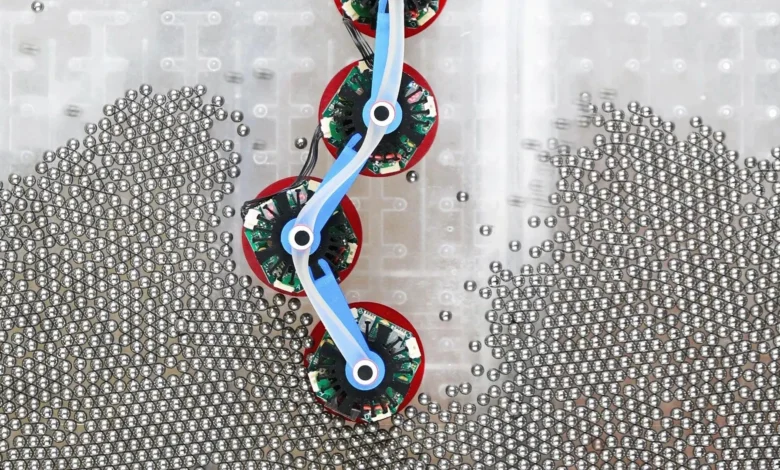
The landscape of materials science is undergoing a profound paradigm shift as an international collective of physicists from the universities of Amsterdam, New South Wales, and Cambridge unveils groundbreaking discoveries regarding a dynamic class of substances known as active matter. Unlike conventional, passive materials—such as steel, glass, concrete, and rubber—which rely entirely on external forces to stretch, bend, or deform, active matter possesses internal energy sources. This intrinsic capacity allows these unique materials to autonomously sense, interpret, and react to their environments in ways that defy classical engineering principles.
The culmination of years of rigorous experimentation, mechanical design, and theoretical physics, these findings have been detailed in two landmark scientific papers recently accepted by prestigious academic journals. One study, prominently featured on the cover of the Proceedings of the National Academy of Sciences (PNAS), introduces active chains capable of continuous, rhythmic movement akin to crawling and walking. The second study, published in Physical Review X (PRX), demonstrates how active matter fundamentally violates classical mechanical assumptions, specifically challenging Le Chatelier’s Principle. Together, these discoveries promise to rewrite the design rules for future generations of robotics, smart materials, and biomedical applications.
Chronology of the Breakthrough
The foundations of this recent collaborative success were laid several years ago, when researchers across the Netherlands, the United Kingdom, and Australia began pooling their expertise in soft matter physics, non-equilibrium dynamics, and mechanical engineering. While natural examples of active matter—such as bacterial colonies, cellular tissues, and coordinated flocks of birds—have long fascinated biologists and physicists alike, recreating these lifelike properties in synthetic, non-living systems has remained a formidable hurdle.
By roughly 2022 and 2023, the collaborative team initiated intensive physical experiments utilizing deceptively simple building blocks. Rather than relying on complex computer chips or heavy electronic actuators, the researchers began constructing experimental arrays using miniature motors, flexible rods, and ordinary rubber bands. This minimalistic approach allowed them to isolate the fundamental physics governing energy-consuming networks.
The trajectory of the research soon bifurcated into two major investigative paths: one focusing on non-reciprocal mechanical instabilities (leading to the PNAS publication), and the other examining macroscopic material responses and network connectivity (leading to the PRX publication). By late 2023 and early 2024, the teams—led by joint first authors Sami Al-Izzi (University of New South Wales) and Yao Du (University of Amsterdam) on the first front, and Jack Binysh (working within Corentin Coulais’s group at the University of Amsterdam) on the second—finalized their empirical observations, formulated comprehensive mathematical models, and submitted their findings for peer review. The subsequent acceptance and publication of these papers in mid-2024 marked a watershed moment for the active matter community.
Engineering Motion Without Centralized Control
To understand the magnitude of the first discovery, one must examine the fundamental mechanics of material instability. In classical mechanics, phenomena such as buckling and snapping are strictly reactive. If an individual compresses a flexible ticket or thin sheet of metal, external energy forces the structure past a critical tipping point until it abruptly deforms or flips. Once the action is complete, the movement ceases, requiring another distinct external force to induce further change.
The research team transformed this paradigm by introducing internal activity and non-reciprocal interactions into a flexible chain of rods. By embedding small, energy-consuming motors at the joints where adjacent rods connected, the researchers ensured that the mechanical influence between neighboring elements was asymmetrical. Specifically, the mechanical feedback exerted by rod A onto rod B differed fundamentally from the reaction of rod B onto rod A.
When external forces were applied to these active chains, the system bypassed single-event buckling. Instead, the continuous consumption of internal energy drove the structure into a state of sustained, ongoing oscillation. The physicists identified that this behavior stems from the transformation of the system’s critical instability threshold into what is formally designated as a critical exceptional point.
Through this mathematical and physical transformation, the structures achieved dynamic gait-like movements. The experimental chains did not merely bend and hold their shape; they visibly crawled, walked, and even simulated digging motions. This autonomous locomotion opens expansive horizons for soft robotics. Traditional robots rely heavily on rigid skeletons, heavy actuators, and centralized microprocessors to coordinate movement. In stark contrast, active chains suggest a future where soft robotic limbs can generate complex, adaptive locomotive behaviors organically, utilizing decentralized, distributed intelligence encoded directly into the material’s physical architecture.
Challenging Classical Engineering: The Violation of Le Chatelier’s Principle
While the first study redefined structural movement, the second investigation by the same international consortium tackled a foundational dogma of structural engineering. For centuries, engineers across civil, mechanical, and aerospace disciplines have relied upon established scaling rules to predict how macroscopic structures will behave based on the attributes of their individual components.
Chief among these foundational rules is Le Chatelier’s Principle. In a mechanical framework, this principle dictates that altering an individual component to be stiffer or more resilient should predictably increase the overall stiffness and resistance of the entire composite structure. However, when the research team constructed a two-dimensional, lattice-like network of active motors and rods, they observed a profoundly counterintuitive phenomenon: increasing the local activity of individual components frequently resulted in a decrease in the overall activity of the entire material.
To dissect this anomaly, the researchers applied the physical concept of percolation—a principle traditionally used to describe how fluids navigate porous media, such as water percolating through tightly packed ground coffee. The team discovered that the macroscopic response of an active network is not governed merely by the average activity level of its parts, but rather by whether active elements form continuous, uninterrupted pathways capable of transmitting mechanical signals across the entire matrix.
If isolated blocks of low-activity components block these pathways, the immense activity of neighboring elements remains localized and fails to propagate. Consequently, simply intensifying the power or activity of random parts does not scale up the performance of the whole system. This realization bridges a critical gap in non-equilibrium thermodynamics and structural design, proving that topology and connectivity dictate systemic response in active materials just as much as raw energy input.
Broader Implications Across Disciplines
The implications of these dual discoveries extend far beyond theoretical physics and advanced robotics. By demonstrating that synthetic matter can autonomously oscillate, crawl, and bypass classical scaling laws, the research team has provided a new toolkit for innovators working across multiple scientific domains.
In the biomedical and life sciences, these principles shed light on how biological tissues operate. Living systems—such as epithelial cell monolayers, which form continuous sheets lining organs and blood vessels—rely on internal energy consumption to maintain tension, heal wounds, and migrate. Understanding how mechanical signals percolate through active networks could lead to breakthroughs in regenerative medicine and synthetic biology.
Furthermore, in materials science and nanotechnology, the insights offer a blueprint for creating adaptive, responsive substances. Such materials could automatically adjust their structural integrity in response to environmental stress, heal micro-fractures autonomously, or serve as the basis for neuromorphic computing networks that process mechanical information in a manner analogous to biological neural tissue.
As research into active matter progresses, the boundary between lifeless machinery and living systems continues to blur. By harnessing internal energy and non-reciprocal interactions, scientists are moving closer to a future where materials are no longer passive canvases awaiting human command, but active, intelligent partners engineered to adapt seamlessly to an unpredictable world.