South Sumatra Targets 3,600 Hectares for People’s Palm Oil Rejuvenation Program in 2026 Amidst Broader National Sustainability Push

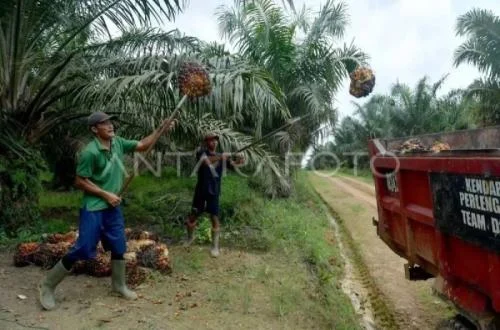
The South Sumatra Provincial Plantation Agency (Dinas Perkebunan Sumatera Selatan, or Disbun Sumsel) has set an ambitious target to rejuvenate 3,600 hectares of smallholder palm oil plantations under the People’s Palm Oil Rejuvenation (PSR) program by 2026. This significant initiative, aimed at enhancing productivity and ensuring the long-term sustainability of the region’s vital palm oil sector, will be distributed across eight key districts within the province. Ichwansyah, the Acting Head of Disbun Sumsel, announced this strategic goal in Palembang on Monday, underscoring the province’s commitment to supporting its smallholder farmers and bolstering Indonesia’s position as a global leader in sustainable palm oil production.
The PSR program is a cornerstone of Indonesia’s national strategy to revitalize its palm oil industry. With a substantial portion of the country’s palm oil plantations being managed by smallholders, many of whom operate with aging trees and suboptimal agricultural practices, rejuvenation is deemed critical. The overarching objective is to increase crude palm oil (CPO) yields without expanding into new forest areas, thereby promoting environmental conservation while simultaneously improving the economic welfare of rural communities. The 2026 target for South Sumatra represents a continued effort in this direction, building on years of implementation and experience.
Strategic Allocation for 2026: Focusing on High-Potential Districts
The 3,600-hectare target for 2026 is meticulously planned to ensure maximum impact and equitable distribution across the province’s diverse agricultural landscape. The largest allocations for the upcoming year are designated for Musi Banyuasin and Ogan Komering Ilir districts, each slated for 1,000 hectares. These two districts are historically significant players in South Sumatra’s palm oil economy, boasting extensive plantation areas and a large number of smallholder farmers. The concentrated effort in these regions reflects their potential for substantial improvements in productivity and their strategic importance to the provincial output.
Beyond these primary targets, the program will also allocate 300 hectares each to Ogan Komering Ulu, Banyuasin, Muara Enim, and Musi Rawas Utara districts. These areas, while perhaps having smaller individual allocations, collectively contribute significantly to the overall provincial agricultural output and represent diverse geographical conditions that require tailored approaches. Further allocations include 150 hectares for Musi Rawas district and 250 hectares for Lahat district. This broad distribution strategy ensures that the benefits of the PSR program reach a wide array of smallholder communities, addressing the specific needs and challenges faced by farmers in different parts of South Sumatra. The selection of these districts is often based on factors such as the prevalence of aging oil palm trees, the readiness of farmer cooperatives, and the availability of suitable land for replanting.
The Imperative of Palm Oil Rejuvenation: A National and Global Context
Indonesia stands as the world’s largest producer of palm oil, a commodity that plays an indispensable role in the national economy, contributing significantly to foreign exchange earnings and providing livelihoods for millions. However, the industry faces multifaceted challenges, particularly concerning the sustainability of its practices and the productivity of its vast smallholder-dominated plantations. Many smallholder farms, established decades ago, are now characterized by aging trees that have passed their peak productive life cycle. These older trees not only yield significantly less fruit but are also often cultivated using traditional methods that are less efficient and sometimes not environmentally sound.
The PSR program, officially launched in 2017 under the direct mandate of President Joko Widodo, was designed as a proactive response to these challenges. It provides financial assistance, technical guidance, and access to superior, certified seeds to smallholder farmers, enabling them to replace their old, unproductive trees with new, high-yielding varieties. The core principle behind PSR is to intensify production on existing land rather than expanding into new areas, thereby mitigating deforestation and biodiversity loss concerns often associated with palm oil development. The Palm Oil Plantation Fund Management Agency (BPDPKS) plays a crucial role in funding this program, leveraging levies collected from palm oil exports to support the rejuvenation efforts, covering a substantial portion of the replanting costs for eligible farmers. This financial support is vital, as farmers typically face a waiting period of 3-4 years before new trees begin to produce fruit, during which their income from palm oil is significantly reduced.
Historical Trajectory: South Sumatra’s Progress and Lingering Challenges (2017-2025)
South Sumatra has been an active participant in the national PSR program since its inception, demonstrating a consistent commitment to its objectives. Since 2017, the province has issued technical recommendations for the rejuvenation of a cumulative total of 75,016 hectares. This figure reflects the strong initial uptake and the sustained interest from smallholder farmers across the province. However, the journey has not been without its complexities. A total of 1,884 hectares, for various reasons, saw farmers withdraw from the program. Such withdrawals can stem from issues related to land legality, changes in farmer readiness, difficulties in meeting administrative requirements, or even shifts in individual farmer priorities.
Despite these withdrawals, significant progress has been made in the implementation phase. As of the end of 2025, a substantial 67,395 hectares have undergone the crucial initial steps of felling and chipping the old trees. This process is vital for clearing the land and preparing it for new planting. Following this, 66,015 hectares have successfully been replanted with superior, certified seedlings, representing a high conversion rate from preparation to actual planting. Nevertheless, a gap remains, with 1,380 hectares having been chipped but not yet planted. This backlog could be attributed to several factors, including delays in seedling procurement, logistical challenges, unfavorable weather conditions, or administrative bottlenecks in the final stages of the program. Addressing these unplanted areas remains a priority to ensure the full realization of the program’s benefits.
Cumulative Realization and District-Specific Impact (2017-2025)
A closer examination of the cumulative technical recommendations from 2017 to 2025 reveals the leading districts in South Sumatra’s PSR efforts. Ogan Komering Ilir (OKI) stands out with the largest realization, covering an impressive 37,074 hectares. This highlights OKI’s vast palm oil footprint and the significant engagement of its smallholder farmers in the rejuvenation program. Following closely is Musi Banyuasin, with 21,665 hectares, another major palm oil-producing region in the province. Muara Enim also shows a substantial contribution with 6,389 hectares.
Other districts that have actively participated include Banyuasin (1,988 hectares), Ogan Komering Ulu (1,950 hectares), Lahat (1,913 hectares), Musi Rawas Utara (999 hectares), and Kota Prabumulih (473 hectares). These figures illustrate the widespread nature of the PSR program across South Sumatra, reaching diverse agricultural communities and demonstrating a provincial-level commitment to modernizing the palm oil sector. The varying scales of participation often reflect the differing sizes of smallholder landholdings, the organization of farmer cooperatives, and the local government’s capacity to facilitate the program.
Annual Trends: Peaks, Troughs, and Evolving Dynamics
Analyzing the annual realization of PSR in South Sumatra provides insights into the program’s momentum and the factors influencing its pace. The program saw a strong start, with 6,343 hectares rejuvenated in 2017. This momentum continued to build, reaching a peak of 13,103 hectares in 2019, reflecting growing awareness, streamlined processes, and increased farmer participation. After some fluctuations, another significant surge occurred in 2023, with 11,639 hectares being rejuvenated, demonstrating renewed efforts and perhaps a more efficient implementation strategy.
However, the data also indicates a notable decline in the subsequent years, with 3,408 hectares in 2024 and a projected 1,636 hectares in 2025. This deceleration could be attributed to several factors. It might signal a saturation point in areas where rejuvenation was most straightforward to implement, leaving more complex cases (e.g., those with land legality issues or less organized farmer groups). Stricter verification processes, shifts in national priorities, or even the global palm oil market dynamics could also play a role in influencing farmer enthusiasm and administrative efficiency. Furthermore, the administrative and logistical challenges associated with coordinating a large-scale agricultural program across numerous small landholdings can inherently lead to variations in annual progress. The 2026 target of 3,600 hectares, therefore, represents a focused effort to revitalize the program’s momentum following these recent declines.
Stakeholder Perspectives and Collaborative Frameworks
The success of the PSR program hinges on robust collaboration among various stakeholders. Government officials at both national and provincial levels consistently emphasize the program’s strategic importance. The Ministry of Agriculture and BPDPKS reiterate their commitment to providing financial and technical support, viewing PSR as a critical tool for achieving sustainable development goals and enhancing Indonesia’s competitive edge in the global palm oil market. Acting Head Ichwansyah’s announcement underscores the South Sumatra Plantation Agency’s proactive role in translating national policies into on-the-ground action, focusing on effective coordination with district administrations and farmer groups.
Farmer associations and cooperatives are pivotal partners, serving as conduits between individual smallholders and government agencies. Representatives from these groups often voice the aspirations of their members for higher yields and improved incomes, while also highlighting practical challenges such as the administrative burden of application processes, the financial strain during the unproductive period of replanting, and the need for continuous technical guidance. They advocate for simplified procedures and more accessible support mechanisms to ensure broader participation.
The private sector, including palm oil companies and seedling suppliers, also plays a crucial role. Industry players often engage in partnerships, providing technical assistance, high-quality seeds, and sometimes even off-take agreements for future harvests. Environmental organizations, while generally supportive of the rejuvenation concept as an alternative to expansion, continuously advocate for stringent environmental monitoring, adherence to no-deforestation policies, and the promotion of sustainable certification standards like Indonesian Sustainable Palm Oil (ISPO) and Roundtable on Sustainable Palm Oil (RSPO) throughout the replanting process. They emphasize the importance of ensuring that rejuvenation does not inadvertently lead to environmental degradation through improper land clearing or chemical use.
Broader Impact and Future Outlook: Towards a Sustainable Palm Oil Future
The People’s Palm Oil Rejuvenation program in South Sumatra, and indeed across Indonesia, carries profound implications for the future of the palm oil industry. Economically, the program is expected to significantly boost CPO production by replacing low-yielding, senile trees with modern, high-yielding varieties. This intensification of production on existing land is crucial for maintaining Indonesia’s position as a global supplier and for generating vital foreign exchange earnings. More directly, for smallholder farmers, successful rejuvenation translates into substantially higher incomes, lifting many out of poverty and improving their overall quality of life. The increased economic activity in rural areas also stimulates regional development.
Socially, the program empowers smallholder communities by enhancing their agricultural knowledge, promoting cooperative farming practices, and providing access to modern technologies. It fosters a sense of ownership and capability, contributing to more resilient rural economies. Environmentally, PSR is a cornerstone of Indonesia’s commitment to sustainable palm oil. By focusing on replanting existing areas, it reduces pressure to convert natural forests into new plantations, thereby contributing to climate change mitigation and biodiversity conservation efforts. The program also encourages the adoption of better agricultural practices, including responsible pest management and nutrient application, leading to more sustainable land management.
However, challenges persist. Ensuring land legality for all participating farmers, maintaining the quality and genetic integrity of distributed seedlings, providing adequate financial support during the unproductive phase, and delivering consistent technical training remain critical hurdles. The administrative complexity of processing thousands of applications from individual farmers also requires continuous streamlining and technological innovation.
Looking ahead, South Sumatra’s 2026 target for the PSR program signifies a renewed determination to overcome these challenges and to solidify its role in Indonesia’s sustainable palm oil journey. The success of this initiative will not only benefit the thousands of smallholder farmers in the province but will also reinforce Indonesia’s narrative of responsible and sustainable agricultural development on the global stage. It is a testament to the ongoing commitment to balance economic prosperity with environmental stewardship, paving the way for a more robust and sustainable palm oil industry for generations to come. The lessons learned from the past several years of implementation, including the reasons for annual fluctuations and farmer withdrawals, will undoubtedly inform future strategies to make the program even more effective and inclusive.
Related posts: