Bristol Myers Squibb Accelerates Drug Discovery with Second NVIDIA DGX SuperPOD Deployment and Limitless Compute Strategy

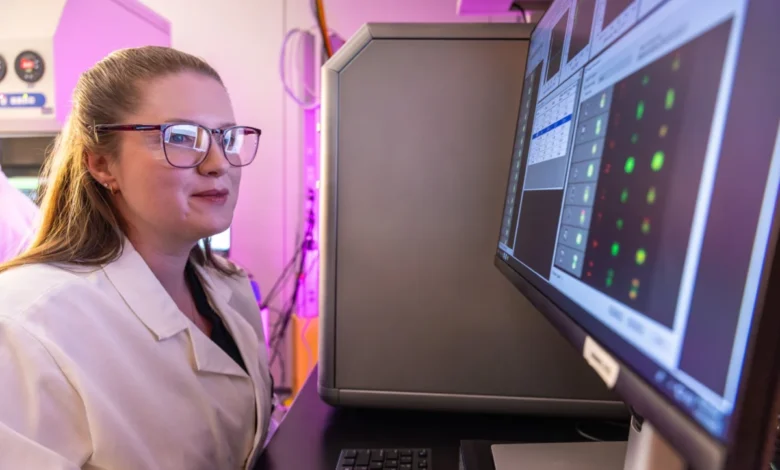
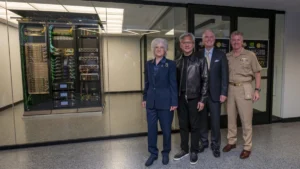
Bristol Myers Squibb (BMS) has announced the deployment of its second NVIDIA DGX SuperPOD, a move that establishes one of the most formidable artificial intelligence infrastructures in the global life sciences sector. This new installation, which Erin Davis, Vice President of Research Business Insights and Technology at BMS, has nicknamed the “SuperDuperPOD,” is built upon eight NVIDIA DGX Vera Rubin NVL72 systems. By integrating this cutting-edge architecture, BMS aims to provide its entire global workforce of scientists with what it calls “limitless compute,” effectively removing the bottlenecks that have traditionally throttled the pace of pharmaceutical research and development.
The deployment marks a significant escalation in the arms race for AI-driven drug discovery. While many pharmaceutical firms have integrated AI into specific silos of their operations, BMS is pursuing a strategy of democratization. The company is moving away from a model where high-performance computing resources are gated and reserved for specialized computational chemists. Instead, the new SuperPOD will be accessible to every researcher across the organization’s global sites, allowing for real-time predictions, model training, and the execution of complex agentic workflows without the logistical delays associated with resource queuing.
Technical Architecture and Performance Gains
The core of this new infrastructure is the NVIDIA DGX Vera Rubin NVL72, a rack-scale system designed specifically for the most demanding generative AI and exascale computing tasks. Each of the eight systems comprises NVIDIA Vera CPUs and Rubin GPUs, which together represent the vanguard of NVIDIA’s Blackwell-successor architecture. According to technical specifications released by BMS, this new cluster delivers up to 10 times the performance per megawatt compared to the legacy infrastructure it is replacing.
This leap in energy efficiency is a critical metric for large-scale pharmaceutical operations. As drug discovery models grow in complexity—moving from simple molecular docking to the creation of multi-billion parameter foundational models—the power consumption of data centers has become a primary operational constraint. By achieving a tenfold increase in efficiency, BMS can scale its computational throughput without a linear increase in energy costs or carbon footprint, aligning its digital transformation with corporate sustainability goals.
The SuperPOD is further enhanced by the NVIDIA BioNeMo Agent Toolkit. This software suite is tailored for biological AI, providing researchers with the tools to build and deploy AI agents capable of navigating the vast datasets required for drug discovery. These agents can automate the analysis of protein structures, predict binding affinities, and even suggest chemical modifications to improve the efficacy of potential drug candidates.
A Three-Year Evolution: From Pilot to Production
The announcement of the second SuperPOD is not an isolated experiment but the culmination of a three-year journey with NVIDIA’s high-performance computing platforms. BMS has operated its first DGX SuperPOD for approximately 36 months, during which time the system transitioned from a proof-of-concept tool to a vital component of the research pipeline.
During this initial phase, BMS realized measurable gains in target identification. AI-enabled workflows allowed scientists to automate the screening of biological targets, a process that previously required weeks of manual literature review and laboratory verification. By delegating these repetitive, data-intensive tasks to the SuperPOD, BMS researchers were able to reallocate their time toward high-value decision-making and experimental design.
One of the most prominent successes of the first SuperPOD was the expansion of the BMS library of CELMoD (Cereblon E3 Ligase Modulator) compounds. These are a class of small molecules engineered to selectively degrade specific proteins that drive disease progression, particularly in blood cancers. The computational power of the first SuperPOD allowed researchers to simulate how these molecules interact with the cellular machinery at an unprecedented scale, leading to the discovery of new targets that were previously considered "undruggable."
The "Predict First" Methodology
The deployment of the second SuperPOD facilitates a broader shift in BMS’s operational philosophy, a strategy that Payal Sheth, Senior Vice President of Therapeutic Discovery Sciences, refers to as “Predict First.” In traditional drug discovery, molecules are synthesized in the lab and then tested to see if they possess the desired properties. This "trial and error" approach is both time-consuming and expensive, with the cost of bringing a single drug to market often exceeding $2.6 billion.
Under the Predict First model, the computational environment acts as a filter. Scientists use the SuperPOD to run large-scale simulations and multi-parameter optimizations before any physical synthesis occurs. "We use predictions as a way to prioritize synthesis," Sheth explained. "This ensures precious laboratory experiments are aligned with progressing molecules that have the highest probability of success." By weeding out molecules that are likely to fail due to toxicity, poor solubility, or lack of potency in the digital phase, BMS can concentrate its laboratory resources on the most promising candidates.
Overcoming Institutional Silos and Data Fragmentation
A recurring challenge in the pharmaceutical industry is the fragmentation of data. Over decades of mergers and acquisitions, large firms often inherit disparate data systems and site-specific restrictions that prevent a unified view of research. Erin Davis, who spent 15 years on the vendor side building platforms for companies like ChemAxon and Schrödinger, identified this as the primary bottleneck in the industry.
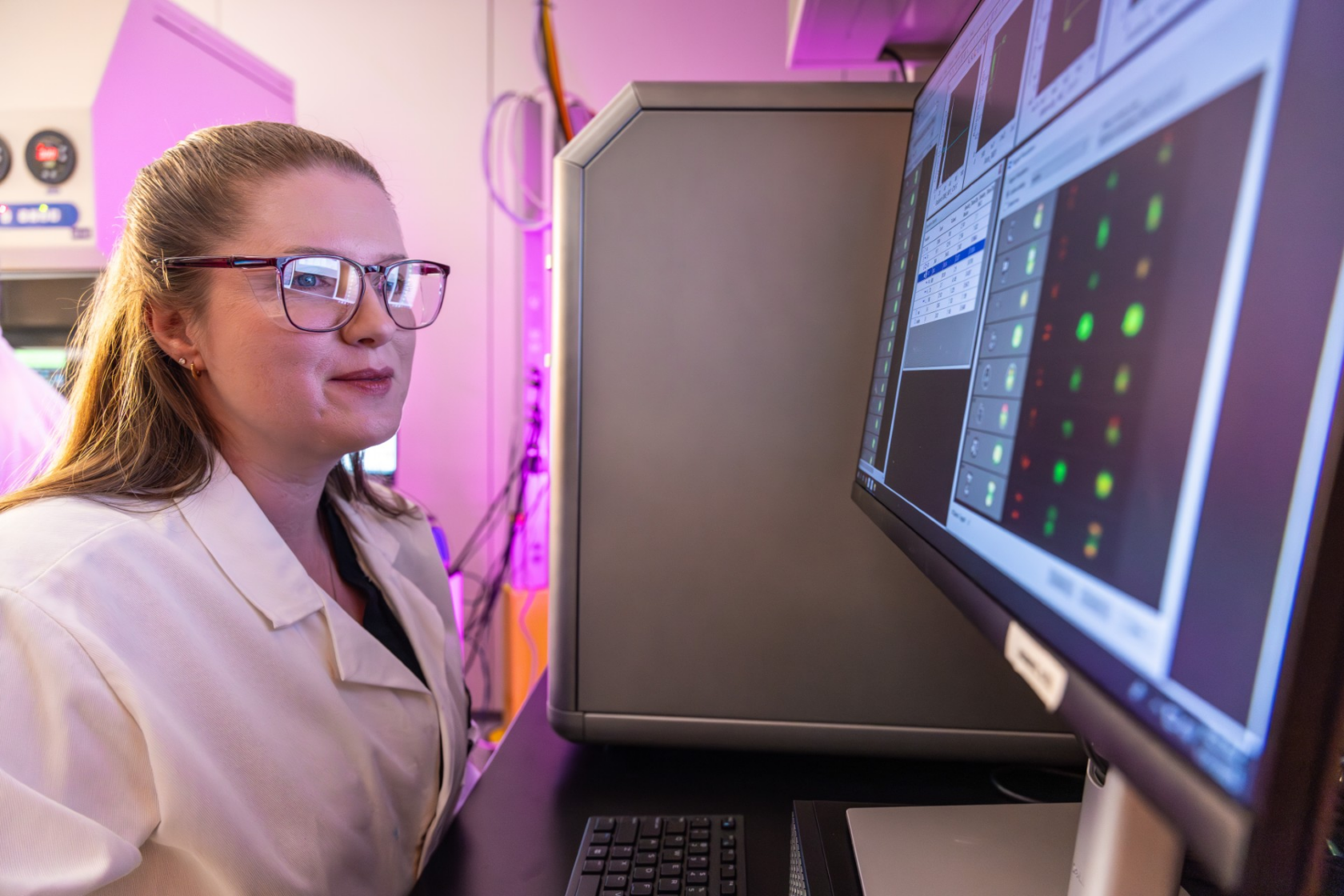
The new SuperPOD architecture addresses this by creating a unified data plane. Managed through NVIDIA Mission Control, the system connects all BMS sites—from Lawrenceville, New Jersey, to San Diego, California—into a single environment. This allows for what Sheth calls a "cumulative learning loop." In the past, insights gained from a specific oncology project might remain isolated within that team. Now, every experiment, clinical readout, and partnership feeds into a centralized intelligence framework.
Furthermore, the introduction of AI-native tooling allows researchers to interact with the supercomputer using natural language. By initiating complex predictions in plain English, the barrier to entry for high-performance computing is lowered, fulfilling Davis’s vision of getting technology "into the hands of actual scientists."
Agentic Workflows and the Virtual Scientist
Perhaps the most transformative aspect of the new SuperPOD is its support for agentic workflows. Unlike traditional software that requires step-by-step instructions, AI agents are designed to achieve high-level goals by autonomously determining the necessary sub-tasks.
In the context of BMS, these agents function as "virtual scientists" that possess institutional knowledge of the company’s vast chemical and biological libraries. Davis describes this as giving every researcher an "army of well-vetted, fully trained virtual scientists." These agents can traverse different programs and silos, identifying patterns and correlations that a human researcher might miss. This "agentic" approach allows the company to learn from decisions made across the entire organization, effectively compounding the intellectual capital of the firm.
However, both Davis and Sheth emphasize that these tools are intended to augment, not replace, human expertise. The human brain remains the primary driver, responsible for identifying nuances and directing the overall scientific strategy. The AI provides the quantitative insights and predictive power necessary to scale that human expertise to new heights.
Personal Stakes and the Future of Brain Health
For Erin Davis, the mission to optimize drug discovery is deeply personal. Having witnessed her father’s struggle with Alzheimer’s disease, she views the acceleration of research not just as a business imperative, but as a moral one. BMS has a significant investment in brain health, a field notorious for its high failure rate and biological complexity.
The "limitless compute" provided by the SuperDuperPOD is expected to be particularly impactful in these difficult therapeutic areas. By building foundational models specifically for neurology and large-molecule design, BMS hopes to find "symptom remediation" and cures for diseases that have long eluded the industry.
Strategic Implications and Market Analysis
The move by BMS reflects a broader trend in the pharmaceutical industry where "TechBio" and traditional Big Pharma are converging. As the cost of physical laboratory work continues to rise, the ability to conduct high-fidelity digital experiments becomes a primary competitive advantage.
Industry analysts suggest that the deployment of the DGX Vera Rubin NVL72 systems places BMS at the forefront of this transition. While other firms are still grappling with how to integrate AI into their legacy workflows, BMS is building an AI-native infrastructure from the ground up. The detailed allocation of the new system across various modalities—including small and large molecule design, clinical applications, and digital twins—suggests a mature strategy that looks beyond the current hype cycle of generative AI.
The conversation between Davis and BMS Chief Digital and Technology Officer Greg Meyers highlights the company’s confidence in its ability to utilize this massive increase in power. When asked if she could truly saturate the "SuperDuperPOD," Davis’s response was a testament to the sheer volume of data and complexity inherent in modern biology: "Just give us time."
As the second SuperPOD comes online, the pharmaceutical industry will be watching closely to see if this massive investment in "limitless compute" translates into a faster, more efficient pipeline of life-saving medicines. For Bristol Myers Squibb, the goal is clear: to ensure that the next generation of scientists is limited only by their imagination, not by the hardware at their disposal.