React Native 0.76 – New Architecture by default, React Native DevTools, and more


The Evolution of the New Architecture
The headline feature of React Native 0.76 is the activation of the New Architecture as the default setting. To understand the significance of this shift, one must look at the historical constraints of React Native. Since its inception, the framework relied on a "bridge" to communicate between the JavaScript thread and the Native (iOS/Android) threads. This bridge was inherently asynchronous and required data to be serialized into JSON, which often created bottlenecks in high-performance applications, particularly those involving complex animations or rapid user interactions.
The New Architecture replaces this legacy system with three core pillars: the JavaScript Interface (JSI), Fabric, and TurboModules. JSI allows for direct, synchronous communication between JavaScript and the native layer, eliminating the need for JSON serialization. Fabric is the new concurrent rendering system that brings React’s latest features, such as Suspense and Transitions, to native views. TurboModules allow for lazy loading of native modules, improving app startup times by only initializing code when it is actually needed.
Meta’s decision to enable this by default in version 0.76 indicates that the architecture has reached production-grade stability. This transition is designed to empower developers to build high-quality native experiences that are indistinguishable from apps built entirely with platform-specific languages like Swift or Kotlin, while maintaining the productivity of the React ecosystem.
Introduction of the Stable React Native DevTools
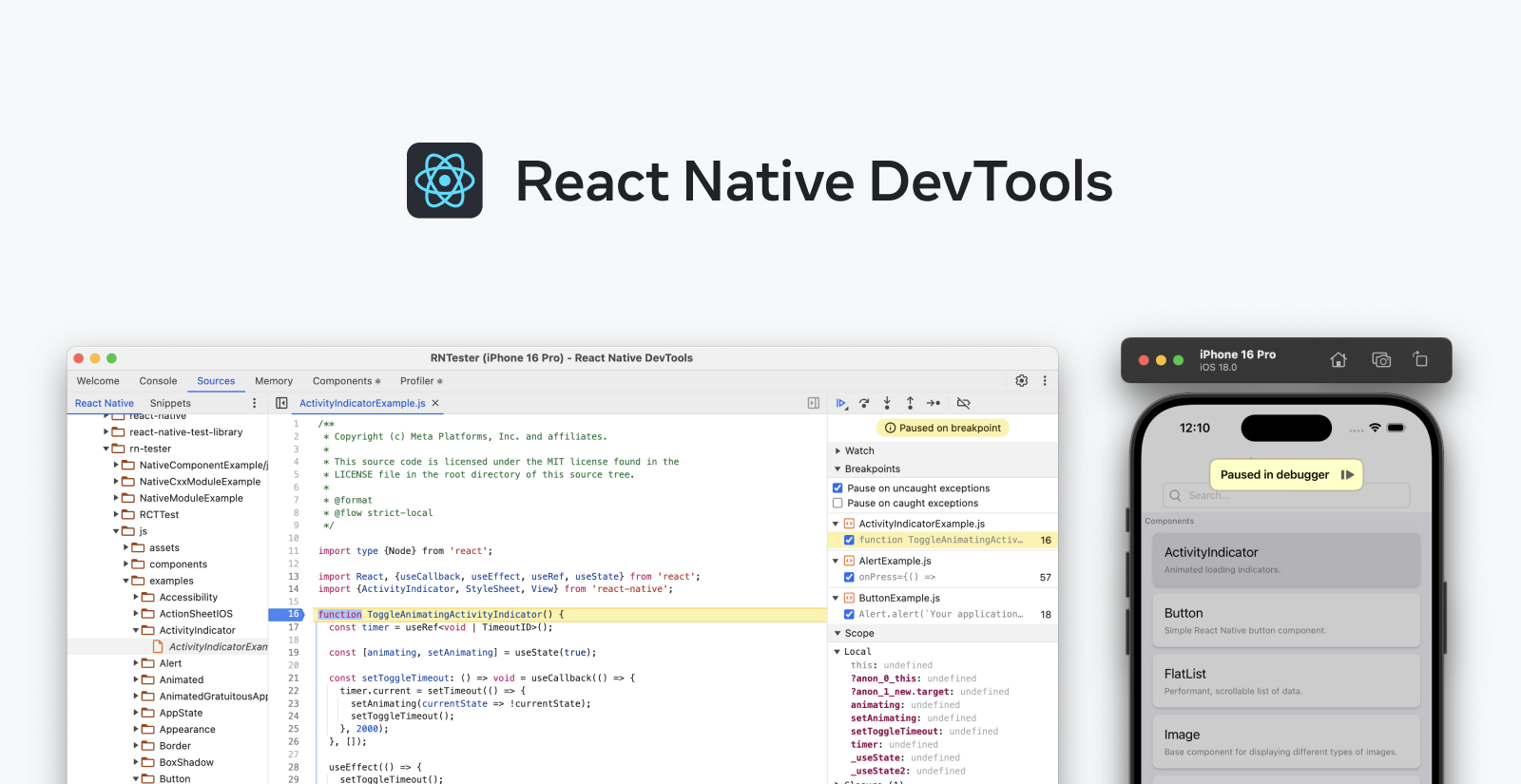
Debugging has historically been a point of friction for React Native developers, often requiring a mix of platform-specific tools and external browser-based debuggers. With the release of version 0.76, the team has introduced the first stable version of React Native DevTools. This new suite is designed to provide a cohesive and reliable debugging experience that aligns closely with modern browser tooling.
React Native DevTools is built upon a completely redesigned backend debugging stack. Unlike previous iterations, such as the experimental debugger introduced in version 0.73, this stable release offers deep integration with the React Native runtime. Key features include a robust console panel for logging, an element inspector for real-time UI debugging, and a architecture that supports future extensions.

A significant shift accompanying this new tool is the phasing out of forwarded logs in Metro. In upcoming releases, developers will be encouraged to move away from the Metro terminal for logging and instead utilize the DevTools’ Console panel. This change is intended to reduce noise in the build process and provide a more feature-rich environment for inspecting application state and errors. The team has indicated that this new stack will eventually support more advanced features, including dedicated Network and Performance panels, which are currently in development.
Performance Benchmarks and Metro Bundler Improvements
Efficiency remains a core focus of the 0.76 release, with substantial improvements made to the Metro bundler and the Android build process. The Metro resolver, the component responsible for mapping import paths to actual modules, has undergone a series of optimizations that have resulted in a 15x increase in resolution speed.
For developers, this translates to significantly faster build times. Meta reports that warm builds—those performed after an initial build where some assets are already cached—are now approximately four times faster. This improvement directly impacts developer productivity by reducing the "wait time" between code changes and seeing those changes reflected in the running application.
On the Android side, React Native 0.76 introduces a major optimization through native library merging. Previously, React Native distributed several distinct native libraries, which increased the binary size and impacted startup performance due to the overhead of loading multiple .so files. In 0.76, much of the native code has been consolidated into a single library: libreactnative.so.
According to internal benchmarks, this consolidation has yielded the following results:
- App Size Reduction: Android applications are now approximately 3.8MB smaller, representing a 20% reduction in the core framework size.
- Startup Latency: The median app startup time has been reduced by approximately 15 milliseconds (an 8% improvement), as the system spends less time performing disk I/O to load libraries.
Advancing UI Capabilities: BoxShadow and Filter Props
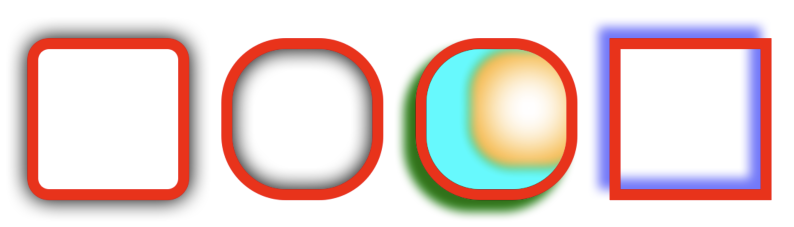
The styling engine in React Native 0.76 has been expanded to include two highly requested properties that have long been staples of web development: boxShadow and filter. These properties are exclusive to the New Architecture and represent a move toward greater CSS parity.
The new boxShadow property addresses several limitations of the previous shadow implementation. In earlier versions, shadow support was inconsistent between iOS and Android, and developers often had to rely on third-party libraries for complex effects. The new boxShadow prop supports:
- Multiple shadows on a single element.
- The
spreadDistanceparameter for finer control over shadow size. - Inset shadows, allowing for internal glow or depth effects.
- Direct compatibility with CSS syntax strings or JavaScript objects.
Similarly, the filter property introduces graphical effects such as blur, brightness, saturation, and hue rotation directly into the style object. This includes support for dropShadow, which differs from boxShadow by acting as an alpha mask—casting a shadow based on the actual pixels of an image or component rather than just its bounding box. These additions allow designers and developers to implement sophisticated visual effects without needing to drop into native code or use heavy image assets.
Framework Agnosticism and Breaking Changes
React Native 0.76 continues the initiative to make the core framework "framework agnostic." This philosophy aims to decouple the core React Native library from the Command Line Interface (CLI) and other peripheral tools. In this release, the @react-native-community/cli has been removed as a direct dependency.
This decoupling allows both React Native and the CLI to follow independent release cycles, enabling faster iteration and more modular development. However, this is a breaking change for developers who rely on the CLI for their daily workflows. Projects must now explicitly list the CLI and its platform-specific plugins (Android and iOS) in their package.json under devDependencies.
Furthermore, the release raises the minimum system requirements for both mobile platforms:
- Android: The minimum SDK version is now 24 (Android 7.0), up from SDK 23.
- iOS: The minimum supported version is now 15.1, up from 13.4.
These changes are part of a broader strategy to shed legacy code and leverage modern platform features. By moving the baseline forward, the React Native team can adopt newer APIs and performance optimizations that were previously unavailable due to backward compatibility constraints.
Impact on the Ecosystem and Industry Reaction
The release of 0.76 has been met with positive reactions from major players in the ecosystem. Expo, the most popular framework for building React Native apps, has announced that 0.76 will be supported in Expo SDK 52. This ensures that the vast majority of the developer community can access these new features through a managed workflow.
Industry analysts suggest that by making the New Architecture the default, Meta is signaling a long-term commitment to the platform’s performance and developer experience. The shift toward web-standard styling (boxShadow/filter) and modern debugging tools is seen as a way to lower the barrier to entry for web developers transitioning to mobile, while the performance gains on Android make React Native a more competitive choice for enterprise-level applications where every megabyte and millisecond counts.
Chronology of Development
The path to 0.76 has been a multi-year journey:
- 2018: Meta announces the "React Native Re-architecture" project.
- 2021: Fabric and TurboModules begin testing in internal Meta apps like Facebook and Instagram.
- 2023 (Version 0.73): The experimental debugger is introduced, laying the groundwork for the new DevTools.
- Early 2024 (Version 0.75): The framework-agnostic vision is articulated, and initial CLI decoupling begins.
- October 2024 (Version 0.76): The New Architecture becomes the default, and the first stable DevTools are released.
As React Native 0.76 becomes the new stable standard, version 0.73 moves to unsupported status. The React Native team has recommended that all developers utilize the "Upgrade Helper" tool to transition existing projects to the new version, noting that while the breaking changes are significant, the performance and stability benefits of the New Architecture represent the future of cross-platform mobile development.
Related posts: