Tool Calling vs. Code Execution for AI Agents: Choosing the Right Action Primitive

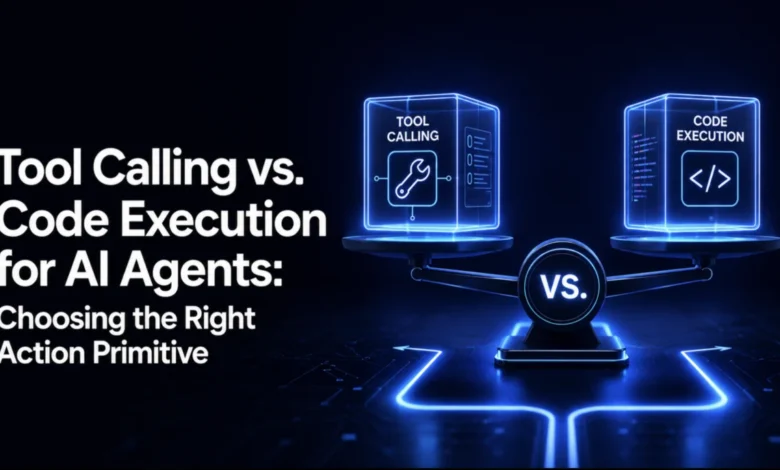
The evolution of autonomous AI agents has reached a critical juncture where the primary challenge is no longer whether an agent can perform a task, but how it should perform that task to ensure efficiency, accuracy, and cost-effectiveness. At the heart of this challenge is the "action primitive"—the fundamental mechanism an AI model employs to interface with external systems. Developers currently face a strategic choice between two distinct methodologies: traditional tool calling and modern code execution. While both allow an agent to interact with databases, APIs, and file systems, they represent vastly different architectural approaches with significant consequences for performance and operational overhead.
The Mechanics of Action: Understanding the Primitives
To understand the divergence between these two methods, one must look at how models translate internal reasoning into external action. Tool calling, which emerged as the industry standard during the early adoption of Large Language Models (LLMs), relies on a structured, iterative loop. In this paradigm, the model is provided with a schema defining available tools. When the model determines an action is necessary, it pauses its generation process to emit a specific JSON payload. The host application intercepts this signal, executes the corresponding function, and feeds the result back into the model’s context. This process is inherently conversational: the model "sees" the tool output as a new message in the chat history, allowing it to process the information and decide on subsequent steps.
Conversely, code execution represents a shift toward programmatic autonomy. Rather than requesting a single discrete action, the model is empowered to generate an entire script—typically in Python or TypeScript—designed to handle multiple tasks, loops, and conditional logic. This script runs within a sandboxed environment, isolated from the model’s core context. The model only receives the final output produced by the script, rather than a stream of intermediate data. This transition is not merely cosmetic; it changes the model from a task-by-task orchestrator into a software architect capable of managing complex, multi-stage workflows without constant supervision.
Chronology and Industry Adoption
The trajectory toward code execution has been accelerated by the demand for "agentic" workflows that can handle enterprise-scale data. In 2024, the publication of the CodeAct paper by researchers at the University of Massachusetts and other institutions provided a foundational academic basis for this shift. The study demonstrated that agents capable of writing and executing code outperformed those limited to JSON-based tool calls by up to 20% on complex, multi-step benchmarks.
By November 2025, major AI laboratories, including Anthropic, codified this research into production-ready features. The introduction of "Programmatic Tool Calling" allowed developers to designate specific tools as callable only from within generated scripts. This marked a departure from the "one-turn-per-action" bottleneck that had previously defined agent behavior, enabling developers to move away from high-latency, context-heavy loops toward more efficient, batch-processed executions.
Supporting Data and Efficiency Metrics
The economic and technical arguments for adopting code execution are rooted in the reduction of "context bloat." In a typical enterprise scenario, such as reconciling travel expenses for a large workforce, a tool-calling approach might require the agent to fetch hundreds of individual line items. Each item is pushed into the model’s context window, consuming expensive tokens and increasing the likelihood of "hallucinations" or calculation errors as the model struggles to maintain focus on the relevant arithmetic.
Anthropic’s internal benchmarking of its Advanced Tool Use suite highlights the scale of this improvement. In one observed workflow involving the migration of data from Google Drive to Salesforce, the token count was reduced from 150,000 to just 2,000—a 98.7% reduction. Furthermore, internal knowledge retrieval accuracy saw a measurable increase, rising from 25.6% to 28.5% in complex research tasks. By offloading logic to a sandboxed environment, the model is freed from the burden of keeping dozens of intermediate values in its active memory, which significantly lowers the risk of calculation errors.
Strategic Implications: When to Choose Which
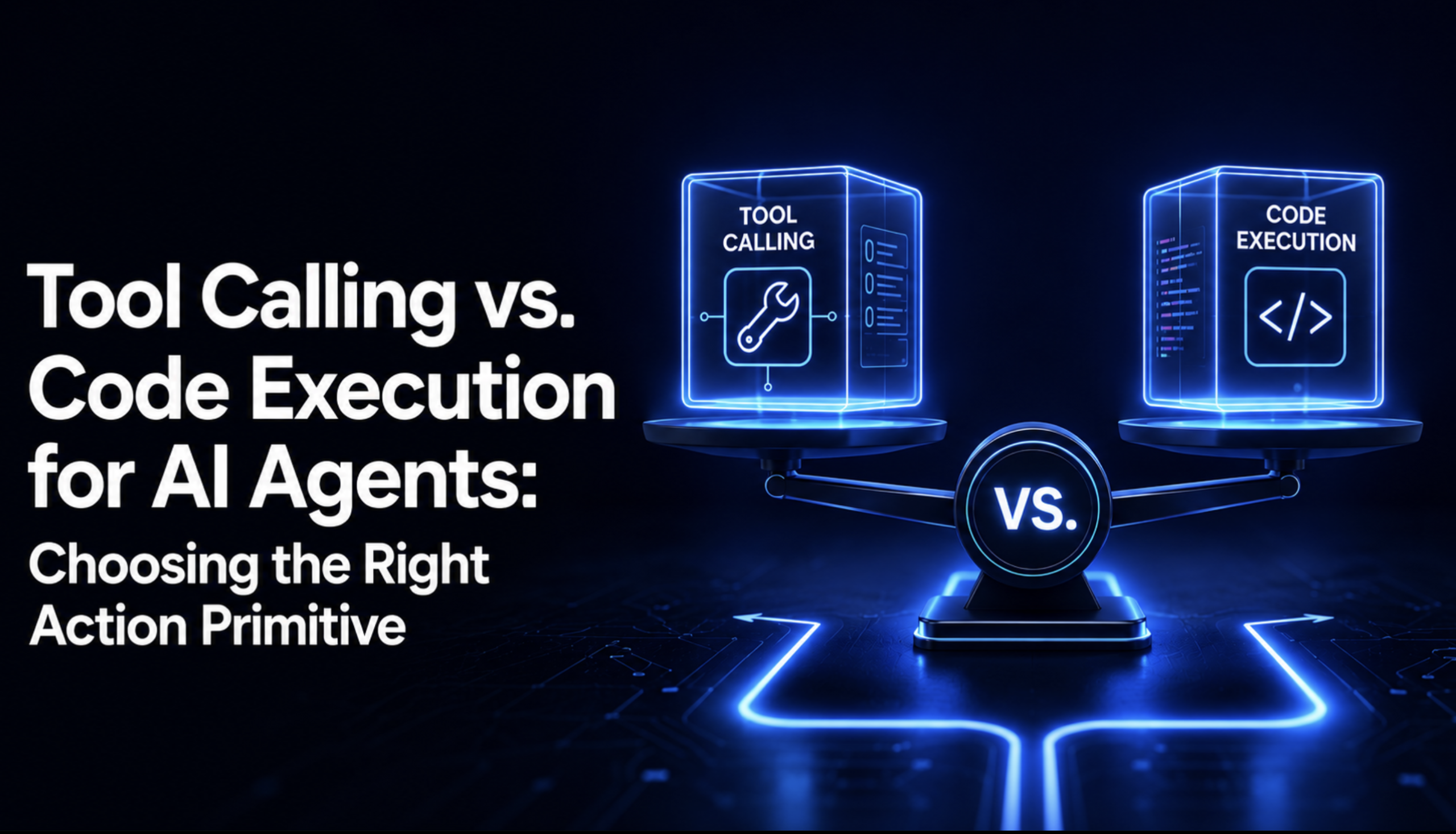
Despite the advantages of code execution, industry experts warn against treating it as a universal replacement for tool calling. The choice between the two is a matter of architectural trade-offs.
The Case for Tool Calling
Tool calling remains the superior choice for single-shot, time-sensitive lookups. If an agent is tasked with a simple query, such as "What is the current temperature in London?", the overhead of initializing a sandboxed code environment is counterproductive. The latency introduced by starting a sandbox can be significant, and for a simple data fetch, the simplicity and auditability of a single tool call are invaluable. In regulated industries, the ability to log every discrete tool call as a clear, auditable event is often a legal or compliance requirement that cannot be sacrificed for performance.
The Case for Code Execution
Code execution excels in environments characterized by "fan-out" and aggregation tasks. When an agent must query multiple databases, aggregate the results, and perform statistical analysis, the efficiency of a loop running locally in a sandbox is unmatched. Furthermore, for tasks involving sensitive data, code execution allows the developer to process PII (Personally Identifiable Information) within a secure, controlled environment, ensuring that only the summarized, sanitized findings are returned to the LLM.
Comparative Decision Framework
For engineering teams, the decision to implement code execution should be guided by a clear evaluation of the task’s nature:
- Task Complexity: If the goal requires multiple iterations, data aggregation, or parallel processing, code execution is the clear winner.
- Context Sensitivity: If the task involves large datasets that do not require detailed reasoning for every row, code execution prevents the context window from being overwhelmed.
- Infrastructure Readiness: Teams without existing secure sandboxing infrastructure may find the initial operational cost of code execution higher than the immediate benefits.
- Audit and Debugging: Tool calling provides a transparent trace of every action. Debugging a generated script that fails internally can be significantly more complex than debugging a single JSON-based tool call.
The Hybrid Future
The prevailing trend in production AI architecture is the adoption of a hybrid approach. Leading agentic systems do not view tool calling and code execution as mutually exclusive. Instead, they utilize a "tool search" or "orchestration" layer that evaluates the complexity of the user’s request and dynamically selects the appropriate primitive.
This maturation of agent technology suggests that the next phase of development will focus on "intelligent orchestration." Future agents will be capable of recognizing when to switch from a high-level conversational mode—using tool calling for simple information retrieval—to a "compute mode," where complex logic is offloaded to a sandboxed execution environment.
Broader Impact and Future Outlook
The shift toward programmatic tool use signals a broader maturation of the AI industry. As agents transition from simple chatbots to functional workers, the requirements for reliability and efficiency have become paramount. By moving beyond the limitations of direct model interaction, developers are creating more robust systems that can handle real-world complexity without the exponential increase in costs that previously hindered large-scale adoption.
While the technical hurdles—such as secure sandboxing and the need for robust error handling in model-generated code—remain, the trajectory is clear. The "action primitive" is no longer just a feature of an API; it is the fundamental building block of the next generation of software. By carefully aligning the choice of primitive with the specific requirements of the task, organizations can build agents that are not only more cost-effective but significantly more capable of delivering high-accuracy results in complex, multi-step environments. As we move into 2026 and beyond, the ability to distinguish between these methods will likely become a core competency for AI engineers and system architects alike.
Related posts: