President Xi Jinping Urges Openness of Strait of Hormuz Amid Escalating Regional Tensions, Emphasizing International Law and Stability

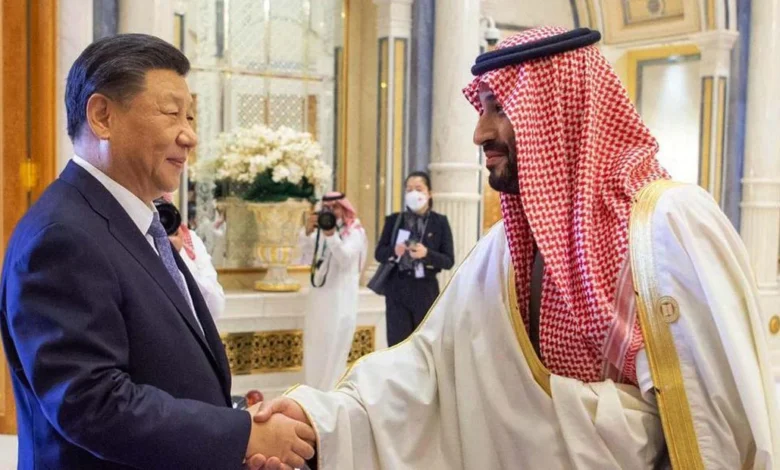
Jakarta, Indonesia – Chinese President Xi Jinping has made an urgent appeal for the unimpeded passage of shipping through the Strait of Hormuz, emphasizing its critical importance for both regional nations and the global community. The call came during a telephone conversation on Saturday, April 20, 2026, with Saudi Arabia’s Crown Prince Mohammed bin Salman. This high-level diplomatic engagement underscores Beijing’s growing concern over mounting instability in the Middle East, particularly around the strategic waterway, and follows President Xi’s meeting in Beijing last week with the Crown Prince of Abu Dhabi, during which similar sentiments regarding adherence to international law were reportedly expressed.
During the exchange with Crown Prince Mohammed bin Salman, President Xi unequivocally stated, "The Strait of Hormuz must remain open for normal shipping, as this is in the common interest of the countries in the region and the international community." The Chinese leader further reiterated Beijing’s unwavering support for Middle Eastern nations in their pursuit of self-determination and pledged China’s commitment to fostering long-term stability and peace across the region. These pronouncements emerge at a particularly volatile juncture, marked by renewed pressure on an informal US-Iran de-escalation agreement, exacerbated by the recent seizure of an Iranian cargo ship by US forces and signals from Tehran indicating a reluctance to engage in fresh peace negotiations.
The Critical Chokepoint: The Strait of Hormuz
The Strait of Hormuz, a narrow sea lane connecting the Persian Gulf with the Arabian Sea and the broader Indian Ocean, is arguably the world’s most vital oil transit chokepoint. Approximately one-fifth of the world’s total petroleum liquids consumption and one-third of the world’s liquefied natural gas (LNG) transits through this 21-mile wide channel. Major oil producers, including Saudi Arabia, Iran, the UAE, Kuwait, and Iraq, rely heavily on the Strait for exporting their crude oil and gas to international markets. Any significant disruption to shipping in the Strait of Hormuz would send immediate shockwaves through global energy markets, leading to soaring oil prices, supply chain disruptions, and potentially severe economic repercussions worldwide. For China, the world’s largest energy consumer and a major importer of crude oil, maintaining stability in the Strait is not merely a regional concern but a matter of paramount national energy security. A substantial portion of China’s imported oil, including crude from Iran and other Gulf states, passes through this critical maritime artery.
Beijing’s Proactive Diplomatic Push in a Volatile Region
President Xi Jinping’s recent diplomatic flurry highlights China’s increasingly proactive role in the Middle East. His call with Crown Prince Mohammed bin Salman and the earlier meeting with Abu Dhabi’s Crown Prince reflect a concerted effort by Beijing to leverage its economic influence and diplomatic capital to de-escalate tensions. China’s approach typically emphasizes non-interference in internal affairs, economic cooperation, and multilateralism, positioning itself as a more neutral arbiter compared to Western powers. This strategy aims to safeguard its vast economic interests, particularly its energy supplies and the ambitious Belt and Road Initiative (BRI), which envisages extensive infrastructure development and trade networks spanning across Eurasia, including key Middle Eastern nations.
The choice of Saudi Arabia and the UAE for these high-level discussions is strategically significant. Both are major oil producers, key economic partners for China, and influential players in regional geopolitics. Saudi Arabia, a cornerstone of Middle Eastern stability and a significant recipient of Chinese investment, holds considerable sway. Engaging Riyadh and Abu Dhabi allows Beijing to project a united front with regional stakeholders against actions that could destabilize the Strait and broader region. President Xi’s emphasis on "international law" during these discussions serves as a veiled but firm message to all parties to respect established norms of maritime navigation, implicitly cautioning against unilateral actions that could escalate conflict.
Escalating Tensions and the Fragile US-Iran De-escalation
The backdrop to President Xi’s urgent appeal is a rapidly deteriorating security situation around the Strait of Hormuz. For months, an informal de-escalation agreement between the United States and Iran had offered a tenuous period of reduced direct confrontation, aiming to prevent a wider conflict. However, this fragile understanding has been severely strained by recent events. Last week, US forces seized an Iranian cargo ship, citing violations of international sanctions. While specific details of the seizure remain sparse, Washington has historically justified such actions under its comprehensive sanctions regime against Tehran, aimed at curbing Iran’s nuclear program and regional activities.
This US action has drawn sharp condemnation from Tehran, which views it as an act of aggression and a direct challenge to its sovereignty. Iranian officials have reportedly signaled a reluctance to engage in new peace talks, expressing distrust and accusing Washington of undermining efforts towards stability. Furthermore, since February 2026, following the outbreak of hostilities which Iran attributes to the United States and Israel, Tehran has reportedly closed off significant portions of the Strait of Hormuz to non-Iranian vessels, effectively creating zones where only its own ships are permitted. Concurrently, Washington has reportedly enforced a blockade against Iranian vessels since last week, further escalating maritime tensions. These tit-for-tat actions raise the specter of miscalculation and direct confrontation, particularly in a confined space like the Strait of Hormuz, where international and Iranian naval vessels operate in close proximity.
China, being a principal buyer of Iranian crude oil, finds itself in a particularly precarious position. While adhering to UN sanctions, Beijing has maintained significant economic ties with Tehran, often navigating a complex diplomatic path. The potential for a complete closure of the Strait, or even sustained disruptions, poses a direct threat to China’s energy supply lines and its broader economic interests. Therefore, China’s call for an immediate and comprehensive de-escalation, coupled with its emphasis on resolving conflicts through political and diplomatic channels, is not merely altruistic but deeply rooted in its strategic imperatives. The Chinese Ministry of Foreign Affairs, in response to the US seizure of the Iranian vessel, has reiterated Beijing’s firm stance, urging all parties to adhere strictly to the terms of the existing de-escalation agreement to prevent a wider conflagration.
China’s Strategic Stakes: Energy Security and the Belt and Road Initiative
China’s engagement in the Middle East is multifaceted and driven by several core strategic interests. Foremost among these is energy security. As the world’s largest importer of oil and gas, China relies heavily on the Middle East for a substantial portion of its energy needs. Any instability in the region, especially disruptions to maritime trade routes like the Strait of Hormuz, directly threatens its economic growth and national stability. Beijing has invested billions in long-term energy contracts and infrastructure projects across the region to secure these vital resources.
Beyond energy, the Middle East is a crucial nexus for China’s ambitious Belt and Road Initiative (BRI). The BRI aims to revive ancient trade routes and establish new ones, connecting China with Europe, Africa, and beyond through a vast network of infrastructure projects, including ports, railways, and pipelines. Many Middle Eastern countries are integral to this vision, serving as key logistical hubs and investment destinations. Unrest and conflict directly undermine the viability and safety of these investments, jeopardizing the broader BRI framework. China’s calls for peace and stability are therefore inextricably linked to the success of its flagship foreign policy initiative.
Furthermore, China seeks to expand its diplomatic influence and establish itself as a responsible global power. By positioning itself as a mediator and advocate for international law and peaceful resolution, Beijing aims to counter perceptions of unilateralism and demonstrate its capacity for constructive engagement on complex global issues. This aligns with China’s broader foreign policy goal of promoting a "community of shared future for mankind," where multilateralism and cooperation prevail over confrontation.
International Law and the Principle of Freedom of Navigation
President Xi’s repeated emphasis on "international law" and the "freedom of navigation" is a deliberate invocation of universally recognized principles governing maritime conduct. The United Nations Convention on the Law of the Sea (UNCLOS), to which both China and Iran are signatories, enshrines the right of innocent passage through territorial seas and transit passage through straits used for international navigation. While nations have sovereign rights over their territorial waters, these rights are balanced against the need for unimpeded international commerce. Any attempt to unilaterally restrict or close a vital international waterway like the Strait of Hormuz would be a grave violation of these principles, with severe consequences for global trade and international relations. China, as a major maritime trading nation, is a strong proponent of these principles, as its own economic prosperity depends on the free flow of goods across the oceans.
Reactions and Broader Regional Dynamics
The implications of President Xi’s call and the underlying tensions are far-reaching. Saudi Arabia, a key ally of the United States but also a growing partner of China, would likely welcome Beijing’s stance on stability in the Strait. As a major oil exporter, Riyadh has a vested interest in ensuring uninterrupted maritime passage. The UAE, similarly, prioritizes stability for its economic prosperity and regional security. Both Gulf states have invested significantly in developing alternative export routes, such as pipelines bypassing the Strait, but these cannot fully mitigate the impact of a major disruption.
Iran’s reaction to China’s call, while not explicitly stated in the provided context, would be complex. While Tehran values its strategic partnership with Beijing, particularly given Western sanctions, it also views the Strait as a critical tool for leverage and defense in times of conflict. Iran’s actions in partially closing the Strait and its rhetoric against the US underscore its willingness to assert its perceived rights and deter perceived threats. The US, for its part, would likely maintain its position regarding sanctions enforcement and freedom of navigation, viewing any restrictions on transit through the Strait as a challenge to international law and its own strategic interests.
Economic and Geopolitical Implications
The potential economic fallout of sustained instability or a closure of the Strait of Hormuz cannot be overstated. Global oil prices would skyrocket, triggering inflation and potentially plunging economies worldwide into recession. Supply chains for a myriad of goods, from electronics to manufacturing components, would be severely disrupted, as shipping costs would surge and transit times lengthen. Insurance premiums for vessels transiting the region would become prohibitively expensive, further hindering trade.
Geopolitically, the crisis would accelerate a realignment of power dynamics. China’s assertive diplomatic posture underscores its growing influence and willingness to engage on critical security issues beyond its immediate periphery. It also highlights the limitations of a purely Western-centric approach to Middle Eastern security. The situation could force difficult choices for regional actors, balancing traditional alliances with emerging partnerships. The risk of military escalation, whether through accidental encounters or deliberate provocations, remains high, necessitating concerted international diplomatic efforts to de-escalate tensions.
Looking Ahead: A Precarious Path to Stability
The path to long-term stability in the Strait of Hormuz and the broader Middle East remains precarious. President Xi Jinping’s intervention represents a significant diplomatic effort by a major global power to de-escalate a rapidly intensifying situation. However, the deep-seated mistrust between the United States and Iran, coupled with complex regional rivalries, poses formidable challenges.
China’s continued advocacy for dialogue, adherence to international law, and support for regional self-determination will be crucial. Its ability to leverage its economic partnerships and diplomatic weight could play a pivotal role in preventing a full-blown crisis. The coming weeks will likely test the resolve of all parties involved, determining whether calls for restraint and peace can prevail over the dangerous trajectory of escalating tensions in the world’s most vital energy artery. The international community will be closely watching for signs of de-escalation, hoping that diplomacy can avert a catastrophic disruption to global commerce and security.
Related posts: