The Shift to Agentic AI and the Rise of Continuous Post-Training: Maximizing Intelligence per Dollar in the Era of Autonomous Systems

The fundamental distinction between a standard performer and an elite professional athlete often lies in the rigorous work performed between competitive events. This period is dedicated to the continuous refinement of technique, the adjustment of strategies to counter new opponents, and the sharpening of specific skills based on the vulnerabilities exposed during previous matches. This paradigm of constant evolution is now being applied to the next frontier of artificial intelligence: Agentic AI. In this new era, a model is no longer a passive recipient of prompts designed to generate a singular answer; instead, it is an autonomous entity provided with a high-level goal. To succeed, the model must adapt as environments shift, navigate unforeseen edge cases, and utilize a changing array of tools. Unlike traditional generative models, an agentic model must plan, execute multi-step tasks, and independently recover from errors encountered mid-process.
This shift in AI behavior necessitates a radical transformation in how models are developed and maintained. Post-training, the phase that refines a model after its initial training on vast sets of raw data, is no longer a final, one-time finishing step before deployment. In the context of agentic systems, post-training has become a continuous, iterative process. Because the operational environments for these agents change rapidly—with tools being updated weekly and production edge cases surfacing that no static test set could anticipate—the model must remain in a state of perpetual learning. Each deployment brings unique codebases, specific institutional policies, and localized environments that require the model to loop back into post-training as new challenges arise. Consequently, the compute footprint of AI development is growing not necessarily because individual training runs are becoming larger, but because these runs essentially never stop. Agentic AI has introduced a new compute pattern that establishes post-training as the central workload of the modern AI era, making it the primary driver of what industry experts call "intelligence per dollar."
The Mechanics of Agentic Post-Training and Reinforcement Learning
To understand the value of this new paradigm, one must demystify the technical transition from pretraining to post-training. During the pretraining phase, a model learns the foundational skill of predicting the next token in a sequence. This process grants the model linguistic fluency and a broad base of knowledge, but it does not instill true intelligence or reasoning capabilities. Post-training is where the actual "brain" of the agent is built. It is during this phase that the model learns to write functional code, architect a multi-step plan, effectively use search tools, and self-correct when a logical path leads to a dead end.
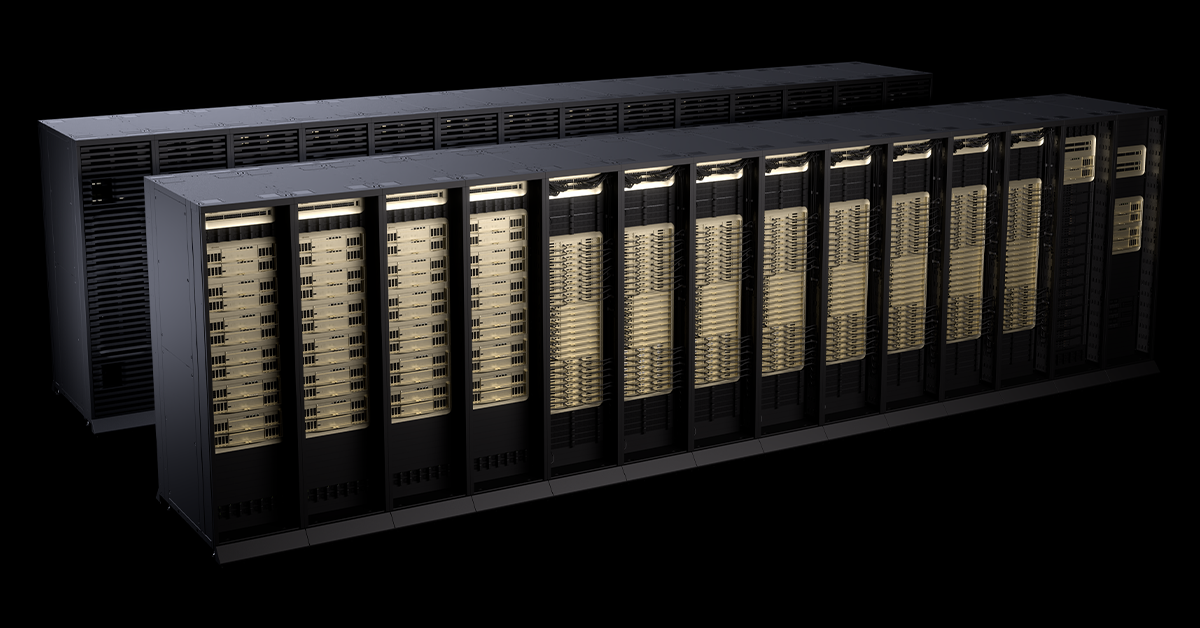
In the agentic framework, there is rarely a fixed "answer key" for the model to memorize. Instead, the model is guided by rewards, utilizing Reinforcement Learning (RL) techniques. When assigned a task, the model generates an attempt—referred to as the forward pass—which mirrors the actual work it would perform on the job. This attempt is then objectively scored based on its success or efficiency. The resulting feedback is used to update the model’s internal weights—the backward pass—incorporating the lesson learned. Over millions of such iterations, the model’s reasoning capabilities and overall intelligence grow.
Running this loop at a global scale presents a massive orchestration challenge. It requires thousands of simulated environments generating "rollouts" in parallel, while rewards are verified in real-time and updated weights are redistributed across the training cluster. To standardize this process, NVIDIA has introduced open libraries such as NeMo Gym, which provides structured training environments, and NeMo RL, designed for distributed post-training. These tools are intended to transform post-training from a bespoke research experiment into a repeatable, industrial-grade infrastructure.
Redefining Metrics: Intelligence per Dollar vs. Cost per Token
For years, the primary metric for AI efficiency has been "cost per token," which measures the all-in cost of delivering one million tokens during inference. While this remains a vital metric for the "inference factory"—the part of the system that generates revenue by serving users—it is no longer sufficient to describe the full economic picture of Agentic AI. Industry leaders are now looking toward "intelligence per dollar" as the definitive measure of success.
Intelligence per dollar sits a layer above cost per token. It addresses the broader question of what it costs to build a model that is worth serving in the first place, and how much investment is required to keep that model relevant as its environment changes. These two metrics are nested rather than competing. AI infrastructure that reduces the cost per token naturally lowers the cost of every unit of intelligence built into the model. Conversely, every increase in the model’s intelligence raises the value of every token the inference factory serves. In essence, cost per token measures the operating yield of the system, while intelligence per dollar measures whether the capital investment in model development is generating a proportional increase in capability and value.
Benchmarking the Agentic Era: NVIDIA Nemotron 3 Ultra
A primary example of this philosophy in action is the NVIDIA Nemotron 3 Ultra, an open-weight, 550-billion-parameter Mixture-of-Experts (MoE) model. This model was developed using a fully disclosed post-training recipe executed on the NeMo RL platform. The results demonstrate the tangible impact of continuous post-training on high-level reasoning tasks. In the SWE-bench verified benchmark—a standard for real-world coding—the Nemotron 3 Ultra scored 71.7%. This means the model was able to produce working fixes for approximately seven out of ten real software bugs sourced from open-source projects, with each fix verified against the project’s own rigorous test suites.
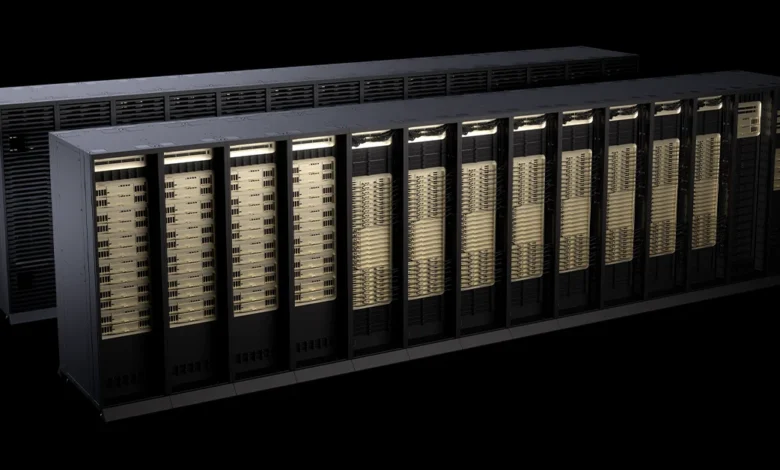
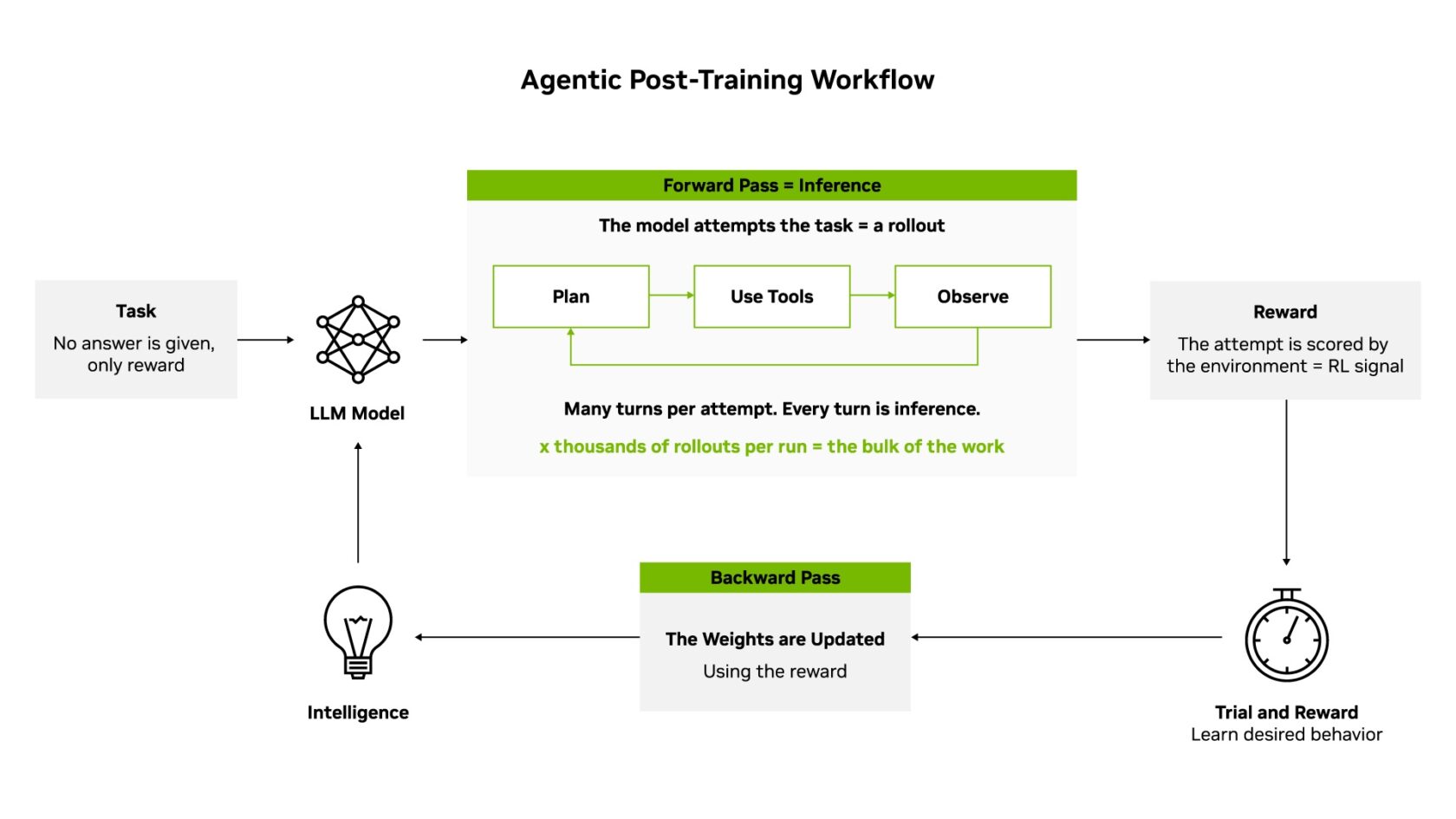
The efficiency of these runs is heavily dependent on the underlying hardware. The NVIDIA Blackwell platform was specifically engineered to lower the cost per run, making the frequent post-training cycles required by agentic AI economically viable for enterprises. However, the roadmap extends even further with the upcoming NVIDIA Vera Rubin platform. The Vera Rubin architecture is designed to train the largest models using only one-fourth of the GPUs required by the Blackwell generation. It was co-designed to maximize intelligence per dollar by supporting more simultaneous rollouts, managing more complex environments, and enabling post-training cycles that run indefinitely without prohibitive costs.
Industry Adoption and Case Studies
Several leading AI firms are already integrating these continuous post-training workflows into their core operations. Prime Intellect, a company focused on decentralized AI training, utilizes the NVIDIA Blackwell platform for the continuous post-training of frontier open models. They leverage NVIDIA Dynamo for inference orchestration and have plans to scale their RL environments using the Vera Rubin platform. Prime Intellect’s data indicates that by integrating their sandbox infrastructure with NVIDIA Vera CPUs, they have achieved 30% greater throughput per CPU for RL workloads compared to traditional x86 architectures. This efficiency allows for faster iteration loops, which is critical for businesses looking to deploy agents in dynamic markets.
Perplexity, the AI-based search engine, has also implemented a sophisticated RL post-training stack. Their system runs asynchronously across hundreds of NVIDIA GPUs, utilizing a Remote Direct Memory Access (RDMA)-based weight transfer engine. This technology allows for the synchronization of trillion-parameter models between training and inference nodes in less than two seconds. This rapid synchronization is what allows Perplexity to serve highly optimized Qwen3 235B models on NVIDIA GB200 NVL72 systems, ensuring that the "intelligence" of the search agent is updated almost as fast as the information it retrieves.

Similarly, Together AI has positioned itself as a provider of "post-training as a service." They offer a full suite of services, including supervised fine-tuning, RL, and direct preference optimization (DPO), delivered via an API and SDK. By running on NVIDIA’s optimized kernel libraries, Together AI enables other companies to harness the power of agentic post-training without needing to build the underlying infrastructure themselves.
Broader Impact and Future Implications
The transition toward continuous post-training and the prioritization of intelligence per dollar marks a significant maturation of the AI industry. We are moving away from a world of "static" models that are trained once and slowly degrade in relevance, toward a world of "living" models that grow more capable with every interaction and environmental shift.
This evolution has profound implications for the global economy and the structure of "AI factories." As the cost of intelligence decreases and its quality increases, the barrier to entry for complex automation will drop. Industries such as software development, logistics, and scientific research—which require high-level planning and the ability to handle edge cases—will likely see the most immediate benefits from agentic systems.
Furthermore, the focus on intelligence per dollar will drive hardware manufacturers to move beyond raw FLOPs (floating-point operations per second) and focus on system-level efficiency, memory bandwidth, and low-latency interconnects. The success of the Vera Rubin platform suggests that the future of computing will be defined by how well a system can handle the constant "loop" of reinforcement learning. In this new landscape, the companies that can most efficiently turn compute power into autonomous reasoning will be the ones that define the next decade of technological progress. The agentic era is not just about smarter models; it is about the infrastructure and economic models that make continuous intelligence possible.