The Evolution of Agentic AI Architecture From Monolithic Models to Specialized Swarms in 2026

The landscape of artificial intelligence has undergone a fundamental structural transformation as of mid-2026, marking the definitive end of the era characterized by monolithic, all-purpose language models. In its place, a sophisticated ecosystem of agentic AI architecture has emerged, defined by specialized "swarms," native reasoning capabilities, and standardized communication protocols. This shift represents a transition from "brute-force" orchestration, where engineers spent significant resources hand-crafting brittle prompt chains, to a modular microservices approach where the primary engineering challenge lies in designing the infrastructure for autonomous collaboration.
The Paradigm Shift in AI Reasoning and Execution
Just twelve months ago, the dominant paradigm for building AI agents relied heavily on external orchestration frameworks. Developers utilized patterns such as ReAct (Reasoning and Acting) to force models into iterative loops of planning and execution. These systems were often inefficient, suffering from high latency and significant token overhead as the model was essentially being taught how to "think" in real-time through complex prompt engineering.
By mid-2026, the industry has largely abandoned these external loops in favor of native reasoning. Modern foundation models now incorporate "System 2" thinking directly into their architectures. These models utilize hidden reasoning tokens and explore multiple solution branches before generating a final output. This internal self-correction mechanism has rendered many traditional scaffolding frameworks, such as early versions of LangChain or LlamaIndex, redundant for the purposes of basic planning.
Industry data indicates that native reasoning models have reduced the failure rate of complex multi-step tasks by approximately 40% compared to the orchestrated loops of 2024. Consequently, the role of the AI engineer has evolved from prompting individual models to architecting the environments—or "sandboxes"—in which these highly capable models operate.
A Chronology of Agentic Evolution: 2023 to 2026
The road to the current state of agentic AI can be traced through several distinct phases of development. In 2023, the focus was primarily on "Chat-as-an-Interface," where single models responded to direct queries with limited tool access. By 2024, the concept of "Agentic Workflows" gained traction, introducing the first generation of planning and reflection loops. However, these systems remained fragile and difficult to scale in production environments.
The year 2025 served as a pivotal turning point with the introduction of the Model Context Protocol (MCP). This standardization allowed for a universal method of connecting models to external data sources and tools, eliminating the need for custom-written API wrappers for every new integration. Simultaneously, foundation models began integrating "test-time compute," allowing them to allocate more processing power to difficult reasoning tasks during the inference phase.
As we reach mid-2026, the focus has shifted entirely to "Agentic Swarms." These are collections of smaller, highly specialized agents that communicate via standardized protocols to solve complex problems. This modularity allows for greater system resilience, as individual components can be updated, tested, and replaced without disrupting the entire workflow.
The Architecture of Modern Agent Swarms
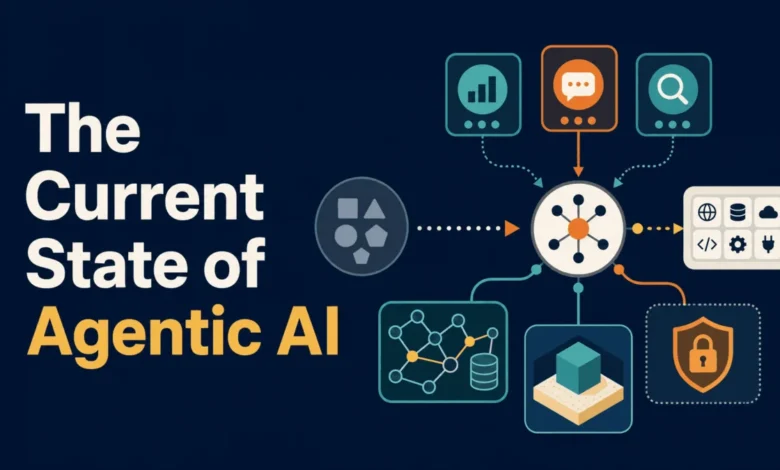
The transition from monolithic agents to swarms is often compared to the transition from monolithic software to microservices. In a modern production environment, a single request is no longer handled by one giant model equipped with dozens of tools. Instead, a "Triage Agent" serves as the entry point, analyzing the user’s intent and routing the task to the appropriate specialist.
A typical enterprise swarm might consist of several specialized nodes:
- Triage Agent: Manages initial routing and intent classification.
- Data Retrieval Agent: Specialized in writing and executing read-only SQL or vector database queries.
- Analysis Agent: Equipped with sandboxed Python environments for data manipulation and visualization.
- Synthesis Agent: Aggregates findings from various specialists into a coherent final report.
This architecture solves the "bottleneck" problem inherent in monolithic models. When a single model is burdened with 50 or more tools, the context window becomes cluttered, leading to "distraction" and a higher frequency of tool-calling errors. By contrast, a swarm keeps the context window lean for each specialist agent, allowing for the use of smaller, faster, and more cost-effective models—such as the latest iterations of Qwen or Llama—at the node level.
Standardization through the Model Context Protocol (MCP)
The widespread adoption of the Model Context Protocol (MCP) has been the primary catalyst for the commercial viability of AI swarms. Prior to this standardization, integrating an agent with a corporate database or a third-party API like Slack or GitHub required extensive manual labor. Engineers had to write custom JSON schemas, handle authentication, and manage idiosyncratic error responses for every integration.
The MCP serves as a universal adapter. Under this protocol, an MCP server automatically exposes its tools and resources to the agentic system. The execution of the tool call happens on the server side, separating the cognitive task of "deciding to use a tool" from the technical task of "executing the API call."
| Feature | Pre-2025 Integration | Mid-2026 (MCP) |
|---|---|---|
| Credential Management | Hardcoded or environment-injected | Isolated on MCP servers |
| Tool Discovery | Manual schema definition | Automated resource exposure |
| Execution | Inline via agent runtime | Remote execution via server |
| Interoperability | Low (custom per model) | High (universal standard) |
This shift has reduced the time-to-production for complex AI integrations by an estimated 65%, allowing enterprises to deploy agents that can interact with their entire software stack with minimal custom code.
Persistent Memory and the Rise of Memory Graphs
One of the most significant advancements in 2026 is the implementation of system-level memory. While individual agents within a swarm remain stateless for each specific call—keeping costs low and context windows efficient—the system as a whole maintains a persistent "Memory Graph."
This is typically achieved through a graph database, such as Neo4j, which stores relationships between entities, past user preferences, and the results of previous executions. In a production swarm, a dedicated "Memory Agent" operates asynchronously. Its sole function is to observe the interactions within the swarm, extract relevant facts, and update the graph database.
For example, if a user previously requested data in a specific format or expressed a preference for certain metrics, the Memory Agent records this in the graph. In future sessions, this context is injected into the Triage Agent’s prompt, ensuring that the system "learns" and personalizes its behavior over time without requiring expensive model fine-tuning.
Security Implications and the Threat of AIjacking
The increased connectivity and autonomy of agentic swarms have introduced new vulnerabilities, most notably the threat of "AIjacking." This involves indirect prompt injection, where a malicious instruction is hidden within data that an agent is likely to read, such as an email, a PDF, or a website.
In a swarm architecture, the danger is amplified because of "lateral movement." If a Triage Agent reads a malicious email and passes that context to a Data Retrieval Agent with database access, the injection can pivot through the system to exfiltrate sensitive information. The very handoff mechanisms that make swarms efficient can be exploited as attack vectors.
To combat this, enterprise security teams have moved toward three primary defense layers:
- Handoff Guardrails: Strict validation of data as it passes between agents to ensure no executable instructions are hidden in the payload.
- Isolated Execution Environments: Running all tool-calling actions—especially those involving code execution—in ephemeral, air-gapped containers.
- Human-in-the-Loop (HITL) Triggers: Mandatory manual approval for any action that involves "write" permissions or the movement of sensitive data.
Broader Economic and Professional Impact
The maturation of agentic AI architecture is fundamentally altering the economics of AI deployment. By moving away from massive, monolithic models for every task, organizations are seeing a decrease in inference costs even as the complexity of their AI systems increases. The ability to use "small" models for specialized tasks within a swarm has made AI more accessible to medium-sized enterprises.
Professionally, the "AI Engineer" role is merging with traditional systems architecture. Success in the field now requires a deep understanding of distributed systems, database management, and network security, in addition to expertise in large language models.
As we look toward the remainder of 2026, the focus is expected to shift toward further optimizing swarm topology and developing more robust autonomous debugging tools. The path forward is no longer about making individual models "smarter," but about making the systems they inhabit more resilient, integrated, and secure. The era of the lone, all-knowing AI is over; the era of the collaborative, specialized swarm has arrived.