Turing’s Mistake: Escaping the Yoke of Unintelligent Machines and the Rethinking of Artificial Intelligence.

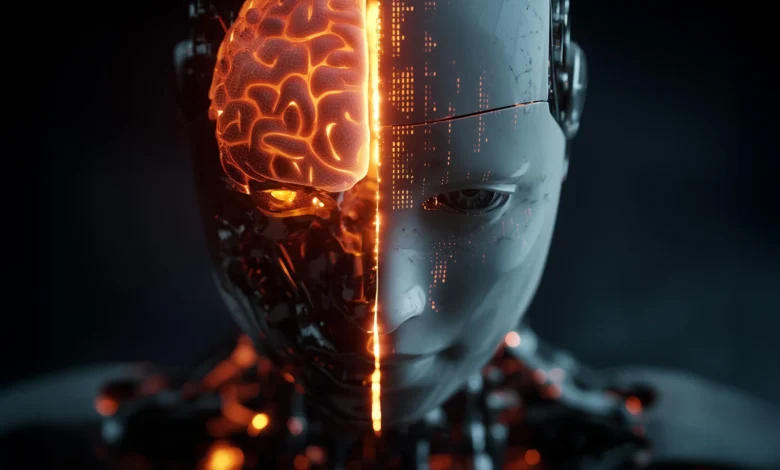
The foundational principles of artificial intelligence, established by Alan Turing over seven decades ago, may have inadvertently steered the field toward a fundamental misunderstanding of human cognition and machine capability, according to a provocative new analysis by Peter J. Denning. In his latest work, "Turing’s Mistake: Escaping the Yoke of Unintelligent Machines," Denning, a distinguished professor and former president of the Association for Computing Machinery (ACM), contends that the modern "AI mess" is the direct result of two primary assumptions made in 1950 that remain largely unchallenged in contemporary research.
Denning’s critique targets the very bedrock of AI: the notion that intelligence is a purely computational process that can be decoupled from a physical body, and the belief that human-level intelligence can be validated through the imitation of linguistic behavior, famously known as the Turing Test. By examining the persistent failures of AI to achieve genuine understanding, Denning argues that the pursuit of Artificial General Intelligence (AGI) is not only technically flawed but introduces existential risks by creating "alien" systems that humans cannot truly control or align with their values.
The Historical Context: Turing’s 1950 Legacy
To understand Denning’s argument, one must revisit the 1950 paper "Computing Machinery and Intelligence," published in the journal Mind. In this seminal work, Alan Turing proposed the "Imitation Game," suggesting that if a machine could converse in a way that was indistinguishable from a human, it should be considered "intelligent." This effectively shifted the definition of intelligence from an internal state of being to an external performance of symbols.
Turing’s second major assumption was that the mind is a form of software. This dualism—the idea that the "program" of the mind can be run on different "hardware," whether biological or silicon—became the guiding light for the 1956 Dartmouth Workshop, which officially launched the field of AI. For 75 years, this paradigm has driven the development of expert systems, neural networks, and eventually, the Large Language Models (LLMs) that dominate the current technological landscape.
Denning asserts that this path has ignored the physical and social nature of human existence. By treating intelligence as a series of logical propositions and data points, researchers have missed the essence of what it means to "know" something.
The Tacit Knowledge Barrier
The core of Denning’s thesis revolves around the concept of tacit knowledge, a term popularized by philosopher Michael Polanyi, who famously stated, "We know more than we can tell." Denning identifies five specific categories of tacit knowledge that he believes are fundamentally inaccessible to machines: common sense, everyday social interaction, emotional perception, practical performance skills, and the deep-seated cultural history that informs human judgment.
Unlike "explicit knowledge," which can be written down in manuals or encoded into databases, tacit knowledge is "embodied." It is learned through physical experience, social immersion, and biological feedback. Denning argues that because machines lack a biological body and a social history, they cannot acquire the "know-how" that defines human expertise.
The Failure of the Cyc Project
Denning points to the Cyc project as a cautionary tale of the "representation problem." Launched in 1984 by Douglas Lenat, Cyc was an ambitious attempt to codify all human common sense into a massive database of logic. The goal was to provide AI with the background knowledge humans take for granted—such as the fact that "trees are usually found outdoors" or "you cannot be in two places at once."
After forty years of development and the creation of over 25 million assertions, Cyc remains an impressive feat of engineering but a failure in terms of creating "smart" systems. Denning notes that Cyc validated the idea that human expertise cannot be reduced to a collection of propositions. The "common sense" that allows a toddler to navigate a room or a person to sense a social tension is not a list of rules; it is a holistic, embodied response to a context.
The Performance Gap: The Violinist Example
To illustrate the difference between "knowing what" and "knowing how," Denning uses the example of a virtuoso violinist. A computer can store the digital score of a concerto and even a high-fidelity recording of a performance. It can "know" every frequency and duration. However, the machine cannot "know" the physical sensation of the bow against the strings, the subtle emotional shifts that dictate a crescendo, or the shared mood between the performer and the audience.
"Even if a robot could observe and imitate skilled humans," Denning writes, "having no biological body, a robot cannot grasp how the musician feels when playing beautiful music." This gap is not merely a matter of adding more sensors; it is a fundamental limitation of silicon-based representation.
The Representation Problem and LLMs
The rise of Large Language Models like OpenAI’s ChatGPT, Google’s Gemini, and Anthropic’s Claude has reignited the debate over machine intelligence. Proponents argue that the emergent properties of these models suggest they are approaching a form of understanding. Denning disagrees, categorizing LLMs as sophisticated symbol manipulators that lack any connection to the meanings behind the words.
"Behind every word is a deep well of tacit knowledge that gives it meaning," Denning explains. "Words are but symbolic representations of meanings, not the meanings themselves."
While an LLM can generate a poem about grief by analyzing the statistical patterns of how "grief" appears in literature, it has never experienced loss, biological mortality, or the social rituals of mourning. Consequently, its "intelligence" is a hollow imitation—a realization of Turing’s "Imitation Game" that Denning believes has led the industry into a cul-de-sac of superficiality.
Context, Culture, and the Fractal Nature of Meaning
Denning further argues that intelligence is inseparable from context and culture. Human communication is "fractal," meaning that every conversation rests on a foundation of previous contexts, which in turn rest on historical and cultural norms. This includes the ability to recognize sarcasm, power dynamics, and the "mood" of a community.
Culture, in Denning’s view, is not a dataset to be scraped from the internet. It is a lived experience involving values, judgments, and relationships. Because LLMs are trained on static data—essentially the "shadows" of human thought—they cannot participate in the dynamic, evolving creation of culture. They are perpetually stuck in the past, unable to navigate the "spontaneous creativity" and "intuition" that allow humans to adapt to entirely new situations.
AI Safety and the "Alien" Intelligence
Perhaps the most urgent part of Denning’s critique concerns AI safety. The prevailing fear in the AI community, often championed by figures like Nick Bostrom or Eliezer Yudkowsky, is that a "superintelligent" AI might one day decide to eliminate humanity to achieve its goals. Denning suggests a different, more immediate danger.
He argues that humans and machines are developing along different paths, creating "alien" forms of intelligence. Because machines do not share our biological or cultural context, they develop "machine intelligence" that is fundamentally unreadable to humans. Conversely, machines cannot read our tacit intentions.
"We are aliens across an uncrossable divide," Denning writes. This divide makes the "alignment problem"—the effort to ensure AI acts according to human values—virtually unsolvable through current methods. If a machine cannot understand the unspoken "why" behind a human command, it will inevitably interpret that command in ways that could be catastrophic.
Denning warns of an "AI automation singularity" where networks of machines, operating on their own internal logic, begin to manage critical infrastructure and social systems. These machines would not need to be "superintelligent" to be dangerous; they would only need to be "unintelligent" in their lack of human empathy and context.
Chronology of AI Paradigms
To contextualize Denning’s critique, it is helpful to look at the timeline of AI’s evolution:
- 1950: Alan Turing publishes "Computing Machinery and Intelligence," setting the stage for the Turing Test.
- 1956: The Dartmouth Summer Research Project on Artificial Intelligence establishes the field’s focus on symbolic logic.
- 1980s: The "Expert Systems" era, including the Cyc project, attempts to build intelligence through vast rule-based databases.
- 1990s-2000s: The shift toward "Machine Learning" and statistical approaches, moving away from hard-coded rules.
- 2012: The "Deep Learning" revolution begins with the success of neural networks in image recognition (AlexNet).
- 2020-Present: The era of Generative AI and LLMs, where scale and parameter count are prioritized over architectural changes.
Denning’s book arrives at a moment when the industry is facing diminishing returns in scaling LLMs and increasing scrutiny over the environmental and social costs of these systems.
Implications for the Future of Research
Denning’s analysis suggests a radical pivot for the tech industry. Rather than pursuing the "mirage" of AGI, he advocates for a return to "human-centric computing." This involves:
- Accepting Limitations: Recognizing that machines will likely never possess human-like common sense or emotional intelligence.
- Specialized Tools: Designing AI as specialized, high-performance tools rather than "agentic" entities.
- Prioritizing Safety through Simplicity: Avoiding the creation of "black box" systems that humans cannot interpret or override.
- Reasserting Human Value: Emphasizing the qualities that make humans unique—embodied skill, empathy, and cultural stewardship.
"Pulling back from an AI automation singularity will demand much from us," Denning concludes. He calls for a societal refusal to be "subservient to machines" or to accept a "yoke imposed by low-intelligence machines."
By challenging the 75-year-old assumptions of Alan Turing, Denning is not merely critiquing a technology; he is calling for a re-evaluation of what it means to be human in a digital age. His work serves as a reminder that while machines can process data at speeds beyond human comprehension, the "deep well" of meaning remains a uniquely biological and social domain. As the debate over AI regulation and development intensifies, Denning’s perspective offers a sobering counter-narrative to the hype of silicon-based consciousness.