Bridging the AI Gap: Understanding the Model Context Protocol and its Role in Enterprise Integration

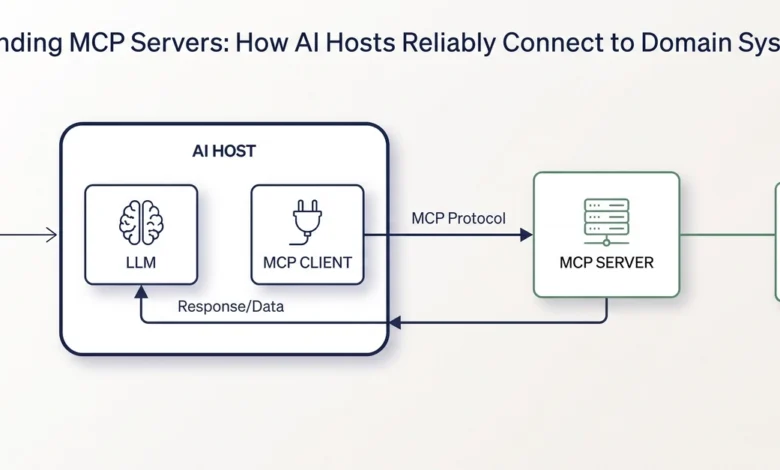
How can an LLM gain controlled access to current data and permitted actions? This is the fundamental challenge facing developers and organizations today as they attempt to move artificial intelligence beyond static chatbots and into the realm of actionable business tools. The introduction of the Model Context Protocol (MCP) in November 2024 marked a significant shift in this landscape, providing an open standard designed to resolve the fragmented, point-to-point integration models that have long hindered enterprise AI adoption.
The Problem of Fragmentation
Before the advent of the Model Context Protocol, the integration of Large Language Models (LLMs) into existing business systems was a fragmented, labor-intensive process. Each application—whether a ticket management system, a file storage repository, or an internal REST API—required a bespoke bridge. An IDE might require one specific integration to interact with a file system, while a separate customer support chatbot required a completely different, custom-built connector for a ticketing platform.
This "tangle" of integrations resulted in several critical issues:
- Duplicate Effort: Developers were forced to repeatedly describe the same domain objects for different AI hosts.
- Authentication Inconsistency: Security teams struggled to manage varying authentication paths and permissions across multiple AI endpoints.
- Maintenance Burden: Any change to an underlying data model necessitated updates across every single custom integration, leading to a brittle and unsustainable infrastructure.
As industry analysts have noted, this fragmentation hindered the scalability of AI deployments. Organizations found themselves spending more time managing the "plumbing" of AI connections than actually leveraging the models to improve productivity or decision-making.
Chronology and Development of the Standard
The development of MCP was a direct response to these industry-wide challenges. Anthropic, a leading AI research and deployment company, spearheaded the initiative to create a unified language for AI-to-data communication.
- November 2024: The Model Context Protocol was officially unveiled. It aimed to establish a standard interface between AI assistants and external data sources, effectively functioning as a "universal adapter" for AI.
- July 28, 2026: A critical milestone was reached with the release of the 2026-07-28 specification. This update solidified the protocol’s architecture, defining the core components: resources, prompts, and tools. This version moved the industry toward a stateless protocol core, utilizing JSON-RPC 2.0 to ensure consistent, scalable communication.
The protocol draws inspiration from the Language Server Protocol (LSP), which successfully standardized how text editors interact with programming languages. By creating a similar "shared contract" for data and tool access, MCP allows for a more decoupled ecosystem where AI hosts (the applications using the models) and MCP servers (the providers of data and tools) can interact without needing prior, specific knowledge of each other’s internal architecture.
Core Components of the MCP Architecture
The MCP architecture operates on a host-client-server model, which provides a clear, secure boundary between the AI model and the sensitive domain data. Understanding these components is essential for any enterprise looking to implement the protocol:
1. Discovery and Negotiation
Unlike older, session-bound methods, MCP utilizes a dynamic discovery process. With each request, clients and servers exchange metadata, including supported protocol versions and capabilities. This ensures that an AI host only attempts to use tools or access resources that the server explicitly permits, preventing unauthorized access and reducing the likelihood of runtime errors.
2. Resources
Resources act as the "read-only" context of the MCP world. They represent data objects—such as ticket details, database schemas, or documentation files—that can be surfaced to the LLM. By using URIs to identify resources, the system allows the host to pull in specific, necessary information without dumping entire databases into the model’s context window.
3. Prompts
Prompts in MCP are not merely static strings. They are structured, parameterizable templates. By providing these templates, an MCP server can guide an LLM to perform specific tasks—such as a risk analysis or a documentation summary—in a consistent, pre-defined manner. This standardization ensures that the AI’s output is more predictable and aligned with internal business logic.

4. Tools
Tools are the most powerful component of the protocol, representing executable domain capabilities. When an LLM determines that it needs to take an action—such as searching for a specific ticket or listing comments—it proposes a tool call. The host then evaluates this proposal against its security and authorization policies before executing the action. This "human-in-the-loop" or "policy-in-the-loop" design is a crucial security feature that differentiates MCP from less structured integration methods.
Implications for Enterprise Security and Data Governance
A common misconception is that the Model Context Protocol itself provides a complete security architecture. Industry experts caution that this is not the case. MCP provides the mechanism for communication, but the responsibility for enforcing security remains with the host and the server implementations.
In a production environment, the server must continue to enforce strict authentication, role-based access control (RBAC), and audit logging. The protocol is designed to support these requirements by ensuring that all requests are validated and that every action taken by the model is subject to the host’s oversight.
From a data governance perspective, MCP promotes "data minimization." Because the host controls which resources are shared with the model, organizations can prevent the exposure of sensitive PII (Personally Identifiable Information) or proprietary intellectual property by ensuring the LLM only ever "sees" the specific fragments of data required for the task at hand.
Broader Industry Impact
The adoption of MCP is poised to reshape the enterprise software market. By lowering the barrier to entry for AI integrations, the protocol allows developers to focus on building value-add features rather than custom API wrappers.
Analysts suggest that we will see a surge in "MCP-native" applications. SaaS providers are already beginning to explore how they can offer MCP servers alongside their existing REST or GraphQL APIs, effectively providing an "AI-oriented integration surface" that is purpose-built for interaction with Large Language Models.
Furthermore, the protocol provides a degree of future-proofing. As AI models evolve and change—or as businesses switch from one LLM provider to another—the underlying integration with domain systems remains stable. The "contract" between the data source and the AI host remains intact, regardless of the underlying intelligence driving the reasoning process.
Future Outlook
As the industry moves toward 2027 and beyond, the focus will likely shift from the fundamental architecture of the protocol to the development of robust, standard-compliant implementations that emphasize security, auditability, and ease of use.
The successful implementation of MCP requires a "domain-first" mindset. Organizations must define their internal data boundaries, permission models, and operational procedures before mapping them to MCP resources and tools. By designing from the domain system outward, companies can ensure that their AI assistants are not just capable of "chatting" about their business, but are actively empowered to assist with real-world tasks in a controlled, secure, and highly efficient manner.
The Model Context Protocol stands as a testament to the maturation of the AI industry. By moving away from custom, fragile integrations and toward a standardized, open-source communication framework, the technology community is building the foundation for the next generation of intelligent, enterprise-grade applications.