React Native officially expands to Meta Quest devices to bridge mobile and spatial computing development

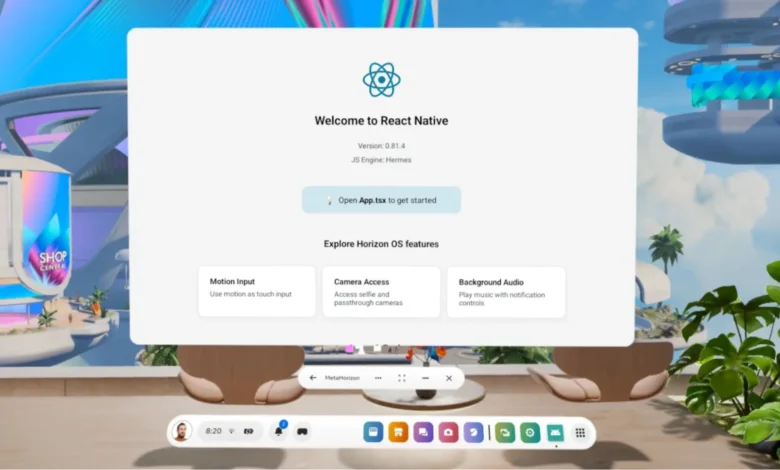
React Native, the cross-platform development framework that has fundamentally reshaped how mobile applications are built, has officially extended its reach to the Meta Quest ecosystem. Announced during the keynote address at React Conf 2025, this milestone marks a significant evolution in the framework’s "Many Platform Vision." By integrating support for Meta Horizon OS, the operating system powering Meta’s VR headsets, the React Native community is now empowered to deploy applications into the spatial computing environment using the same codebase, tooling, and architectural patterns familiar to millions of mobile developers.
The Evolution of the Many Platform Vision
The trajectory toward this announcement began in earnest in August 2021, when the core React Native team published their "Many Platform Vision" manifesto. At that time, the framework had already transcended its initial iOS and Android boundaries, finding utility in desktop environments like Windows and macOS, and even the web via emerging technologies like react-strict-dom. The core philosophy was clear: prevent ecosystem fragmentation by allowing developers to maintain a single source of truth for UI logic, while enabling the framework to adapt to the unique requirements of emerging form factors.
For years, the industry had witnessed a surge in specialized frameworks for VR and AR, many of which required developers to learn proprietary languages or complex 3D engines like Unity or Unreal. While these engines remain the gold standard for high-fidelity gaming, the vast majority of consumer and productivity applications—ranging from social media feeds to project management tools—are better suited to the declarative UI patterns found in React. By adopting Meta Quest, the React Native team is effectively positioning the headset as a high-performance, spatial Android device rather than an isolated silo.
Technical Foundations: Why Meta Horizon OS Matters
The integration is not a reinvention of the wheel but a strategic leverage of existing infrastructure. Because Meta Horizon OS is built upon the Android Open Source Project (AOSP), the transition for developers is remarkably seamless. From a technical perspective, the Quest hardware operates as an Android target. Existing Android build pipelines, Gradle configurations, and standard debugging workflows remain functional.
This decision avoids the pitfalls of previous platform expansions, which often suffered from "forked" codebases that required unique maintenance paths. Instead, the framework treats the Meta Quest as a first-class citizen within the existing React Native abstraction layer. This means that a developer who has spent years building Android applications will find the transition to VR development to be largely a matter of adjusting UI constraints rather than relearning core architecture.
Development Workflow and Deployment
The workflow for building on Meta Quest is designed to mirror the current standard in the React Native ecosystem. For initial prototyping, developers can utilize Expo Go, the rapid development tool that allows for near-instant previewing of changes on the headset. As projects scale and require native module access or deeper hardware integration, developers transition to development builds.
To manage the transition from standard mobile to spatial, the community has introduced the expo-horizon-core library. This plugin handles the necessary configuration for Meta Horizon OS, including setting product flavors, adjusting manifest requirements, and defining application metadata at build time. By modifying the app.json configuration, developers can specify supported devices, such as the Quest 2, Quest 3, and Quest 3S, while toggling platform-specific settings like head-tracking or background execution permissions.
Bridging the Gap: Challenges and Compatibility
While the underlying Android compatibility is robust, the environment of a VR headset is inherently different from that of a smartphone. The most prominent difference lies in the absence of Google Mobile Services (GMS). Because Meta Horizon OS relies on the core AOSP, developers cannot rely on proprietary services such as Google Play Services, Firebase Cloud Messaging, or integrated Google Maps SDKs.

This shift necessitates a change in how developers approach external dependencies. Any library that assumes the presence of GMS will likely fail or require significant refactoring. Consequently, the React Native community has begun auditing common libraries for compatibility. In scenarios where a mobile feature is absent—such as GPS or SMS—developers must implement platform-aware code paths. The ExpoHorizon utility provides a straightforward API to detect if an application is running on a Quest device, allowing developers to conditionally disable unsupported features or provide "fallback" UI elements that make sense in a spatial context.
Designing for Spatial Computing
Perhaps the most significant hurdle for developers moving from mobile to the Quest is the user experience (UX) paradigm. On a smartphone, the interface is constrained by a physical screen and touch-based interactions. In a VR environment, the UI exists in three-dimensional space, viewed through a headset with varying focal distances and controlled by spatial pointers or hand-tracking gestures.
The design principles for this new medium resemble those used in desktop and tablet development rather than mobile. Developers are encouraged to design for "large hit targets" and clear visual feedback. Because the Quest controller acts as a pointer device, the interaction model shifts toward hover states and focus-based navigation—patterns that are closer to traditional web development than the direct-touch manipulation users expect on a phone. The goal is to avoid "touch-only" assumptions, ensuring that the interface remains legible and interactive regardless of whether the user is navigating with a controller, their hands, or a peripheral keyboard and mouse.
Industry Implications and Market Analysis
The official support of React Native on Meta Quest carries profound implications for the software market. By lowering the barrier to entry, Meta is likely attempting to bolster the "non-gaming" app library of the Horizon Store. Historically, the VR market has been heavily skewed toward gaming; however, the rise of spatial computing as a productivity tool—highlighted by the popularity of virtual monitors and workspace apps—demands a robust set of utility software.
By enabling React Native, Meta effectively invites a workforce of millions of web and mobile developers to build for the Quest without the need for specialized 3D graphics expertise. This could lead to an influx of B2B applications, enterprise collaboration tools, and educational software that were previously too costly to develop for a niche platform.
Furthermore, this move acts as a defensive strategy for the framework itself. As Apple continues to push its own spatial computing platform, VisionOS, the React Native team is signaling that it intends to remain the universal bridge between platforms. Whether a developer is building for an iPhone, a Windows desktop, or a VR headset, React Native aims to provide the common language that binds these disparate ecosystems together.
Conclusion and Future Outlook
The introduction of official React Native support for Meta Quest is a testament to the framework’s maturity and its long-standing commitment to platform-agnostic development. By grounding the integration in the established Android foundation, the team has ensured that the learning curve remains flat, while the possibilities for developers are exponentially expanded.
As the industry continues to experiment with the role of spatial computing in daily life, the tools that enable rapid, scalable, and cross-platform development will prove to be the most critical infrastructure. With this release, the React Native ecosystem is no longer just about the screen in a user’s pocket—it is about the digital environment they inhabit. Developers are encouraged to review the official Meta Horizon OS documentation and the expo-horizon-core repository to begin migrating their mobile applications into the spatial era. The foundation has been laid; the next chapter of React Native development will be measured not just in screen pixels, but in the immersive depth of the experiences created.