Massive Identity Theft Breach Exposes 153 Million North American Drivers Licenses via Dark Web Service

A newly discovered dark web portal known as Nexus has triggered a firestorm in the cybersecurity community after surfacing earlier this week with a staggering cache of 153 million digital scans of driver’s licenses. The breach, which includes government-issued identification from both the United States and Canada, appears to originate from a systemic failure at a prominent Louisiana-based identity verification firm, idscan.net. The exposure has reached the highest echelons of the U.S. government, with reports confirming that the personal identification records of high-ranking officials, including U.S. Defense Secretary Pete Hegseth, are currently available for purchase on the illicit marketplace.
The discovery was first brought to light on August 31, when a source alerted security researchers to an advertisement on the Russian-language cybercrime forum Exploit. The threat actor behind the Nexus service claimed to possess a massive repository of sensitive identity documents, offering a Virginia driver’s license as a "free sample" to demonstrate the legitimacy of the data. Subsequent analysis revealed that the database is not merely a collection of numbers but a high-fidelity archive of identification, often containing front-and-back scans, infrared imagery, and ultraviolet captures of official government credentials.
Chronology of a Data Catastrophe
The scale of the breach became immediately apparent when researchers performed a blind search on the Nexus platform. An empty query returned approximately 11.5 million pages of results, with roughly 15 records per page, confirming the service’s claim that it holds over 153 million individual driver’s license records. The geographic distribution of the stolen data heavily favors the United States, though Canadian records are also well-represented, with nearly half a million records originating from Ontario alone.

The data appears to be remarkably current. Evidence suggests that the perpetrators have been exfiltrating information for at least a year, with a steady influx of new records. Within a 24-hour window, researchers observed the addition of 400,000 new license scans to the portal, indicating that the source system remained actively compromised or was being continuously harvested until the site’s abrupt closure following public scrutiny.
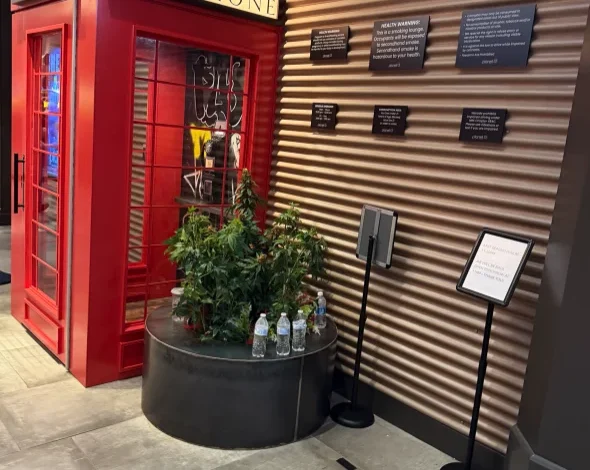
Researchers testing the database found a chilling pattern: the timestamps on the digital files corresponded precisely with dates on which individuals had utilized their driver’s licenses at third-party businesses. By cross-referencing these timestamps with travel logs, car rental receipts, and visits to regulated facilities—such as marijuana dispensaries—investigators were able to trace the data point of origin back to a centralized identity verification provider, idscan.net.
The Role of Third-Party Verification
The investigation suggests that the breach occurred at the infrastructure level of idscan.net, a company that provides "VeriScan" services to more than 20,000 locations globally. The company, which processes over 21 million verifications monthly, serves a diverse array of sectors, including major rental car agencies like Hertz, retail giants like Target, and various government-adjacent entities.
The vulnerability appears to stem from the hardware and software systems used by these venues to authenticate identity. When a customer hands their license to a representative or inserts it into a scanning kiosk, the system captures multiple versions of the ID, including high-resolution imagery and spectral data designed to detect forgeries. Because idscan.net acted as a central aggregator for this data across thousands of disparate businesses, a single point of failure within their network allowed for the mass exfiltration of millions of sensitive documents.

In one notable case, a researcher found his own license and his mother’s license in the database. Both records carried timestamps within seconds of each other, corresponding to the exact moment the pair provided their IDs to a rental car representative. Other victims, including cybersecurity experts and federal employees, found their records in the system after visiting dispensaries that utilize the company’s technology.
Official Inquiries and Government Involvement
The discovery of high-ranking government officials’ data within the Nexus repository prompted an immediate response from federal authorities. The Federal Bureau of Investigation (FBI) New Orleans field office launched an official inquiry into the source of the images shortly after the breach was publicized. Sources confirmed that senior leadership within the FBI’s cyber division was briefed on the matter, particularly as the dataset included sensitive information belonging to high-level government personnel.
Idscan.net, following a period of silence, eventually released a formal notification acknowledging the incident. The company stated that an unauthorized third party may have accessed or copied customer information, including full names and identification numbers. They have since pledged to notify affected individuals and provide credit monitoring services. However, the efficacy of these measures is being questioned by privacy advocates who argue that the permanent nature of a driver’s license scan makes it impossible to "reset" one’s identity in the same way one might reset a password.
Other organizations linked to the vendor have moved quickly to distance themselves. A spokesperson for Caesars Entertainment clarified that the company had not utilized idscan.net services since February 2025 and that no active data was at risk, countering assertions made on the vendor’s own marketing materials.

Broader Implications and Security Analysis
The Nexus breach represents a paradigm shift in the severity of identity theft. Unlike a standard database leak—which might expose emails or passwords—this incident involves the compromise of "identity provenance." A driver’s license is a foundational document used to verify identity for everything from banking and credit applications to physical access at secure facilities.
"This episode should further strengthen the resolve for people who are fighting back against online ID schemes," said Zach Edwards, a security researcher whose own license was included in the cache. The trend of requiring digital ID scans for increasingly mundane tasks—such as accessing online services, entering age-restricted venues, or renting vehicles—has created a "honeypot" effect. Every time a consumer hands over their ID, that data is transmitted, processed, and often stored by third-party vendors who may not be held to the same rigorous security standards as the government agencies that issued the documents.
Experts warn that this breach poses unique risks to vulnerable populations. For individuals in the witness protection program or those fleeing domestic violence, the ability to disappear is a matter of life and death. When AI-powered facial recognition tools are applied to 153 million high-resolution images, the ability to hide in plain sight becomes significantly more difficult.
Furthermore, the inclusion of medical marijuana cards and Common Access Cards (CAC) in the breach highlights the danger of "data creep," where vendors collect more information than is strictly necessary for a transaction. The storage of infrared and ultraviolet scans is particularly concerning, as this data is specifically intended for high-security authentication. If these images are compromised, the very mechanisms designed to prevent fraud become the tools used to facilitate it.

Conclusion and Future Outlook
While the Nexus website vanished from the dark web shortly after the breach became public—displaying a terse message that the service was "no longer available"—the damage is already done. The data is likely circulating in private channels, and the long-term impact on the identity verification industry is expected to be profound.
The incident has reignited the debate over "data minimization"—the principle that organizations should collect only the minimum amount of personal information necessary for their operations. As the FBI continues its investigation, the tech industry and lawmakers are under mounting pressure to establish stricter oversight for third-party identity verification providers. For the 153 million victims, the focus now shifts to the arduous task of monitoring their financial and personal identities against a backdrop of unprecedented exposure. The Nexus breach serves as a stark reminder that in an increasingly digitized world, the infrastructure of identity is only as secure as its weakest, most heavily utilized link.