AI-Powered Analysis of Reddit Posts Reveals Unreported Side Effects in Popular Weight-Loss Medications Like Ozempic and Mounjaro


The rapid mainstream adoption of blockbuster metabolic medications has outpaced the slow-moving gears of traditional clinical research, leaving a vast reservoir of patient experiences largely unexamined by formal regulatory bodies. To bridge this information gap, a team of researchers at the University of Pennsylvania has turned to artificial intelligence, leveraging advanced computational social listening to comb through more than 400,000 public social media posts. By analyzing over five years of discussions generated by nearly 70,000 Reddit users, the Penn Engineering research team identified recurring symptoms among people using popular glucagon-like peptide-1 (GLP-1) receptor agonists—such as semaglutide, marketed as Ozempic, Wegovy, and Rybelsus, and tirzepatide, marketed as Mounjaro and Zepbound—that remain notably absent or underrepresented in official clinical trials and regulatory safety labels.
The study, which was recently published in the scientific journal Nature Health, highlights two specific categories of patient-reported phenomena that demand rigorous follow-up investigation: reproductive symptoms, including unexpected fluctuations and irregularities in menstrual cycles, and body temperature regulation anomalies, such as persistent chills and sudden hot flashes. While the research underscores that these findings do not establish a definitive causal link between the medications and the reported symptoms, it demonstrates the unprecedented capability of natural language processing models to extract valuable, unprompted health signals from real-world patient communities at a speed traditional medical surveillance cannot match.
Background Context and the Rise of GLP-1 Therapeutics
To understand the gravity and necessity of this novel research approach, one must examine the meteoric rise of GLP-1 receptor agonists over the past half-decade. Originally developed and approved for the management of type 2 diabetes, medications like semaglutide and tirzepatide demonstrated profound efficacy in promoting substantial weight loss. Consequently, demand skyrocketed, transforming these specialized therapeutics into cultural and economic powerhouses almost overnight.
As millions of individuals began utilizing these drugs for chronic weight management and diabetes control, the demographic profile of the user base expanded far beyond the carefully controlled cohorts typically assembled for pre-approval clinical trials. While clinical trials remain the gold standard for establishing drug safety and primary efficacy, they are fundamentally constrained by design. Typically enrolling thousands of carefully screened participants over a span of several years, trials are optimized to detect high-frequency, severe, or acute adverse events. However, they frequently lack the statistical power, demographic diversity, or duration required to uncover less common, nuanced, or quality-of-life-altering side effects that emerge only when millions of people from diverse backgrounds begin daily use.
Furthermore, patients navigating these treatments in their daily lives rarely experience side effects in a clinical vacuum. Instead, they turn to peer-to-peer digital ecosystems—most notably Reddit communities dedicated to weight loss and diabetes management—to compare notes, seek reassurance, and share unfiltered observations. Recognizing this dynamic, the University of Pennsylvania team sought to transform this digital neighborhood grapevine into an actionable, early-warning health surveillance system.
A Chronology of Digital Health Surveillance
The integration of computational linguistics and internet data into pharmacovigilance is not entirely unprecedented, though the technological sophistication required to execute it has evolved exponentially. The foundational efforts in this field date back to approximately 2011, when Lyle Ungar, a professor in the Department of Computer and Information Science (CIS) at Penn Engineering and a co-author of the recent study, participated in some of the earliest academic attempts to mine user-generated internet text for signals of adverse drug reactions.
For many years, however, scaling these efforts proved remarkably difficult. The primary bottleneck lay in the unstructured and colloquial nature of human language. Patients discussing their health online do not use standardized medical terminology; one user might describe experiencing "freezing cold hands and feet," while another might type about "constant, bone-chilling shivers." To analyze these reports systematically, researchers previously had to manually map thousands of informal expressions onto formalized medical taxonomies, such as the Medical Dictionary for Regulatory Activities (MedDRA), which is universally utilized by regulatory agencies and pharmaceutical developers to classify adverse events. This manual translation process severely restricted the volume of data that could be analyzed within a reasonable timeframe.
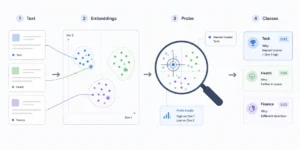
The advent and maturation of large language models (LLMs), such as advanced iterations of GPT and Gemini architectures, fundamentally revolutionized this analytical paradigm. By deploying computational social listening empowered by modern LLMs, Sharath Chandra Guntuku, Research Associate Professor in CIS at Penn Engineering and the study’s senior author, alongside lead author and doctoral student Neil Sehgal, bypassed historical data-processing bottlenecks. The LLMs enabled the research team to process hundreds of thousands of informal text documents with unprecedented speed, converting colloquial patient narratives into standardized medical categories while maintaining rigorous consistency.
Detailed Findings: What the Data Shows
The Penn Engineering study examined a massive dataset consisting of more than 400,000 Reddit posts generated by roughly 70,000 unique users over a five-year window. Because the dataset was derived from Reddit, the researchers explicitly noted inherent demographic biases: the user base tends to skew younger, is disproportionately male compared to the broader clinical population of weight-loss drug users, and is heavily concentrated within the United States.
Despite these limitations, the analysis successfully validated its own methodology by independently detecting well-established, high-frequency adverse events associated with GLP-1 therapies. Approximately 44% of the users included in the study cohort described experiencing at least one side effect. Gastrointestinal disturbances dominated the findings, with nausea, vomiting, diarrhea, and constipation ranking as the most frequently discussed complaints—findings that align perfectly with the known safety profiles outlined in official drug labeling.
However, the true value of the study emerged from the identification of unexpected, high-frequency signals that have historically received less attention in formal clinical settings:
- Reproductive and Menstrual Irregularities: Nearly 4% of the Reddit users in the sample explicitly detailed reproductive symptoms. Among female-identifying users, this percentage translates to an even higher incidence rate of menstrual disruptions, including heavy bleeding, intermenstrual spotting (bleeding between periods), and unpredictable cycle lengths.
- Body Temperature Dysregulation: A significant number of users described experiencing unexplained thermal disturbances, ranging from persistent chills and feeling abnormally cold in temperate environments to sudden hot flashes and low-grade, fever-like sensations.
- Severe and Debilitating Fatigue: Exhaustion emerged as the second most frequently reported complaint throughout the dataset. Despite its prevalence in online patient narratives, fatigue is relatively underreported in traditional clinical trial documentation as a primary, persistent adverse event reaching statistical reporting thresholds.
Biological Plausibility and Hypothalamic Mechanisms
To evaluate whether these patient-reported signals warranted serious scientific inquiry rather than being dismissed as internet noise, the researchers consulted clinical experts, including Jena Shaw Tronieri, a Senior Research Investigator at Penn’s Center for Weight and Eating Disorders and a co-author of the study.
The investigation pointed toward a compelling biological nexus: the hypothalamus. This remarkably small yet vital region of the structural brain acts as the body’s master command center, regulating a vast array of autonomic functions, including hunger cues, energy expenditure, reproductive hormone axes, and core body temperature homeostasis.
Because GLP-1 receptor agonists exert their therapeutic effects by engaging receptors within the central nervous system—including areas within and adjacent to the hypothalamus—the researchers theorized a plausible biological mechanism. Tronieri emphasized that while this anatomical connection does not definitively prove causation, it strongly suggests that downstream hormonal and autonomic fluctuations could theoretically manifest as menstrual changes and temperature dysregulation. Consequently, these patient-reported patterns warrant dedicated, systematic clinical investigation rather than immediate dismissal.
Implications for Clinical Practice, Regulation, and Industry
The implications of the Penn Engineering study extend far beyond academic curiosity, striking at the heart of modern pharmacovigilance and drug safety monitoring. Traditional clinical research is inherently deliberate, methodical, and slow—a design necessary for safety and accuracy, but one that leaves a dangerous temporal vulnerability when a pharmaceutical product transitions from a niche medical treatment to a global consumer phenomenon in a matter of months.
By demonstrating that computational social listening can rapidly surface emerging patient concerns, the study outlines a complementary framework for medical research. Neil Sehgal highlighted the practical takeaway for practicing clinicians: when patients share unprompted, recurring complaints that fall outside standard clinical trial summaries, those qualitative leads deserve attentive listening during routine clinical encounters.
Furthermore, the methodology holds profound promise for monitoring not only FDA-approved pharmaceuticals but also the sprawling, loosely regulated market of wellness products, unregulated peptide analogs, and compounded weight-loss formulations that proliferate rapidly across social media platforms like TikTok, Instagram, and Reddit. When consumers experiment with unregulated substances, formal adverse event reporting systems often fail to capture emerging dangers until severe harm has occurred. AI-driven social listening systems could theoretically serve as an early-detection radar, identifying adverse signals weeks or months before traditional surveillance networks register an anomaly.
Future Directions and Ongoing Research
Looking ahead, the research team at the University of Pennsylvania aims to expand the scope of their computational models. Future initiatives will focus on moving beyond English-language forums and diversifying data extraction across international social media platforms to determine whether the observed symptom patterns hold true globally or remain idiosyncratic to Western internet culture.
As artificial intelligence continues to reshape biomedical research, studies like this one highlight a paradigm shift: the recognition that patient voices, when aggregated and analyzed at scale through advanced computational tools, represent an invaluable, untapped frontier in medical safety and personalized healthcare.
Study Details and Disclosures:
The research was conducted entirely within the University of Pennsylvania School of Engineering and Applied Science, with no external funding reported for the study. Co-author Jena Shaw Tronieri reported receiving an investigator-initiated grant, on behalf of the University of Pennsylvania, from Novo Nordisk, alongside consulting fees from Currax Pharmaceuticals, LLC. All other authors declared no competing financial interests or conflicts of interest.
Related posts: