Wistron and NVIDIA Unveil 700 Million Dollar Advanced AI Manufacturing Facility in Fort Worth Marking a New Era for American Industrialization

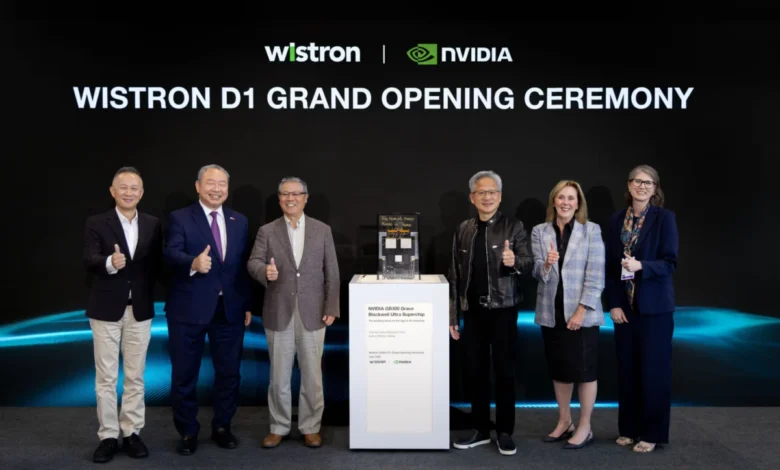
The global landscape of artificial intelligence infrastructure reached a significant milestone today as Wistron, a leading global technology service provider, officially inaugurated its first manufacturing facility in the United States. Located in Fort Worth, Texas, the 324,000-square-foot "greenfield" plant, known as the D1 facility, represents a pivotal shift in the production of high-end AI hardware. The site is dedicated to the assembly and testing of superchips that serve as the computational engines for the world’s most sophisticated artificial intelligence systems.
The opening ceremony was attended by a high-profile delegation, including NVIDIA founder and CEO Jensen Huang, Wistron Chairman Simon Lin, several high-ranking Taiwan government officials, and local Fort Worth civic leaders. The event highlighted the strategic importance of domestic manufacturing in the high-stakes race for AI supremacy. During his keynote remarks, Jensen Huang emphasized that the facility is not merely a factory but a cornerstone of a broader movement to revitalize the American industrial base through the lens of the AI era.
Manufacturing is an essential pillar for every economy and every country, Huang stated during the ceremony. He noted that the establishment of chip plants, packaging facilities, and computer system plants across the United States signals a significant period of reindustrialization. By bringing the production of AI "factories"—the massive server clusters that generate intelligence—back to American soil, the technology sector is contributing to a more resilient and self-sufficient national economy.
The D1 Facility: A Hub for Next-Generation Superchips
The Wistron D1 facility is engineered for high-volume, high-precision manufacturing. At its launch, the plant is operating two primary manufacturing cells, each dedicated to the cutting-edge of NVIDIA’s hardware roadmap. The first cell is focused on the production of the NVIDIA GB300 Grace Blackwell Ultra Superchip. This system is widely considered the most powerful AI supercomputer component in existence, integrating a massive array of transistors and cooling systems into a single, high-performance unit.
The second manufacturing cell is slated to produce the NVIDIA Vera Rubin Superchip, the successor to the Blackwell architecture. By securing the production lines for both current and future generations of AI hardware, the Fort Worth plant ensures its relevance in the rapidly evolving technology cycle. Wistron executives confirmed that the facility is currently scaling its operations with the goal of producing tens of thousands of advanced circuit boards per month by the end of the current calendar year.
The complexity of these machines is staggering. Jensen Huang described the systems built around the GB300 as weighing approximately two tons and consisting of over 1.5 million individual parts. With a price tag of roughly $4 million per unit, these are among the most valuable and complex manufactured goods in the world. Huang likened the production scale at the Wistron plant to that of consumer electronics, stating that the facility is "cranking them out in volume" to meet the global demand for "intelligence infrastructure."
A 700 Million Dollar Investment in the Texas Economy
The establishment of the Fort Worth plant represents a substantial financial commitment of $700 million by Wistron. This investment is expected to have a significant multiplier effect on the local and state economy. At the time of the opening, the facility has already created over 500 new jobs, ranging from high-level engineering roles to specialized technical positions. Wistron has announced plans to double its workforce to 1,000 employees by the end of 2024.
The impact of the facility extends beyond the tech sector. Huang pointed out that the construction and operation of such a massive plant involve a wide array of trades and services. The project has supported jobs for plumbers, electricians, construction workers, and logistics specialists. This diversity of employment reflects the broader economic benefits of "reindustrialization," where high-tech investments stimulate traditional labor markets.
Wistron Chairman Simon Lin expressed a vision of the AI era that transcends corporate profits, focusing on the societal benefits of the technology being built in Texas. From a macro view of the whole AI world, down to the community and country, it’s a great vision, Lin remarked. He added that the goal of these advancements is to usher in an era where humanity is "happier and healthier" through the application of artificial intelligence in healthcare, science, and daily life.
The Role of Digital Twins and Virtual Construction
One of the most technologically advanced aspects of the D1 facility is that it was fully operational in a virtual environment before a single brick was laid in the physical world. Wistron utilized NVIDIA’s Omniverse platform to create a "digital twin" of the entire factory. This virtual replica allowed engineers to simulate and optimize every aspect of the manufacturing process in a 3D environment.
The digital twin integration involved several components of the NVIDIA software stack:
- Omniverse and Metropolis: Used for designing the layout of assembly lines and simulating the movement of robotic systems and human workers to ensure maximum efficiency and safety.
- Nemotron and Cosmos Frontier Models: Applied to analyze data and predict potential bottlenecks in the production cycle.
- PhysicsNeMo: An open framework that allowed Wistron to simulate the physical properties of the facility, including thermal management and airflow, which are critical for testing high-heat-output AI chips.
By validating assembly line layouts and training workers on standard operating procedures in a virtual space, Wistron was able to significantly reduce the time required to bring the factory online. This "digital-first" approach to manufacturing is becoming the standard for the next generation of industrial facilities, allowing for rapid adaptation as hardware designs change.
Strategic Context: NVIDIA’s "Build in America" Initiative
The Wistron Fort Worth factory is a key component of NVIDIA’s larger strategic initiative to localize its supply chain. The company has committed to manufacturing up to $500 billion in advanced AI platforms within the United States. This move is partly a response to global supply chain vulnerabilities and partly a strategic effort to align with U.S. industrial policy aimed at securing domestic production of critical technologies.
Texas has emerged as a central hub for this high-tech migration. The opening of the Wistron plant follows other significant developments in the region, such as Coherent’s groundbreaking of a new manufacturing facility in Sherman, Texas, which will focus on AI optical components. The "Silicon Prairie" of North Texas is increasingly becoming a critical node in the global semiconductor and AI hardware ecosystem, benefiting from the state’s business-friendly environment and a growing pool of skilled technical talent.
The Concept of the "AI Factory"
A recurring theme during the opening ceremony was the evolution of the factory itself. Jensen Huang proposed that AI factories will soon become as fundamental to modern society as agriculture and electricity. In his view, the 20th century was defined by factories that took in raw materials and produced physical goods. The 21st-century factory, however, takes in electricity and data to produce "tokens"—the building blocks of artificial intelligence.
Just as agriculture is a fundamental infrastructure of society, in the future these AI factories will be a fundamental infrastructure, Huang explained. He envisioned a future where roads, railroads, and the internet are joined by a network of AI factories that generate the intelligence required to power autonomous vehicles, drug discovery, and climate modeling. The Wistron facility in Fort Worth is one of the first physical manifestations of this vision.
Chronology of Development and Future Outlook
The journey to the opening of the D1 facility began as a "greenfield" project, meaning it was built from the ground up on previously undeveloped land. This allowed Wistron the freedom to design a facility specifically tailored for the unique requirements of AI superchip production, which involves higher power densities and more rigorous testing protocols than standard consumer electronics.
The timeline for the facility’s expansion is aggressive. Having already reached a headcount of 500, the ramp-up to 1,000 employees over the next few months will coincide with the transition from the GB300 production to the introduction of the Vera Rubin architecture. This rapid scaling is necessary to keep pace with the demand from cloud service providers and enterprise data centers, which are currently in a "compute arms race" to build out their AI capabilities.
The ceremony concluded with the unveiling of the first NVIDIA GB300 Grace Blackwell Ultra Superchip produced at the site. In a symbolic gesture, Jensen Huang signed the unit, marking the official start of high-volume AI manufacturing in Fort Worth. Following the ceremony, Huang engaged in discussions with national and local media, reinforcing the message that the "Build in America" strategy is not just a policy goal but a functional reality.
Implications for the Global Supply Chain
The opening of Wistron’s Fort Worth plant has significant implications for the global technology supply chain. Traditionally, the assembly of such complex systems was concentrated in East Asia. By establishing a massive footprint in the United States, Wistron and NVIDIA are reducing "geographical risk" and shortening the distance between the point of manufacture and the primary market for these systems.
Furthermore, the collaboration between a Taiwanese manufacturing giant and an American semiconductor leader underscores the deep technological ties between the two regions. As the U.S. government continues to emphasize the importance of domestic semiconductor manufacturing through legislation like the CHIPS and Science Act, facilities like Wistron’s D1 plant serve as a blueprint for how international partnerships can drive domestic industrial growth.
In conclusion, the inauguration of the Wistron facility in Fort Worth is more than a local economic win; it is a signal of the changing nature of global manufacturing. As AI becomes the central driver of economic growth, the "factories" that produce this intelligence are becoming the most important assets in the world. With $700 million in investment and the world’s most advanced superchips rolling off the assembly line, Fort Worth has officially secured its place at the heart of the AI era.
Related posts: