Cloudflare Unveils Cache Transcoding to Maximize Storage Efficiency Using Zstandard Compression

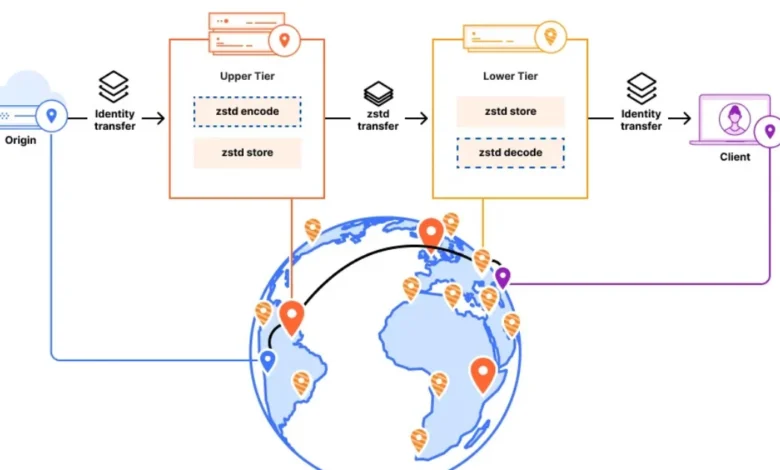
Cloudflare has officially introduced a prototype initiative known as Cache Transcoding, a strategic technical endeavor designed to optimize the efficiency of its global content delivery network (CDN) by applying Zstandard compression to uncompressed text-based assets before they are written to disk. By targeting frequently accessed but previously uncompressed data—such as HTML, JSON, CSS, and JavaScript—the hyperscaler aims to reclaim petabytes of effective cache capacity. This architectural shift, which integrates Facebook’s Zstandard algorithm into Cloudflare’s Rust-based Pingora proxy framework, marks a significant milestone in the ongoing industry-wide effort to balance CPU utilization with storage density and bandwidth consumption at a massive, global scale.
The Technical Mechanics of Cache Transcoding
The fundamental premise of Cache Transcoding rests on a simple yet highly effective mathematical trade-off: the expenditure of a marginal amount of CPU cycles during the initial ingress of a file to significantly reduce its storage footprint for the duration of its lifespan in the cache. When a qualifying response enters the Cloudflare cache, it is compressed using the Zstandard (Zstd) algorithm. Because the compression process occurs only once—at the moment of entry—the cost is amortized across every subsequent request that fetches that specific asset from the cache.
Cloudflare engineers, led by the insights shared by Aashi Patel, have identified that this approach offers a twofold benefit. First, it maximizes the utility of existing physical server storage, allowing for a higher volume of data to be held locally without necessitating a proportional increase in hardware procurement. Second, it reduces the total volume of data transmitted between geographically distributed data centers, effectively mitigating bandwidth bottlenecks that occur during cache misses or synchronization events.
Crucially, the system is designed with specific guardrails to ensure efficiency. Transcoding is strictly limited to responses that are at least 4 KiB in size. This threshold is intentional; it prevents the system from wasting computational resources on small, fragmented objects where the overhead of compression would likely outweigh the storage savings. Furthermore, the protocol explicitly excludes binary content, pre-compressed files, and range requests. By avoiding the re-compression of already compressed media—such as images, videos, and fonts, which account for a substantial 63.3% of bytes in typical traffic—Cloudflare ensures that CPU cycles are reserved for tasks that yield the highest return on investment.
Chronology and Development Trajectory
The development of Cache Transcoding follows years of internal optimizations at Cloudflare aimed at refining its proxy architecture. The transition from legacy infrastructure to the Rust-based Pingora proxy provided the modularity required to experiment with such advanced, high-performance features.
While the public announcement of the prototype occurred recently, the underlying research has been iterative. Cloudflare began by analyzing traffic patterns to determine the viability of on-the-fly transcoding. Their findings were striking: while media-heavy traffic dominated the byte count, text-based assets (HTML, JSON, CSS, JS) represented a massive 67.3% of total requests. Within that text-based segment, roughly 71% of the content was arriving at the edge in an uncompressed state.
By identifying this "compressible gap," the engineering team developed the prototype to target specifically this segment. Current development is focused on fine-tuning the compression levels. Because Zstandard allows for varying degrees of compression intensity, the team is currently testing how different levels impact latency and CPU load across diverse edge server configurations. This testing is being conducted both in isolation and in conjunction with Cloudflare’s Tiered Cache architecture, which acts as an intermediary layer to reduce origin server load.
Supporting Data and Statistical Context
The economic and technical rationale for Cache Transcoding is rooted in the sheer volume of data traversing Cloudflare’s network. According to data provided by the company, media files (images, video, and fonts) account for 21.4% of total requests but consume 63.3% of the bandwidth. Conversely, text-based responses account for 67.3% of all requests but only 22.3% of total bytes transferred.
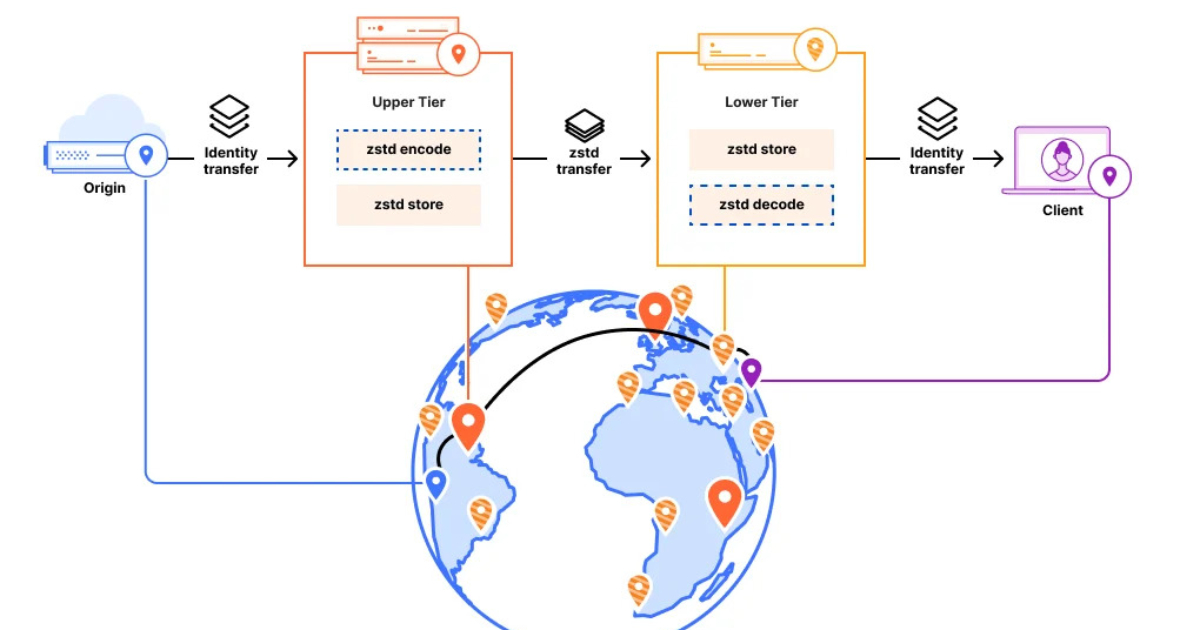
The 2.8x compression ratio achieved for eligible text content is a significant figure in the context of a CDN. When applied to the petabytes of data that Cloudflare processes daily, this ratio translates to a massive reduction in the physical storage footprint. The decision to ignore files under 4 KiB is also data-driven; internal metrics suggest that this exclusion policy sacrifices only approximately 1% of total eligible data, while significantly streamlining the processing logic and avoiding the "long tail" of inefficient, tiny object compression.
Industry Reception and Technical Discourse
The announcement has triggered a robust technical debate among systems engineers, particularly on platforms like Hacker News and specialized forums. The discourse highlights a divide between those who prioritize storage efficiency and those concerned with the complexities of stateful cache management.
One point of contention is the terminology. Some practitioners have questioned the use of the word "transcoding," which traditionally refers to the conversion of one media format to another (such as changing a video codec). In this context, it functions as an encode/decode operation for data compression. Despite the semantic debate, the utility of the approach is widely recognized.
A more substantive concern raised by the engineering community involves the handling of range requests. In standard HTTP caching, a range request allows a client to request only a specific segment of a file. If a file is stored as a single, compressed blob, the cache must decompress the entire file to extract the requested byte range, which could theoretically negate the performance benefits of compression. Cloudflare’s documentation suggests they are aware of these trade-offs, leading to the current exclusion of range requests from the transcoding logic to maintain cache performance and integrity.
Additionally, users have pointed out potential optimizations regarding "cold" versus "hot" content. While Cloudflare currently focuses on broadly caching content, some observers suggested that applying compression selectively to "cold" data—content rarely requested—could save on the costs associated with disk I/O and storage, whereas hot content might benefit more from being stored in an uncompressed state to minimize the latency added by decompression during each request.
Broader Implications and Future Outlook
The implications of Cache Transcoding extend beyond simple storage savings. As global internet traffic continues to grow, the ability to maximize the efficiency of existing hardware becomes a competitive advantage. For a company like Cloudflare, which operates one of the world’s largest networks, even a 1% reduction in total bandwidth and storage requirements can result in millions of dollars in capital expenditure (CapEx) savings annually.
Moreover, the move signifies a broader trend in cloud infrastructure: the "intelligence" of the edge is expanding. Rather than acting as a simple "dumb pipe" that passes data from origin to user, the modern CDN is increasingly a compute-heavy layer that performs real-time data manipulation. Whether through image optimization, WAF (Web Application Firewall) filtering, or now, advanced cache transcoding, the edge is becoming the primary site for performance and efficiency improvements.
Looking ahead, Cloudflare has stated that the prototype remains in the evaluation phase. Future iterations will likely address the challenges of range requests and further refine the compression thresholds. The company is expected to continue testing across various global regions, monitoring how different CPU architectures and traffic profiles respond to the Zstd integration.
If successful, the implementation of Cache Transcoding could become a blueprint for other hyperscalers and content delivery networks. By turning storage into a dynamic, compressed layer, Cloudflare is setting a new standard for how the internet handles the increasing deluge of text-based data, ensuring that performance remains high even as the physical constraints of global networking intensify. The success of this project will likely depend on the company’s ability to maintain low latency during the decompression phase, ensuring that the "effective capacity" gained does not come at the cost of user experience.